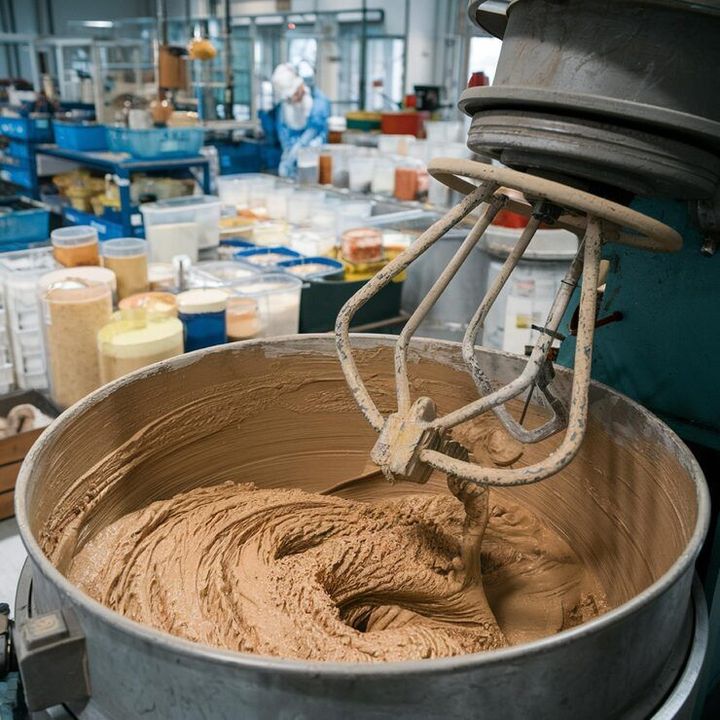
Industrial Mixing Machines: Complete Guide to Types, Uses, Benefits, and Industry Applications
Industrial mixing machines play a vital role in modern manufacturing by combining different materials into a consistent and uniform mixture. From food production and pharmaceuticals to chemicals, cosmetics, construction materials, and wastewater treatment, mixing equipment helps industries maintain quality, improve efficiency, and produce reliable products at scale.
Although mixing may seem like a simple process, industrial applications often involve powders, liquids, pastes, slurries, and highly viscous materials that require specialized equipment and carefully controlled mixing techniques. Choosing the right machine depends on the material's properties, production volume, desired consistency, and industry requirements.
This guide explains how industrial mixing machines work, why they are important, where they are used, the different types available, and the latest developments shaping industrial mixing technology.
Understanding Industrial Mixing Machines
An industrial mixing machine is equipment designed to blend, combine, disperse, homogenize, or emulsify two or more materials into a uniform composition. Unlike household mixers, industrial mixers are engineered to handle large production batches, continuous manufacturing processes, and materials with varying densities and viscosities.
The primary objective of industrial mixing is consistency. Every batch should have the same texture, composition, concentration, and quality regardless of production scale. This consistency is especially important in industries where product performance depends on accurate ingredient distribution.
Industrial mixers are available in various designs, each created for specific mixing challenges. Some machines gently blend dry powders, while others create high-shear mixing for liquids, emulsions, or thick materials.
Why Industrial Mixing Machines Matter Today
As manufacturing becomes more automated and quality standards become stricter, mixing equipment has become an essential part of production systems. Businesses rely on industrial mixers to reduce production time, improve material utilization, and achieve repeatable results.
Consistent mixing also minimizes product defects, improves shelf life for many products, and supports compliance with industry quality standards. Whether producing pharmaceuticals, paints, food ingredients, or construction materials, reliable mixing contributes directly to product performance and manufacturing efficiency.
Modern industries also process increasingly complex materials, including recycled compounds, specialty chemicals, biodegradable materials, and advanced composites. These materials often require precise mixing conditions that traditional methods cannot achieve efficiently.
How Industrial Mixing Machines Work
Industrial mixing machines use mechanical energy to move materials in a controlled pattern inside a mixing vessel. Rotating blades, paddles, ribbons, propellers, or impellers create movement that distributes ingredients evenly throughout the mixture.
The mixing process varies depending on the material and production goal. Some applications require gentle blending to avoid damaging ingredients, while others require intense mixing to break particles apart or create emulsions between liquids that naturally separate.
Several factors influence mixing performance, including mixing speed, blade design, vessel shape, batch size, temperature, viscosity, and mixing duration. Engineers adjust these variables to achieve the desired consistency without over-processing materials.
Different Types of Industrial Mixing Machines
Industrial mixing equipment is available in multiple configurations, with each type designed for specific materials and manufacturing processes.
Ribbon Mixers
Ribbon mixers use helical ribbons mounted on a horizontal shaft to move powders and granular materials in opposite directions simultaneously. This creates thorough blending while maintaining gentle handling of ingredients.
Ribbon mixers are commonly used in food processing, chemical manufacturing, animal feed production, fertilizers, and powdered construction materials.
Paddle Mixers
Paddle mixers use flat blades that gently move materials throughout the mixing chamber. They are suitable for fragile materials that require uniform blending without excessive shear or particle damage.
Industries use paddle mixers for grains, powders, spices, pharmaceutical ingredients, and specialty chemicals.
High-Shear Mixers
High-shear mixers rapidly rotate specialized mixing heads to break particles into smaller sizes while dispersing solids into liquids. They are ideal for emulsification, homogenization, and suspension creation.
Applications include cosmetics, pharmaceuticals, dairy products, paints, coatings, adhesives, and chemical emulsions.
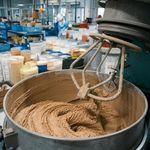
Planetary Mixers
Planetary mixers rotate mixing tools around the bowl while simultaneously spinning on their own axis. This dual movement provides complete coverage of the mixing container.
Planetary mixers are widely used for dough, creams, pastes, sealants, adhesives, batteries, and cosmetic formulations.
Static Mixers
Static mixers contain fixed internal elements inside a pipe rather than moving blades. Materials flow through the mixer, and internal structures repeatedly divide and recombine the flow to create mixing.
These mixers are common in continuous liquid processing, water treatment, chemical dosing, and polymer manufacturing.
Drum and Tank Mixers
Drum mixers attach directly to storage drums or mixing tanks, making them suitable for liquids, oils, chemicals, cleaning solutions, and industrial coatings.
They provide flexible mixing for batch production and storage applications.
Common Materials Mixed in Industrial Processes
Industrial mixing machines handle a wide range of materials with different physical characteristics.
Liquids include water-based solutions, oils, chemicals, beverages, paints, and cleaning products. Powder mixing involves flour, cement, pigments, pharmaceutical powders, detergents, and mineral compounds. Semi-solid materials include creams, gels, toothpaste, adhesives, and cosmetic products.
Highly viscous materials such as polymers, resins, sealants, chocolate, and industrial pastes require specialized mixers capable of handling thicker consistencies without reducing mixing efficiency.
Industries That Use Industrial Mixing Machines
Industrial mixing machines support manufacturing across numerous sectors because nearly every production process involves combining materials.
Food and Beverage Manufacturing
Food manufacturers use mixing equipment for sauces, dairy products, bakery ingredients, beverages, confectionery, spices, and nutritional products. Consistent mixing improves taste, texture, and product quality while maintaining hygiene standards.
Pharmaceutical Manufacturing
Pharmaceutical production requires accurate mixing for tablets, capsules, syrups, creams, suspensions, vaccines, and laboratory formulations. Precision is essential because ingredient distribution affects dosage consistency.
Chemical Industry
Chemical manufacturers mix solvents, pigments, polymers, catalysts, detergents, fertilizers, lubricants, and specialty compounds. Different chemicals often require controlled temperature and mixing intensity.
Cosmetics and Personal Care
Cosmetic production involves emulsions, lotions, shampoos, conditioners, creams, serums, gels, and makeup products. High-shear mixing helps create smooth textures and stable formulations.
Construction and Building Materials
Construction industries use mixers for cement additives, mortar compounds, paints, coatings, waterproofing materials, insulation products, and sealants.
Environmental and Water Treatment
Mixers help prepare treatment chemicals, sludge, wastewater additives, flocculants, and other processing materials used in industrial and municipal treatment facilities.
Benefits of Industrial Mixing Machines
Industrial mixing machines improve manufacturing in several important ways.
Uniform ingredient distribution ensures consistent product quality across production batches. Automated mixing reduces manual labor while increasing production capacity and repeatability. Efficient mixers minimize material waste by ensuring complete blending of ingredients.
Modern equipment also supports better process control through adjustable speed settings, programmable mixing cycles, temperature monitoring, and automated operation. These features improve productivity while reducing human error during manufacturing.
Energy-efficient designs and optimized mixing patterns help manufacturers reduce operating costs without sacrificing product quality.
Choosing the Right Industrial Mixing Machine
Selecting the correct mixer begins with understanding the production process and material characteristics rather than simply choosing equipment based on size.
Material viscosity is one of the most important considerations. Thin liquids require different impellers than thick pastes or powders. Batch size determines vessel capacity and production efficiency.
Mixing objectives also matter. Blending, emulsification, dispersion, homogenization, suspension, and dissolution each require different mixing technologies.
Manufacturers also consider cleaning requirements, automation compatibility, production frequency, available space, and future expansion plans when selecting industrial mixing equipment.
Maintenance and Operational Best Practices
Regular maintenance helps industrial mixing machines operate safely and consistently over long production cycles.
Routine inspection includes checking bearings, seals, shafts, blades, motors, and gearboxes for wear. Lubrication schedules reduce friction and extend equipment life.
Cleaning procedures depend on the industry. Food and pharmaceutical facilities often use clean-in-place systems, while chemical manufacturers may require specialized cleaning protocols for different compounds.
Monitoring vibration, noise, motor temperature, and mixing performance helps identify maintenance needs before unexpected downtime occurs.
Operator training is equally important because proper loading sequences, mixing speeds, and shutdown procedures help maintain equipment performance and workplace safety.
Automation in Industrial Mixing Systems
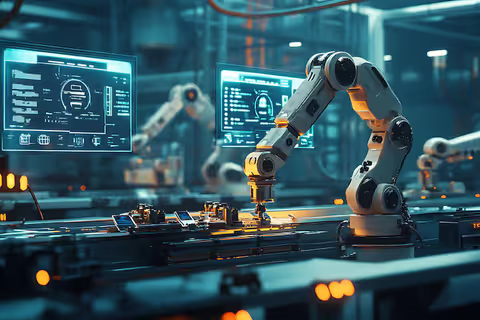
Automation has significantly changed industrial mixing technology over the past few years. Modern systems integrate sensors, programmable controllers, and production software to improve consistency.
Automated mixers can control mixing speed, batch timing, temperature, ingredient dosing, and mixing sequences with minimal manual intervention. Production data is recorded for quality assurance and process optimization.
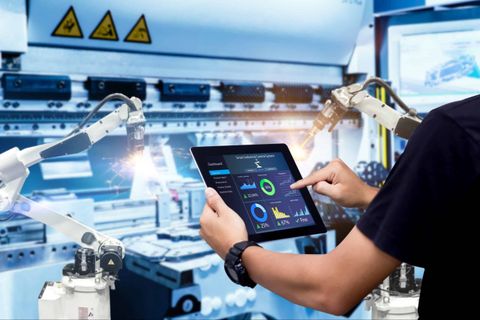
Manufacturers increasingly connect mixing equipment with broader production systems, enabling real-time monitoring, predictive maintenance, and remote diagnostics through industrial automation platforms.
Recent Trends in Industrial Mixing Technology
Industrial mixing technology continues evolving as manufacturers focus on efficiency, sustainability, and smarter production.
Smart Monitoring Systems
Many modern mixers now include sensors that monitor torque, temperature, vibration, and mixing consistency. These systems help detect performance changes before equipment failures occur.
Energy-Efficient Mixing Designs
Manufacturers are developing impellers and mixing geometries that achieve better mixing while reducing energy consumption. Improved motor technology also contributes to lower operational energy use.
Hygienic Mixing Equipment
Food, pharmaceutical, and biotechnology industries increasingly use stainless-steel equipment designed for easy cleaning and contamination prevention. Hygienic designs reduce cleaning time while supporting strict manufacturing standards.
Mixing for Sustainable Materials
Growing use of recycled plastics, biodegradable materials, renewable chemicals, and environmentally friendly formulations has created demand for mixers capable of processing new material combinations without compromising consistency.
Digital Process Integration
Industrial mixing systems increasingly connect with manufacturing execution systems and industrial monitoring platforms, allowing production teams to analyze performance and improve batch consistency using operational data.
Challenges in Industrial Mixing Operations
Despite technological improvements, industrial mixing still presents engineering challenges.
Different material densities can cause separation during mixing. Highly viscous materials require greater mechanical force and specialized blade designs. Powders may create dust or uneven distribution if mixing parameters are incorrect.
Temperature-sensitive materials may require controlled mixing environments to prevent degradation. Large production volumes also require careful scaling because mixing behavior changes as batch size increases.
Understanding these variables helps manufacturers optimize mixing processes while maintaining consistent product quality.
The Future of Industrial Mixing Machines
Industrial mixing machines are becoming more intelligent, efficient, and adaptable to modern manufacturing needs. Advances in automation, sensor technology, digital monitoring, and sustainable production are helping industries improve quality while reducing waste and energy consumption.
Future mixing systems are expected to use predictive maintenance, AI-assisted process optimization, and greater integration with automated production lines. These developments will allow manufacturers to maintain consistent product quality while responding more quickly to changing production requirements.
As industries continue producing more specialized materials and environmentally responsible products, industrial mixing machines will remain a foundational technology supporting reliable, scalable, and efficient manufacturing processes.
Frequently Asked Questions
What is the purpose of an industrial mixing machine?
An industrial mixing machine combines materials into a uniform mixture while maintaining consistency, quality, and efficiency across manufacturing batches.
Which industries use industrial mixing machines the most?
Food processing, pharmaceuticals, chemicals, cosmetics, construction materials, wastewater treatment, and many manufacturing industries use industrial mixing equipment extensively.
What is the difference between a ribbon mixer and a high-shear mixer?
A ribbon mixer is primarily used for gentle blending of powders and granular materials, while a high-shear mixer creates intense mixing for emulsions, dispersions, and liquid formulations.
How do manufacturers choose the right industrial mixer?
They evaluate material viscosity, production volume, mixing objectives, cleaning requirements, automation needs, and the physical properties of ingredients before selecting equipment.
Why is automation becoming important in industrial mixing?
Automation improves consistency, reduces manual intervention, records production data, enables predictive maintenance, and integrates mixing equipment with modern manufacturing systems.
Conclusion
Industrial mixing machines are essential components of modern manufacturing because they ensure materials are blended accurately, consistently, and efficiently across a wide range of industries. From powders and liquids to highly viscous compounds and advanced formulations, specialized mixing technologies help manufacturers achieve reliable production outcomes while maintaining product quality.
As industrial processes become increasingly automated and sustainability becomes a greater priority, mixing equipment continues evolving with smarter controls, energy-efficient designs, and digital monitoring capabilities. Understanding the different types of mixers, their applications, and best operational practices helps businesses and professionals select equipment that supports long-term manufacturing performance and process reliability.