Industrial Food Processing: Methods, Trends and Key Insights
Understand industrial food processing, its importance, modern technologies, recent Indian developments, safety rules, useful tools, and practical considerations.
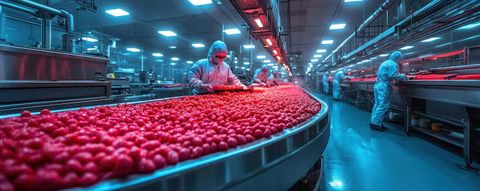
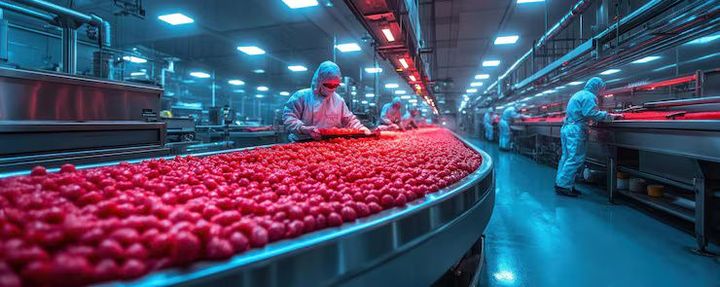
Industrial food processing is the organized transformation of agricultural ingredients and raw foods into products that can be safely stored, transported, prepared, or consumed. Common processes include cleaning, sorting, grinding, mixing, heating, pasteurization, drying, freezing, chilling, fermentation, filling, and packaging.
The sector exists because raw food is often seasonal and highly perishable. Processing can help extend shelf life, maintain consistent quality, reduce post-harvest losses, and make food easier to handle at larger scales.
A typical industrial food processing workflow can include several connected stages:
| Processing Stage | Main Purpose |
|---|---|
| Preparation | Cleaning, sorting and size reduction |
| Processing | Heating, drying, freezing or mixing |
| Quality Control | Checking safety and product characteristics |
| Packaging | Protecting food from contamination and damage |
| Storage | Maintaining suitable temperature and conditions |
Modern facilities increasingly combine food processing equipment with sensors, automated controls, data systems, and hygienic production practices.
Why Industrial Food Processing Matters Today
Food processing affects farmers, manufacturers, distributors, retailers, institutions, and consumers. Efficient processing can create stronger links between agricultural production and food markets while reducing the amount of produce lost after harvesting.
It is also important for products that require controlled conditions. Dairy products, frozen foods, canned foods, grain-based products, beverages, meat alternatives, snacks, and prepared foods can require carefully controlled temperature, moisture, sanitation, and packaging conditions.
Another major area is food safety. Industrial food production must identify potential biological, chemical, and physical hazards and establish controls appropriate to the process. The U.S. FDA's preventive-controls framework, for example, requires covered facilities to conduct hazard analysis and implement risk-based preventive controls.
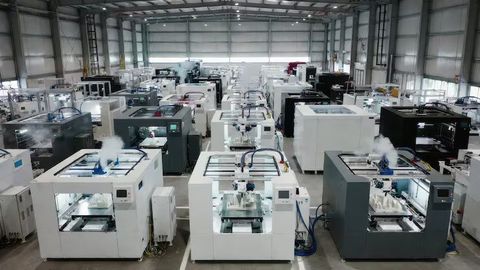
Automation is also changing food manufacturing. A 2025 European Commission review highlighted growing use of robotics, artificial intelligence, and automated technology to address efficiency, safety, quality, labor pressures, and regulatory requirements.
Recent Developments and Technology Trends
During 2025 and 2026, industrial food processing in India continued moving toward stronger cold-chain infrastructure, automation, food safety, and technology-driven production.
On February 6, 2026, India's Ministry of Food Processing Industries reported that food-processing-sector gross value added had reached ₹2.24 lakh crore in 2023–24, while processed-food exports represented 20.4% of agricultural exports in 2024–25.
Cold-chain infrastructure also remained a major development area. In July 2025, the government invited proposals under the Integrated Cold Chain and Value Addition Infrastructure component of PMKSY, with revised operational guidelines issued in May 2025.
Food irradiation received additional attention as a preservation technology. Government information published in December 2025 noted a ₹1,000 crore allocation approved in July 2025, including support for 50 new food irradiation units.
AI and digital systems are another emerging direction. Applications can include predictive quality monitoring, production-data analysis, traceability, demand forecasting, machine vision, and process optimization.
Laws, Standards and Government Policies in India
Food processing in India operates under the Food Safety and Standards Act, 2006, along with regulations administered by the Food Safety and Standards Authority of India (FSSAI).
Key areas include:
- Food business licensing and registration
- Hygiene and sanitary practices
- Food additives and product standards
- Packaging and labelling requirements
- Contaminant and residue limits
- Food safety management practices
FSSAI uploaded the Food Safety and Standards (Licensing and Registration of Food Businesses) Amendment Regulations, 2026 on March 12, 2026. It also published a draft amendment concerning food product standards and additives on March 30, 2026.
Government programmes such as PMKSY, PMFME, and PLISFPI are also designed to strengthen processing infrastructure, preservation capacity, technology adoption, and formalization within the sector.
Useful Tools and Resources
Facilities and learners can use general-purpose resources such as:
- HACCP worksheets and hazard-analysis templates
- Process-flow and production-layout templates
- Thermal processing calculators
- pH and water-activity measurement tools
- Batch and lot traceability spreadsheets
- Preventive-maintenance checklists
- Sanitation and inspection checklists
- Energy and equipment-efficiency dashboards
- Food safety training materials
- Government regulatory portals and food standards databases
These tools can help organize production information, monitor key parameters, and maintain consistent documentation.
Frequently Asked Questions
What is industrial food processing?
It is the large-scale transformation of raw agricultural or food ingredients through controlled processes such as heating, cooling, drying, grinding, mixing, fermentation, and packaging.
What equipment is commonly used?
Common equipment includes conveyors, mixers, grinders, heat exchangers, ovens, dryers, freezers, filling systems, refrigeration equipment, weighing systems, and inspection devices.
How does automation help food processing?
Automation can improve process consistency, collect production data, monitor operating conditions, and reduce the need for repetitive manual activities.
Why is cold-chain infrastructure important?
Cold-chain systems maintain controlled temperatures during storage and transportation for temperature-sensitive foods, helping preserve quality and reduce spoilage.
Does every food processor follow the same regulations?
No. Requirements depend on the country, food category, processing activity, facility type, and distribution market. In India, FSSAI requirements are central to food safety regulation.
Conclusion
Industrial food processing connects agriculture with modern food distribution through controlled preparation, preservation, packaging, and storage. Its importance is growing as food systems focus more strongly on safety, efficiency, traceability, sustainability, and reduction of post-harvest losses.
Recent developments in India show increasing attention to cold chains, food irradiation, digital technologies, and processing infrastructure. At the same time, operators must understand applicable food safety standards and maintain appropriate records and controls. The future of industrial food processing is likely to combine proven processing methods with automation, data analytics, improved preservation techniques, and stronger food-safety management.
Disclaimer
This article is intended for general educational purposes. Food-processing requirements can vary according to product, facility, location, and applicable regulations. Readers should verify current requirements with the relevant government authority before making operational or regulatory decisions.