Industrial Conveyor Belts: Types, Uses, Benefits, and Maintenance Guide (2026)
Industrial conveyor belts are one of the most important systems used in modern manufacturing, warehousing, mining, food processing, and logistics. They help move materials and products efficiently from one location to another, reducing manual labor and improving productivity.
Whether it is transporting raw materials in a factory, moving packaged goods in a warehouse, or carrying heavy minerals in a mining operation, conveyor belts have become an essential part of industrial operations across many sectors.
This guide explains how industrial conveyor belts work, the different types available, where they are used, their advantages, maintenance practices, and the latest developments in conveyor technology.
What Are Industrial Conveyor Belts?
An industrial conveyor belt is a continuous moving surface designed to transport materials, products, or components between different points in an industrial facility. The system is powered by motors and supported by rollers, pulleys, or sliding surfaces depending on its design.
Conveyor belts can carry lightweight items such as packaged food as well as heavy materials like coal, sand, metal parts, and construction aggregates. They are designed for continuous operation and can be customized based on industry requirements, load capacity, speed, temperature, and environmental conditions.
The primary purpose of a conveyor belt is to improve material handling while reducing the time, effort, and risks associated with manual transportation.
How Industrial Conveyor Belts Work
Industrial conveyor systems operate through a simple but highly effective mechanism.
A motor powers one or more pulleys that rotate and move the belt continuously. Materials placed on the belt travel along its surface until they reach their intended destination. Additional components such as rollers, guides, sensors, and control systems help maintain smooth operation.
A standard conveyor system generally includes:
Conveyor belt material.
Drive pulley connected to a motor.
Idler rollers supporting the belt.
Tensioning mechanism to maintain belt alignment.
Frame structure supporting the entire system.
Control system for speed and operation management.
Advanced conveyor systems may also include automation controls, safety sensors, and monitoring systems.
Why Industrial Conveyor Belts Are Important
Material handling is a major part of industrial operations. Conveyor belts help businesses move products consistently, safely, and efficiently.
Key reasons conveyor belts are widely used include:
Faster transportation of materials.
Reduced manual handling.
Improved workplace safety.
Increased production efficiency.
Consistent product flow between processes.
Lower operational downtime when properly maintained.
These benefits make conveyor systems valuable across industries of all sizes.
Common Types of Industrial Conveyor Belts
Different industries require different conveyor belt designs depending on the products being transported.
Flat Belt Conveyors
Flat belt conveyors are among the most widely used conveyor systems.
They feature a flat continuous belt supported by rollers or a sliding surface and are suitable for transporting boxes, packages, components, and lightweight materials.
Common applications include manufacturing plants, warehouses, packaging facilities, and assembly lines.
Roller Conveyor Belts
Roller conveyor systems use cylindrical rollers beneath the belt or directly transport products on rollers.
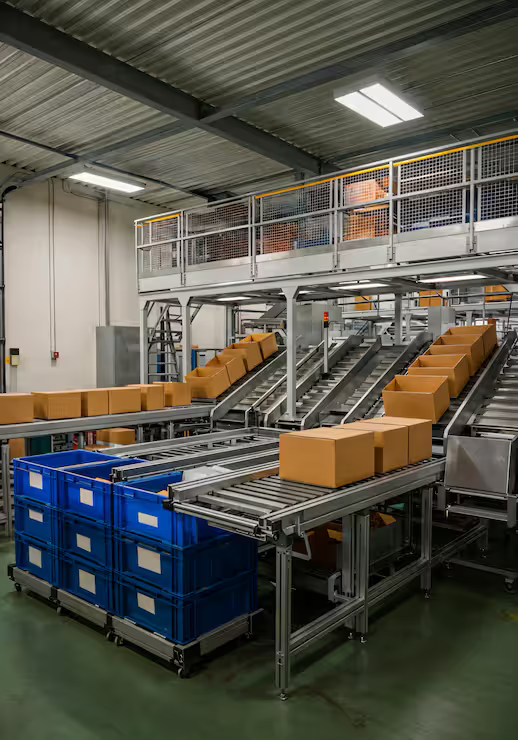
They are ideal for cartons, pallets, containers, and large packages in logistics and distribution centers.
Modular Plastic Conveyor Belts
Modular conveyor belts are made from interconnected plastic segments rather than a single continuous belt.
Advantages include:
Easy replacement of damaged sections.
Good resistance to moisture.
Suitable for food processing environments.
Flexible configurations for curves and inclines.
Cleated Conveyor Belts
Cleated conveyor belts contain raised sections that prevent materials from sliding backward on inclined conveyors.
They are commonly used for:
Agricultural products.
Bulk materials.
Recycling facilities.
Packaging lines with elevation changes.
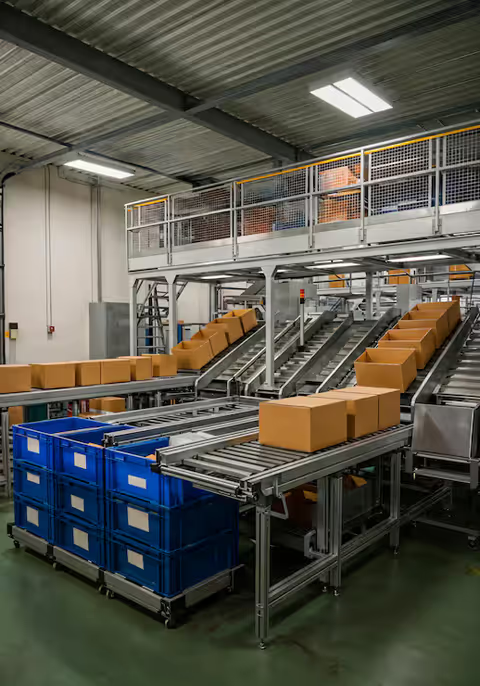
Inclined Conveyor Belts
Inclined conveyors transport materials between different heights within a facility.
They help maximize vertical space while maintaining efficient product movement.
Heat-Resistant Conveyor Belts
Heat-resistant belts are designed for high-temperature environments where ordinary belts may degrade.
Industries using these belts include:
Steel manufacturing.
Cement production.
Foundries.
Glass manufacturing.
Heavy-Duty Rubber Conveyor Belts
Rubber conveyor belts are designed to handle abrasive, heavy, or sharp materials.
Typical industries include mining, construction, quarrying, ports, and bulk material transportation.
Materials Used in Industrial Conveyor Belts
The belt material significantly affects durability, flexibility, and performance.
Common conveyor belt materials include:
Material | Common Use |
| Rubber | Mining, heavy manufacturing, construction materials. |
| PVC | Warehouses, packaging, logistics, light manufacturing. |
| PU (Polyurethane) | Food processing, pharmaceuticals, clean manufacturing. |
| Modular Plastic | Food production, beverage plants, packaging systems. |
| Fabric Reinforced Belts | General industrial applications with medium loads. |
| Steel Cord Belts | Long-distance heavy-load mining conveyors. |
Selecting the correct material depends on load type, operating environment, temperature, moisture exposure, and chemical resistance.
Industries That Use Industrial Conveyor Belts
Industrial conveyor belts support operations across a wide range of industries.
Manufacturing
Factories use conveyors to transport components between production stages, helping maintain consistent workflow and reducing production delays.
Warehousing and Logistics
Distribution centers rely on conveyor systems for sorting, packaging, loading, and unloading products quickly and accurately.
Food and Beverage Processing
Food-grade conveyor belts transport ingredients, packaged foods, beverages, baked goods, and frozen products while meeting hygiene requirements.
Mining and Quarrying
Mining conveyors move ores, coal, minerals, gravel, and rocks over long distances, reducing dependence on trucks and manual handling.
Agriculture
Agricultural conveyor systems transport grains, seeds, fruits, vegetables, fertilizers, and harvested crops.
Pharmaceutical Industry
Conveyor belts support clean and automated transportation of medicines, medical devices, and packaged pharmaceutical products.
Recycling Facilities
Recycling plants use conveyor systems to sort plastics, metals, paper, glass, and other recyclable materials efficiently.
Benefits of Industrial Conveyor Belts
Industrial conveyor systems offer several operational advantages beyond transportation.
Improved Productivity
Continuous material movement reduces delays between production processes and increases overall output.
Reduced Manual Labor
Automation minimizes repetitive lifting and carrying tasks, allowing workers to focus on higher-value activities.
Enhanced Workplace Safety
Conveyor systems help reduce workplace injuries associated with manual material handling, especially when safety mechanisms are properly maintained.
Better Material Handling Accuracy
Products move along predefined paths, reducing the chances of misplaced materials or handling errors.
Cost-Effective Long-Term Operations
Although conveyor systems require installation and maintenance, they often reduce labor costs and improve operational efficiency over time.
Scalable for Different Operations
Conveyor systems can be expanded or modified as production requirements change.
Key Factors to Consider When Choosing an Industrial Conveyor Belt
Selecting the right conveyor belt requires understanding operational needs rather than choosing a single standard design.
Important considerations include:
Load Capacity
Determine the weight and size of materials the belt will carry.
Belt Speed
Speed should match production requirements without damaging products or creating bottlenecks.
Operating Environment
Consider factors such as:
Temperature.
Moisture.
Dust.
Chemicals.
Oil exposure.
Outdoor conditions.
Belt Length and Width
Dimensions should fit facility layout and material flow requirements.
Incline or Decline Requirements
Products transported vertically or on slopes may require cleated or inclined belts.
Hygiene Requirements
Food and pharmaceutical industries often require belts designed for easy cleaning and contamination prevention.
Industrial Conveyor Belt Maintenance Best Practices
Proper maintenance helps extend conveyor belt life and minimize unexpected downtime.
Regular Inspection
Inspect belts for:
Cracks.
Tears.
Fraying.
Misalignment.
Surface wear.
Early detection prevents larger mechanical issues.
Belt Cleaning
Dust, debris, oil, and product buildup can reduce performance and increase wear.
Cleaning schedules should match the operating environment.
Tension Adjustment
Correct belt tension prevents slipping, excessive stretching, and uneven wear.
Roller and Pulley Maintenance
Check rollers and pulleys for damage, buildup, or unusual noise that may affect belt movement.
Lubrication of Moving Components
Bearings, motors, and mechanical components require appropriate lubrication according to manufacturer recommendations.
Alignment Checks
Misaligned belts may drift sideways, causing uneven wear and possible system damage.
Routine alignment checks improve reliability.
Common Conveyor Belt Problems and Solutions
Even well-designed systems experience wear over time.
Problem | Possible Cause |
| Belt slipping | Incorrect tension, worn pulleys, or excessive load. |
| Belt misalignment | Improper tracking, damaged rollers, or uneven loading. |
| Excessive belt wear | Abrasive materials, poor alignment, or inadequate cleaning. |
| Material spillage | Overloading, incorrect belt speed, or damaged belt edges. |
| Unusual vibration or noise | Worn bearings, loose components, or roller damage. |
Routine preventive maintenance helps reduce these issues before they affect production.
Conveyor Belt Safety in Industrial Facilities
Safety is a critical part of conveyor system operation.
Recommended practices include:
Install emergency stop switches along conveyor lines.
Use protective guards around moving components.
Train workers on safe operating procedures.
Lock out equipment before maintenance.
Keep loose clothing and tools away from moving belts.
Inspect safety sensors and alarms regularly.
Following workplace safety procedures helps reduce accidents and equipment damage.
Automation and Smart Conveyor Belt Technology
Industrial conveyor belts have become increasingly intelligent through automation and digital monitoring.
Modern systems may include:
Speed sensors.
Load monitoring.
Automatic sorting systems.
Barcode and QR code scanners.
Vision inspection systems.
Internet-connected monitoring devices.
Predictive maintenance software.
These technologies help manufacturers monitor equipment health, reduce downtime, and improve operational efficiency through real-time data.
Sustainability in Conveyor Belt Systems
Many industries are improving conveyor systems to reduce environmental impact.
Sustainability practices include:
Energy-efficient drive motors.
Lightweight belt materials requiring less power.
Recyclable conveyor components.
Reduced product waste through accurate material handling.
Longer-lasting belt materials that reduce replacement frequency.
Sustainable conveyor solutions also support broader industrial energy-efficiency goals.
Recent Trends in Industrial Conveyor Belts
Industrial conveyor technology continues to evolve as manufacturing becomes more automated.
Recent trends include:
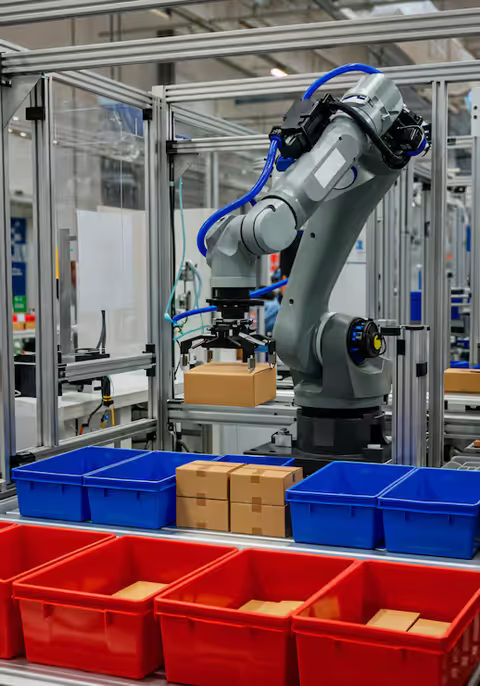
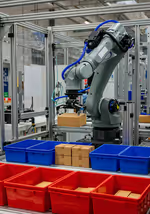
Greater integration with robotic manufacturing systems.
AI-assisted predictive maintenance.
Modular conveyor designs for flexible production lines.
Smart sensors for real-time belt monitoring.
Increased adoption of energy-efficient conveyor drives.
Hygienic conveyor systems for food and pharmaceutical production.
Automated sorting conveyors supporting e-commerce fulfillment centers.
These developments are helping industries improve productivity while reducing maintenance interruptions.
Frequently Asked Questions About Industrial Conveyor Belts
What is the main purpose of an industrial conveyor belt?
Its primary purpose is to transport materials and products efficiently within industrial facilities while reducing manual handling.
Which industries use conveyor belts the most?
Manufacturing, logistics, mining, food processing, agriculture, pharmaceuticals, recycling, and construction all rely heavily on conveyor systems.
What material is commonly used for conveyor belts?
Rubber, PVC, polyurethane, modular plastic, and steel-reinforced materials are among the most commonly used options depending on the application.
How often should conveyor belts be inspected?
Inspection frequency depends on usage intensity, but regular visual inspections and scheduled preventive maintenance are recommended for continuous industrial operations.
Can conveyor belts be customized?
Yes. Conveyor systems can be customized for belt width, length, speed, incline angle, load capacity, operating environment, and industry-specific hygiene or safety requirements.
Conclusion
Industrial conveyor belts play a vital role in modern material handling and automated production systems. They improve efficiency, reduce manual labor, enhance workplace safety, and support consistent product movement across manufacturing, logistics, mining, food processing, agriculture, and many other industries.
Choosing the appropriate conveyor belt depends on material type, operating conditions, load capacity, and production requirements. Equally important is regular inspection, cleaning, alignment, and preventive maintenance to maximize equipment life and reduce downtime.
As industrial automation continues to advance, conveyor belts are becoming smarter, more energy-efficient, and better integrated with digital monitoring systems. Understanding how these systems work helps businesses and professionals make informed decisions about reliable and efficient material handling solutions.