Industrial Coating Systems Guide: Types, Process, Benefits, and Modern Applications
Industrial coating systems play an essential role in protecting equipment, structures, and manufactured products from wear, corrosion, chemicals, moisture, and environmental damage. Whether used on steel bridges, factory machinery, pipelines, automotive components, or industrial equipment, coatings help extend service life while improving performance and appearance.
As industries continue to adopt advanced manufacturing technologies, coating systems have become more sophisticated. Modern industrial coatings are designed not only to protect surfaces but also to improve energy efficiency, reduce maintenance requirements, and support environmental sustainability.
This guide explains what industrial coating systems are, how they work, where they are used, and why they are important across different industries.
Understanding Industrial Coating Systems
An industrial coating system is a combination of surface preparation methods, coating materials, and application techniques used to create a protective layer on a material. The coating forms a barrier between the underlying surface and external conditions that could cause damage over time.
Unlike decorative paints, industrial coatings are engineered for durability and specific performance requirements. Different industries require different coating systems depending on exposure to heat, chemicals, water, ultraviolet light, abrasion, or corrosion.
The performance of a coating system depends on selecting the right coating material, preparing the surface correctly, and applying the coating under suitable conditions.
Why Industrial Coating Systems Matter
Industrial environments expose materials to challenging conditions every day. Metal surfaces can rust, concrete can absorb moisture, machinery can wear down from friction, and chemical exposure can gradually weaken protective materials.
Industrial coating systems help solve these challenges by creating durable protective surfaces that resist environmental and operational damage. They also improve the lifespan of infrastructure and industrial assets while reducing the frequency of repairs and replacements.
Many industries rely on coating systems to maintain operational safety, preserve product quality, and comply with industry standards for corrosion protection and environmental performance.
How an Industrial Coating System Works
A coating system involves several stages that work together to achieve long-lasting protection. Each stage is important because even a high-quality coating may fail if the surface is not prepared properly.
The process begins with surface preparation. Dirt, grease, rust, moisture, and old coatings are removed using mechanical cleaning, abrasive blasting, chemical cleaning, or other preparation techniques. The goal is to create a clean surface that allows strong coating adhesion.
Next comes primer application. Primers improve adhesion between the surface and the protective coating while adding corrosion resistance.
After the primer, one or more intermediate coats may be applied to build coating thickness and improve protection against environmental conditions.
The final topcoat provides the outer protective finish. It adds resistance to weather, chemicals, sunlight, abrasion, or other environmental factors depending on the application.
Once applied, the coating is cured through air drying, heat curing, or chemical curing, allowing it to achieve its designed strength and durability.
Main Types of Industrial Coating Systems
Industrial coatings are available in different formulations designed for specific industrial environments.
Epoxy Coating Systems
Epoxy coatings are widely used because of their strong adhesion, chemical resistance, and corrosion protection. They are commonly applied to steel structures, industrial flooring, storage tanks, pipelines, and manufacturing equipment.
These coatings create a hard protective surface capable of handling moisture and many industrial chemicals.
Polyurethane Coating Systems
Polyurethane coatings provide excellent weather resistance, flexibility, and color retention. They are often used as topcoats on industrial equipment, bridges, transportation infrastructure, and outdoor machinery.
Their resistance to ultraviolet light makes them suitable for outdoor applications.
Zinc-Rich Coating Systems
Zinc-rich coatings provide sacrificial corrosion protection for steel. The zinc particles protect exposed steel surfaces even if minor coating damage occurs.
These coatings are frequently used in marine structures, offshore equipment, bridges, and industrial steel fabrication.
Powder Coating Systems
Powder coating applies dry coating particles electrostatically before curing them with heat. The result is a durable finish with good resistance to impact, scratches, and weathering.
Powder coatings are widely used for metal furniture, industrial components, appliances, architectural products, and automotive parts.
Ceramic and High-Temperature Coatings
Some industries require coatings capable of withstanding extremely high temperatures or thermal cycling. Ceramic coatings provide insulation and heat resistance for industrial furnaces, exhaust systems, turbines, and specialized manufacturing equipment.
Surface Preparation: The Foundation of Coating Performance
Surface preparation is one of the most important parts of any industrial coating system. Poor preparation often leads to coating failure through peeling, blistering, cracking, or corrosion beneath the coating.
Preparation methods depend on the material and operating environment. Abrasive blasting removes rust and creates surface texture for adhesion. Mechanical grinding prepares welded areas and fabricated components. Chemical cleaning removes oils and contaminants. Moisture removal ensures coatings bond correctly during application.
Proper preparation improves coating adhesion, coating thickness consistency, and overall system lifespan.
Common Coating Application Methods
Industrial coatings are applied using different techniques depending on product size, coating type, and production requirements.
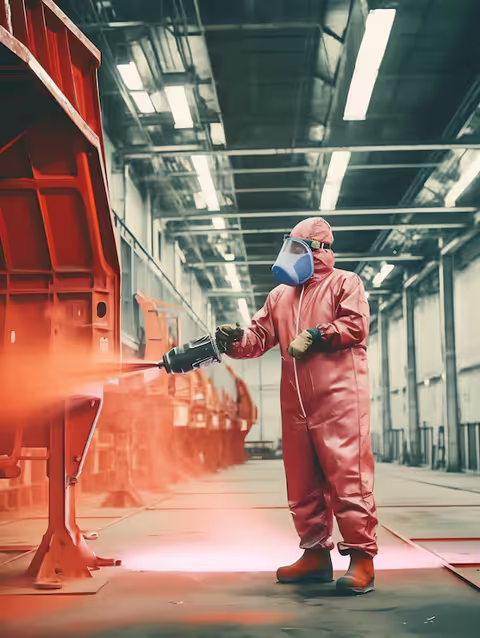
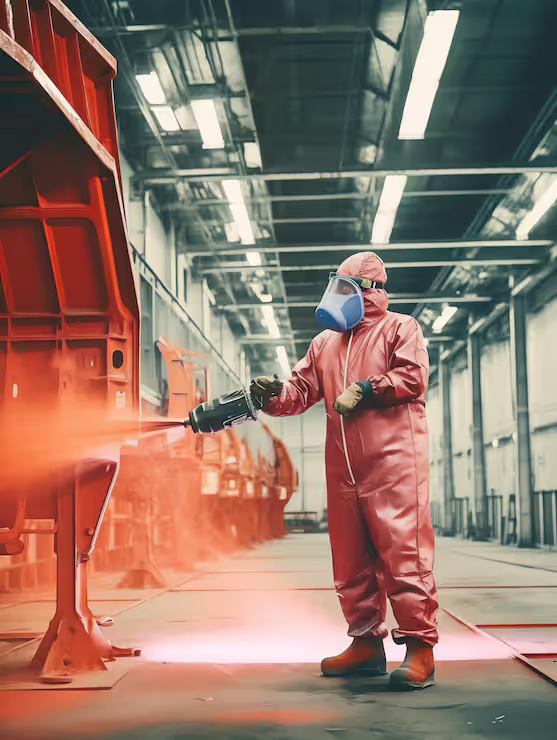
Spray coating is widely used for large structures and complex equipment because it provides even coverage across irregular surfaces.
Brush and roller application is suitable for maintenance work, repairs, and areas that are difficult to access with spray equipment.
Electrostatic powder coating improves coating efficiency by attracting powder particles to grounded metal surfaces before curing.
Dip coating allows complete coverage of smaller components by immersing them in coating material.
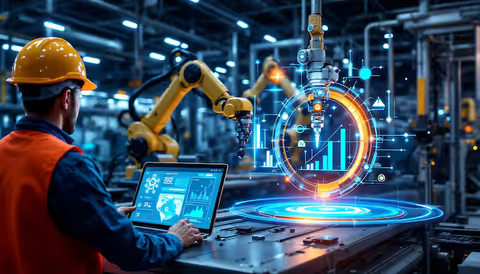
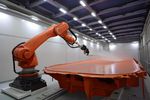
Automated robotic coating systems are increasingly used in manufacturing facilities where consistent coating thickness and repeatability are important.
Industries That Use Industrial Coating Systems
Industrial coating systems support a wide range of sectors where equipment and infrastructure require long-term protection.
| Industry | Common Coating Applications |
|---|---|
| Manufacturing | Machinery, equipment frames, production lines, storage systems. |
| Construction | Steel structures, bridges, concrete surfaces, industrial buildings. |
| Oil and Gas | Pipelines, tanks, offshore platforms, processing equipment. |
| Automotive | Vehicle bodies, chassis components, wheels, industrial parts. |
| Marine | Ships, ports, docks, marine equipment exposed to saltwater. |
| Power Generation | Turbines, cooling towers, boilers, electrical infrastructure. |
| Food Processing | Equipment surfaces requiring hygienic and corrosion-resistant coatings. |
Each industry selects coating systems based on environmental exposure, safety requirements, and equipment operating conditions.
Benefits of Industrial Coating Systems
Industrial coatings provide value beyond protecting surfaces. They contribute to operational reliability and long-term asset performance.
One major benefit is corrosion protection. Moisture, oxygen, and chemicals can rapidly damage metal surfaces without protective coatings.
Coatings also increase equipment lifespan by reducing wear caused by abrasion, friction, and environmental exposure.
Many coating systems improve chemical resistance, protecting equipment used in manufacturing, processing plants, and chemical industries.
Heat-resistant coatings protect equipment operating at elevated temperatures while specialized coatings improve electrical insulation or conductivity where required.
Modern coating systems also improve appearance, making industrial products easier to identify, inspect, and maintain over time.
Choosing the Right Industrial Coating System
Selecting the appropriate coating depends on several technical considerations rather than appearance alone.
The material being coated is the first consideration. Steel, aluminum, concrete, galvanized metal, and composite materials each require compatible coating systems.
Environmental exposure is equally important. Outdoor equipment faces sunlight, rain, humidity, and temperature changes, while indoor equipment may encounter chemicals or abrasion instead.
Expected service life influences coating thickness and coating type. Infrastructure designed for decades of operation generally requires multi-layer coating systems with primers, intermediate coats, and durable topcoats.
Temperature exposure, mechanical wear, maintenance accessibility, and regulatory requirements also influence coating selection.
A properly matched coating system performs better and reduces maintenance throughout the equipment lifecycle.
Recent Developments in Industrial Coating Technology
Industrial coating technology has evolved significantly over the past year as industries focus on sustainability, automation, and higher performance materials.
Manufacturers are increasing the use of low-emission coating formulations that reduce environmental impact while maintaining durability.
Water-based industrial coatings continue expanding in applications where reduced volatile emissions and improved workplace safety are priorities.
Smart coating technologies are receiving greater attention for infrastructure monitoring. Some advanced coatings can indicate corrosion activity or surface damage before visible deterioration occurs.
Automation has also improved coating consistency. Robotic spray systems and digital thickness monitoring help manufacturers achieve uniform coating application while reducing material waste.
Research into nanotechnology-enhanced coatings is also progressing, with coatings designed for improved scratch resistance, self-cleaning surfaces, and enhanced corrosion protection.
Environmental and Safety Considerations
Industrial coating systems are increasingly designed with environmental responsibility in mind. Manufacturers are developing coatings that produce fewer emissions during application and curing.
Proper ventilation, protective equipment, and controlled application environments remain important for worker safety during coating operations.
Waste management practices have also improved through better coating recovery systems, powder recycling technologies, and efficient application equipment that minimizes overspray.
Environmental regulations continue encouraging industries to adopt coating technologies with lower environmental impact while maintaining protective performance.
Maintenance of Industrial Coating Systems
Even durable coating systems require periodic inspection and maintenance to ensure long-term performance.
Routine inspections help identify scratches, blistering, peeling, cracking, discoloration, or corrosion before damage spreads beneath the coating.
Cleaning coated surfaces removes contaminants that may gradually reduce coating effectiveness.
Localized repairs can often restore damaged areas without replacing the entire coating system when issues are detected early.
Maintenance schedules depend on environmental exposure, operating conditions, and coating type, but regular monitoring significantly extends coating lifespan.
Common Challenges in Industrial Coating Applications
Industrial coating performance can be affected by application conditions if proper procedures are not followed.
Improper surface preparation is one of the leading causes of coating adhesion failure.
Incorrect coating thickness may reduce durability or create curing problems.
Temperature and humidity during application can influence drying time and coating performance.
Contamination between coating layers may weaken bonding, while insufficient curing can reduce chemical or abrasion resistance.
Quality control procedures, environmental monitoring, and coating inspections help reduce these challenges during industrial applications.
Future Trends in Industrial Coating Systems
Industrial coating systems continue evolving alongside advanced manufacturing and infrastructure technologies.
Greater automation is expected to improve application precision and reduce material waste in industrial production.
Artificial intelligence and digital inspection tools are being integrated into coating quality control to identify defects earlier in the production process.
Sustainable coating chemistry will likely become increasingly important as industries pursue lower environmental impact and improved resource efficiency.
Advanced multifunctional coatings that combine corrosion protection, thermal insulation, antimicrobial properties, or electrical performance are also becoming more common across specialized industries.
These innovations are helping industrial coating systems become more durable, efficient, and adaptable to changing industrial requirements.
Frequently Asked Questions
What is the purpose of an industrial coating system?
An industrial coating system protects surfaces from corrosion, moisture, chemicals, abrasion, heat, and environmental damage while extending the service life of equipment and infrastructure.
Which materials can be coated using industrial coating systems?
Industrial coating systems can be applied to steel, aluminum, concrete, galvanized metal, composites, and many other industrial materials using compatible coating formulations.
Why is surface preparation important before coating?
Surface preparation removes contaminants and creates proper adhesion between the coating and the material, improving durability and reducing the risk of coating failure.
What is the difference between epoxy and polyurethane coatings?
Epoxy coatings provide strong chemical resistance and corrosion protection, while polyurethane coatings offer better flexibility, weather resistance, and long-term color retention for outdoor applications.
How often should industrial coatings be inspected?
Inspection frequency depends on operating conditions and environmental exposure, but regular inspections help detect damage early and extend coating performance through timely maintenance.
Conclusion
Industrial coating systems are an essential part of modern manufacturing, construction, transportation, energy, and infrastructure. They protect valuable assets from corrosion, environmental exposure, chemicals, abrasion, and temperature-related damage while supporting longer equipment life and lower maintenance requirements.
As coating technologies continue advancing through sustainable materials, automated application systems, and smarter protective solutions, industries have access to increasingly reliable coating systems for demanding operating environments. Understanding coating types, application methods, surface preparation, and maintenance practices helps organizations select solutions that provide durable protection and consistent performance across a wide range of industrial applications.