Industrial Automation Software Explained: A Complete Guide for Modern Industries
Industrial automation software is the digital system that helps factories, manufacturing plants, warehouses, and industrial facilities automate machines, equipment, and production processes. Instead of relying entirely on manual monitoring and operation, this software allows computers, sensors, controllers, and connected devices to communicate and perform tasks automatically.
Automation software has become an essential part of modern industry because production environments have grown more complex. Manufacturers need accurate monitoring, faster production cycles, reduced downtime, and better quality control. Industrial automation software brings these capabilities together through centralized dashboards, real-time data collection, and intelligent process management.
Unlike traditional control systems that required operators to manually supervise equipment throughout the day, automation software continuously monitors machines, identifies operational changes, records production data, and helps operators respond quickly when needed. This creates a smarter and more efficient industrial environment while supporting consistent production standards.
Today, industrial automation software is used across industries such as automotive manufacturing, food processing, pharmaceuticals, electronics, textiles, chemicals, packaging, oil and gas, logistics, water treatment, and renewable energy facilities.
Importance: Why Industrial Automation Software Matters Today
Industrial operations are becoming increasingly connected through digital technologies. Businesses need systems that can collect information from multiple machines, analyze production performance, and provide meaningful insights without interrupting operations. Industrial automation software plays a central role in achieving these goals.
One of the biggest reasons automation software matters is operational efficiency. Machines equipped with sensors and controllers generate enormous amounts of operational data every second. Automation software converts this information into understandable reports, alerts, and visual dashboards that help operators make informed decisions.
Another important advantage is consistency. Automated systems follow predefined rules and workflows, reducing variations in manufacturing processes. This helps maintain product quality and minimizes production errors that may occur during manual operations.
Safety is another major factor. Automation software can monitor equipment conditions, detect unusual temperatures, pressure levels, vibration patterns, or electrical faults, and notify operators before equipment failures become serious. This supports safer workplaces and reduces unexpected production interruptions.
Industrial automation software also improves collaboration between departments. Production managers, maintenance teams, engineers, and quality assurance professionals can access the same operational information through centralized platforms, improving communication and planning.
As industries move toward digital transformation, automation software helps organizations adapt to changing production demands while supporting sustainable resource usage through improved energy monitoring and process optimization.
How Industrial Automation Software Works
Industrial automation software acts as the communication layer between industrial equipment and human operators. It receives information from machines, processes the data, and sends commands based on predefined automation logic.
The process begins with industrial devices such as sensors, programmable logic controllers (PLCs), distributed control systems (DCS), motors, robotic systems, and industrial Internet of Things (IIoT) devices. These devices collect measurements including temperature, pressure, flow rate, speed, energy usage, humidity, and machine status.
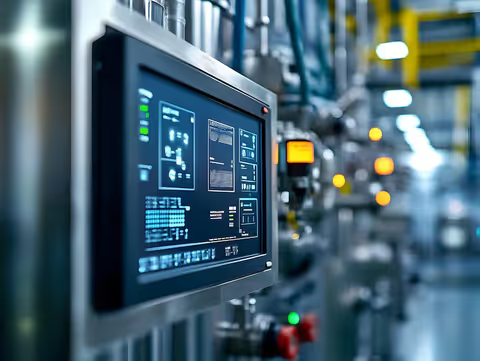
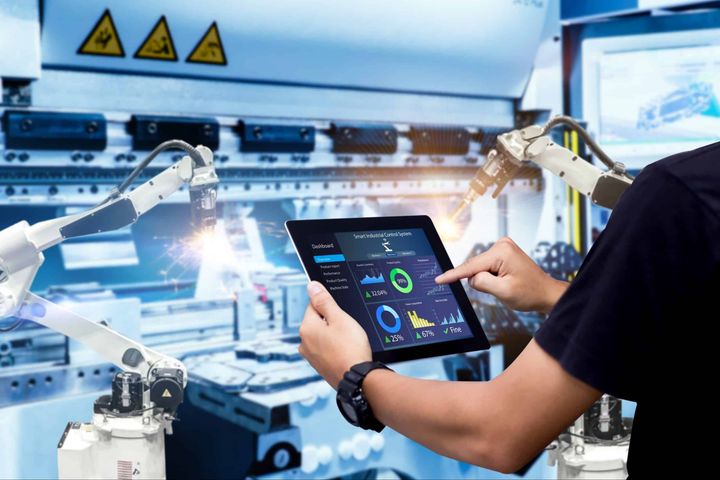
The automation software receives this information through industrial communication protocols and organizes it into real-time dashboards. Operators can monitor production lines, machine health, alarms, and performance indicators from a central interface.
When specific conditions occur, such as a machine exceeding its operating temperature or production speed falling below a target value, the software can trigger alerts or automated actions according to configured workflows.
Historical production data is also stored for analysis. Engineers use these records to identify recurring equipment issues, optimize maintenance schedules, and improve manufacturing performance over time.
Modern automation software often integrates with enterprise resource planning systems, manufacturing execution systems, quality management systems, inventory software, and cloud analytics platforms, creating a connected industrial ecosystem.
Key Features of Industrial Automation Software
Industrial automation software combines monitoring, control, analysis, and reporting into a single environment designed for industrial operations.
Real-Time Monitoring
Real-time monitoring provides live visibility into machines, production lines, utilities, and industrial equipment. Operators can quickly identify operational changes without physically inspecting every machine.
Process Control
Automation software manages industrial processes according to predefined rules, schedules, and operating parameters. It ensures equipment operates within safe and efficient limits.
Alarm and Event Management
The software records alarms, warnings, and operational events whenever equipment behaves outside expected conditions. This helps maintenance teams investigate issues efficiently.
Data Collection and Reporting
Automation platforms continuously collect operational data and generate reports showing production output, equipment utilization, downtime, efficiency, and energy consumption.
Remote Access
Many modern automation systems allow authorized personnel to monitor industrial operations remotely through secure dashboards, making it easier to supervise multiple facilities.
Maintenance Support
Automation software helps maintenance teams monitor equipment conditions and identify patterns that may indicate future mechanical or electrical failures.
Integration Capabilities
Industrial automation software can exchange information with robotics, warehouse systems, ERP software, laboratory systems, quality inspection tools, and industrial databases.
Different Types of Industrial Automation Software
Industrial automation software is available in different categories depending on operational requirements and industry applications.
Software Type | Primary Purpose |
| SCADA Software | Supervises industrial equipment, monitors processes, and controls operations remotely. |
| PLC Programming Software | Develops and manages automation logic for programmable controllers. |
| DCS Software | Controls large industrial plants with distributed control architecture. |
| MES Software | Manages production scheduling, manufacturing execution, and operational tracking. |
| HMI Software | Provides graphical interfaces for operators to monitor and interact with machines. |
| Industrial IoT Platforms | Connect industrial devices for cloud monitoring, analytics, and predictive insights. |
Each type supports different levels of industrial automation, from individual machines to entire manufacturing facilities.
Where Industrial Automation Software Is Used
Industrial automation software supports a wide variety of industries where continuous monitoring and process control are essential.
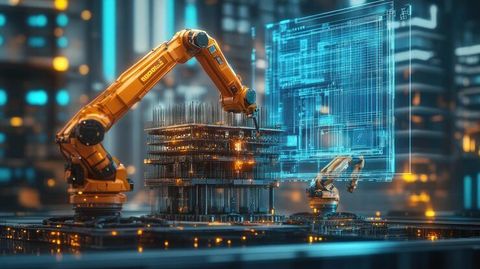
Manufacturing plants use automation software to coordinate production equipment, robotic assembly systems, and conveyor operations. Automotive facilities rely on automation for welding, painting, assembly, and quality inspection.
Food and beverage manufacturers monitor processing temperatures, mixing systems, packaging equipment, and sanitation procedures through automation software.
Pharmaceutical industries use automation software for precise production control, environmental monitoring, batch management, and regulatory documentation.
Energy and utility companies monitor power generation equipment, substations, pipelines, renewable energy systems, and water treatment facilities using centralized automation platforms.
Warehouses and logistics centers automate material handling equipment, conveyor systems, robotic sorting machines, inventory tracking, and shipping operations.
Chemical industries depend on automation software for pressure control, mixing operations, chemical dosing, safety monitoring, and environmental compliance.
Benefits of Industrial Automation Software
Industrial automation software delivers value across production, maintenance, quality, and operational management.
Improved Productivity
Automation reduces repetitive manual tasks and helps machines operate with greater consistency, supporting higher production efficiency.
Better Decision Making
Real-time dashboards provide operational visibility, allowing managers and engineers to identify performance issues quickly.
Reduced Downtime
Continuous equipment monitoring helps detect abnormal operating conditions before unexpected failures interrupt production.
Higher Product Quality
Automated monitoring maintains consistent production parameters, helping reduce quality variations and manufacturing defects.
Increased Workplace Safety
Automation software monitors hazardous conditions and alerts operators when equipment operates outside safe limits.
Better Resource Management
Production data helps organizations monitor energy consumption, material usage, equipment utilization, and maintenance activities more effectively.
Easier Regulatory Compliance
Automation software records operational history, equipment events, and production logs that support audits and compliance documentation.
Recent Updates and Industry Trends in 2026
Industrial automation software continues evolving alongside Industry 4.0 technologies, artificial intelligence, and connected industrial devices.
One major trend throughout 2025 and 2026 is increased adoption of Industrial Internet of Things platforms. More factories are connecting machines through secure industrial networks, allowing centralized monitoring across multiple production sites.
Artificial intelligence is becoming more integrated into automation software through predictive maintenance models, anomaly detection, production forecasting, and intelligent process optimization. Instead of reacting to equipment failures, organizations increasingly use historical machine data to identify maintenance needs earlier.
Digital twin technology has expanded across manufacturing industries. Digital twins create virtual models of industrial equipment or production lines that simulate real-world performance and help engineers test operational changes before implementation.
Edge computing is another growing trend. Rather than sending all industrial data to cloud platforms, edge computing processes information closer to machines, reducing latency and improving response times for critical operations.
Cybersecurity has also become a stronger focus. Industrial automation software now includes stronger authentication methods, encrypted communication, user access management, and continuous monitoring to protect operational technology environments.
Cloud-based industrial dashboards continue growing as organizations seek scalable monitoring solutions across geographically distributed facilities.
Laws, Standards, and Compliance Considerations
Industrial automation software often operates within regulated industrial environments where safety, quality, and cybersecurity standards are important.
Manufacturing facilities commonly follow international industrial automation standards that define communication protocols, safety systems, and equipment interoperability. These standards help ensure reliable communication between industrial devices from different manufacturers.
Cybersecurity standards have become increasingly significant for operational technology systems. Organizations are strengthening network segmentation, user authentication, software updates, and access controls to protect industrial infrastructure.
Industries such as pharmaceuticals, food manufacturing, chemicals, and energy also maintain operational records for inspections, quality management, and environmental compliance. Automation software assists by maintaining accurate digital logs of production activities and equipment events.
As governments encourage smart manufacturing and digital industrial infrastructure, compliance with safety, environmental, and cybersecurity frameworks is becoming an important part of automation planning.
Tools and Technologies Commonly Used with Industrial Automation Software
Industrial automation software works alongside several hardware and software technologies that create connected industrial environments.
Programmable logic controllers control industrial equipment using configurable automation logic. Human-machine interface software provides operators with graphical dashboards to supervise equipment. SCADA platforms monitor industrial assets across facilities, while distributed control systems manage complex industrial plants.
Industrial sensors collect operational measurements from equipment and production lines. Robotics software coordinates automated industrial robots used in assembly, welding, packaging, and material handling.
Industrial IoT gateways connect machines to analytics platforms, while cloud computing platforms provide long-term storage, visualization, and performance analysis. Artificial intelligence tools analyze operational trends and support predictive maintenance.
Together, these technologies create integrated automation systems capable of monitoring thousands of industrial signals in real time.
Choosing Industrial Automation Software for Industrial Needs
Selecting industrial automation software depends on operational goals, production complexity, and future scalability rather than choosing a single solution for every facility.
Organizations generally evaluate software compatibility with existing machines, industrial communication protocols, reporting capabilities, cybersecurity features, scalability, user interface design, integration support, and maintenance requirements.
Facilities with expanding production lines often prefer software that supports modular growth, allowing additional equipment and production processes to be integrated over time without redesigning the entire automation system.
The software should also provide reliable data visualization, alarm management, historical reporting, and secure access for authorized personnel across operational teams.
Conclusion
Industrial automation software has become a foundation of modern industrial operations by connecting machines, people, and production processes into a unified digital environment. It helps organizations monitor equipment in real time, improve operational efficiency, reduce downtime, maintain product quality, and support safer industrial workplaces.
As industries continue adopting smart manufacturing, Industrial Internet of Things devices, artificial intelligence, cloud computing, and predictive maintenance technologies, automation software is evolving beyond traditional machine control into intelligent operational management platforms.
Understanding how industrial automation software works, where it is used, and which technologies support it helps businesses, engineers, students, and manufacturing professionals better understand the future of industrial automation and digital manufacturing.
Frequently Asked Questions
What is industrial automation software used for?
Industrial automation software is used to monitor, control, and manage industrial machines, production processes, sensors, controllers, and operational data in manufacturing and industrial facilities.
What is the difference between SCADA and PLC software?
PLC software programs industrial controllers that operate machines, while SCADA software supervises, monitors, and visualizes equipment across industrial systems through centralized dashboards.
Can industrial automation software improve maintenance planning?
Yes. Automation software records equipment performance data and supports predictive maintenance by identifying operational patterns that may indicate future maintenance requirements.
Which industries commonly use industrial automation software?
Manufacturing, automotive, pharmaceuticals, food processing, energy, chemicals, water treatment, logistics, electronics, mining, and renewable energy industries commonly use industrial automation software.
How does industrial automation software support Industry 4.0?
It supports Industry 4.0 by connecting machines, sensors, controllers, cloud platforms, artificial intelligence systems, and industrial data analytics into a connected digital manufacturing environment.