How Powder Coating Systems Work: A Step-by-Step Guide
Powder coating systems are widely used for applying durable protective and decorative finishes to metal components and industrial products.
Unlike liquid paint, powder coating uses dry powder that is electrically charged and sprayed onto a grounded surface before being cured with heat.
The process combines surface preparation, powder application, recovery, and curing to create a consistent coating. Understanding how these systems work helps manufacturers and engineers evaluate equipment, process requirements, and production workflows.
Why Powder Coating Systems Matter
Powder coating is used across industries where surface durability, appearance, and consistent finishing are important. Applications can include automotive components, appliances, construction products, machinery, metal furniture, electrical enclosures, and fabricated metal parts.
A properly configured system can help provide:
- Durable surface protection
- Consistent coating thickness
- Good resistance to wear and corrosion
- Uniform decorative finishes
- Efficient powder utilization
- Repeatable production results
- Compatibility with automated production lines
The appropriate system depends on component dimensions, production volume, powder chemistry, coating specifications, and the desired level of automation.
Main Components of a Powder Coating System
A complete powder coating line generally combines several pieces of equipment that work together.
| Component | Main Function |
|---|---|
| Pretreatment system | Cleans and prepares the substrate |
| Powder coating booth | Contains overspray during application |
| Powder spray gun | Applies electrically charged powder |
| Powder feed system | Supplies powder to spray equipment |
| Recovery system | Collects usable overspray |
| Curing oven | Melts and cures the powder |
| Conveyor system | Moves components through the process |
| Control system | Monitors and manages operating parameters |
The configuration can range from a manual setup for smaller production requirements to a highly automated line designed for continuous industrial production.
How Powder Coating Systems Work
The powder coating process consists of several interconnected stages.
1. Surface Preparation
The first step is preparing the component surface. Oil, grease, dirt, rust, scale, and other contaminants can interfere with coating adhesion.
Depending on the substrate and application, preparation may involve cleaning, degreasing, abrasive treatment, chemical pretreatment, rinsing, and drying.
Proper surface preparation is essential because even a well-applied powder coating may perform poorly if contaminants remain on the substrate.
2. Powder Preparation
The coating material is supplied as a dry powder formulated for specific performance requirements. Powder formulations can be designed for characteristics such as corrosion resistance, weather resistance, hardness, appearance, or chemical resistance.
The powder is placed into a feed or fluidization system before being delivered to the application equipment.
3. Electrostatic Powder Application
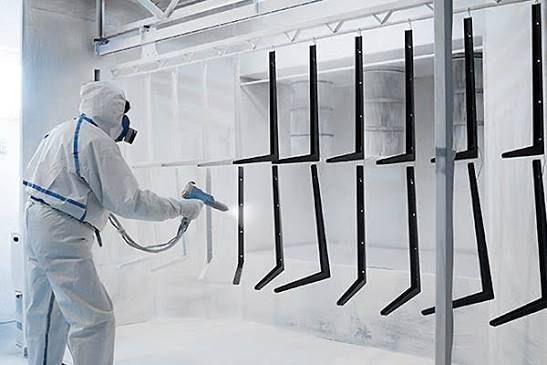
The powder spray gun charges the powder particles as they pass through the gun. The grounded workpiece attracts the charged particles, allowing the powder to accumulate on the surface.
This electrostatic process helps distribute powder across the component and can improve transfer efficiency.
Application parameters such as gun voltage, powder flow, spray distance, grounding, and component geometry can influence the resulting coating.
4. Overspray Recovery
Not every powder particle lands on the workpiece. Excess powder remains in the application area and can be collected through a recovery system.
Depending on the equipment configuration and powder characteristics, recovered material may be reused or processed according to the production system's requirements.
Recovery can help reduce material waste and maintain a cleaner working environment.
5. Curing
After application, the coated component enters a curing oven. Heat causes the powder particles to melt, flow, and chemically cure into a continuous coating film.
Curing conditions depend on the powder formulation and manufacturer specifications. Temperature, time, component thickness, and oven airflow can all influence curing performance.
Insufficient curing may affect coating durability, while excessive heat can affect appearance or substrate properties.
6. Cooling and Inspection
After leaving the curing oven, components are allowed to cool before handling or further processing.
Finished parts can then undergo inspection for coating thickness, color, gloss, adhesion, surface defects, and other application-specific requirements.
Powder Coating System Types
Different production environments require different system configurations.
Manual Powder Coating Systems
Manual systems are operated by technicians using handheld spray guns. They can provide flexibility for different component sizes and shapes.
Automatic Powder Coating Systems
Automatic systems use programmed spray guns and controls to apply powder consistently. They are commonly integrated into higher-volume production lines.
Batch Powder Coating Systems
Batch systems process groups of components together. They can be suitable when products vary significantly in dimensions, shapes, or production requirements.
Continuous Powder Coating Lines
Continuous lines use conveyors to move components through pretreatment, coating, curing, and cooling stages. These systems are designed for repeatable production workflows.
Factors to Consider When Selecting a System
Choosing a powder coating system requires consideration of both the coating process and production environment.
Important factors include:
- Part size and geometry
- Production volume
- Powder chemistry
- Required coating thickness
- Manual or automatic application
- Oven capacity and curing requirements
- Conveyor configuration
- Powder recovery requirements
- Available floor space
- Quality-control requirements
For complex components, system configuration may also need to account for recesses, edges, internal surfaces, and areas that are difficult to coat electrostatically.
Best Practices for Powder Coating
Consistent results depend on controlling each stage of the process rather than focusing only on the spray gun.
Useful practices include:
- Maintain effective grounding of workpieces.
- Keep application equipment clean and properly adjusted.
- Follow the powder manufacturer's curing specifications.
- Monitor coating thickness regularly.
- Maintain pretreatment chemistry within specified parameters.
- Keep powder storage conditions controlled.
- Inspect finished components for defects.
- Establish consistent conveyor speeds and process settings.
Regular equipment maintenance can also help reduce process variation and unexpected production interruptions.
Who Uses Powder Coating Systems?
Powder coating systems are used by manufacturers and finishing operations working with metal products across several industries.
Common applications include:
- Automotive components
- Agricultural equipment
- Industrial machinery
- Metal furniture
- Electrical cabinets and enclosures
- Construction components
- Appliances
- Architectural metalwork
- General fabricated metal products
The required system configuration varies significantly between these applications.
Frequently Asked Questions
What is a powder coating system?
A powder coating system is a group of equipment used to prepare, apply, recover, and cure dry powder coatings on components, commonly metal substrates.
How does a powder coating gun work?
A powder coating gun electrically charges powder particles as they are sprayed. The charged particles are attracted to a grounded workpiece, allowing them to form an initial coating layer.
Why does powder coating need an oven?
The curing oven heats the applied powder until it melts, flows, and cures into a continuous protective coating.
What equipment is included in a powder coating line?
A typical line can include pretreatment equipment, powder booths, spray guns, powder feed systems, recovery equipment, curing ovens, conveyors, and process controls.
How can powder coating quality be improved?
Quality can be improved through proper surface preparation, effective grounding, controlled powder application, appropriate curing conditions, regular equipment maintenance, and consistent inspection procedures.
Conclusion
Powder coating systems combine several process stages to transform dry coating powder into a durable finished surface. Surface preparation, electrostatic application, powder recovery, curing, and inspection each contribute to the final result.
The right system configuration depends on production volume, component characteristics, coating chemistry, automation requirements, and quality specifications. By controlling these factors systematically, manufacturers can establish a more consistent and reliable powder coating process.