Home Automation Devices in Egypt: A Guide to Smart Living
Home automation is changing how people manage everyday activities in residential spaces. From controlling lights with a smartphone to monitoring security cameras remotely, smart home technology allows homeowners and tenants to manage selected household functions with greater convenience and visibility. In Egypt, these technologies can be useful in apartments, villas, gated communities, and other residential properties.
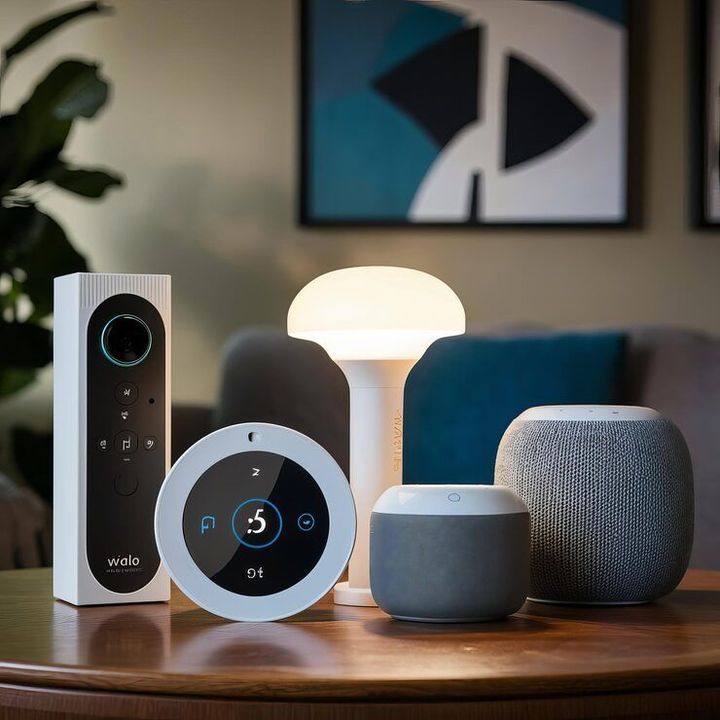
Home automation devices connect household equipment through wireless networks, dedicated hubs, sensors, or compatible control systems. Depending on the setup, users can adjust lighting, manage air conditioning, receive security alerts, and automate certain routines without operating each device manually.
Interest in smart home technology also relates to practical household needs. Egypt's hot summers make indoor temperature management important, while electricity consumption, home security, and convenient control of household appliances are considerations for many residents.
However, a smart home does not necessarily require a complete system. Starting with one or two compatible devices can help users understand the technology before expanding their setup. Choosing suitable equipment depends on the home's electrical infrastructure, internet connection, climate, security requirements, and the user's preferred level of automation.
What Are Home Automation Devices?
Home automation devices are electronic products that allow household functions to be monitored, controlled, or automated. They may connect to a smartphone application, a central smart home hub, a voice assistant, or another compatible device.
Some products operate independently, while others communicate with multiple devices to create coordinated routines. For example, a smart lighting system may turn selected lights on at a scheduled time, while a temperature sensor can provide readings that help users manage indoor conditions.
A typical smart home setup includes three main elements: connected devices, a communication network, and a control interface. Sensors collect information, controllers process commands or rules, and connected equipment performs the requested action.
Not every device supports every communication method. Compatibility should therefore be checked before purchasing equipment, particularly when combining products from different manufacturers.
Common Home Automation Devices Used in Egypt
1. Smart Lighting Systems
Smart lighting is one of the simplest ways to introduce automation into a home. Smart bulbs, switches, dimmers, and lighting controllers allow users to adjust brightness, change supported color settings, or create schedules through an application.
In Egyptian homes, smart lighting can be useful for apartments, living rooms, bedrooms, entrances, and outdoor areas. Residents can schedule selected lights to switch on in the evening or turn them off automatically when they are not needed.
Smart switches can be suitable when users want to control existing lighting fixtures, although installation requirements depend on the wiring and switch design. Some products require a neutral wire or specific electrical arrangements.
Before selecting a lighting system, check voltage compatibility, installation requirements, wireless connectivity, and whether the lights remain controllable when internet access is unavailable.
2. Smart Air Conditioning and Temperature Controls
Air conditioning is an important part of indoor comfort in Egypt, especially during hot weather. Smart temperature controllers and compatible infrared controllers can make it easier to manage cooling schedules and adjust settings remotely.
For example, a resident may switch on a compatible air conditioner before returning home or create a schedule that reduces unnecessary operation during certain hours.
The available functions depend on the air conditioner's design and the controller being used. Some systems provide temperature feedback, while others simply transmit commands similar to those sent by a conventional remote control.
Users should verify compatibility with their specific air conditioner rather than assuming every smart controller supports every model. Proper insulation, regular filter cleaning, and appropriate temperature settings remain important even when automation is available.
3. Smart Security Cameras
Smart security cameras allow residents to monitor selected areas through live video, motion alerts, and recorded footage. Depending on the model, they may support night vision, two-way audio, person detection, and local or cloud-based storage.
These devices can be used at entrances, inside common living areas, or in other suitable locations where monitoring is appropriate.
Before installation, users should consider camera placement, image quality, storage arrangements, and the security of the account used to access recordings. Outdoor cameras should be designed for the relevant environmental conditions, including heat and dust exposure.
Privacy is equally important. Cameras should be positioned responsibly, and recording should respect the privacy of household members, visitors, and neighboring properties.
4. Smart Door Locks and Video Doorbells
Smart locks provide alternative ways to manage access to a home. Depending on the product, they may support PIN codes, authorized mobile access, fingerprint recognition, or temporary digital credentials.
Video doorbells combine a doorbell with a camera, allowing residents to see or communicate with visitors through a connected device. Some models send alerts when someone approaches the entrance.
These products may be useful for apartments and villas, but installation compatibility is essential. Door thickness, lock dimensions, existing hardware, and building restrictions can determine whether a particular model is suitable.
Users should also check what happens during a power failure, depleted battery, or network outage. A reliable backup entry method and clear access-management procedures are important considerations.
5. Smart Plugs and Appliance Controllers
Smart plugs allow compatible electrical appliances to be switched on or off remotely or according to a schedule. They can be useful for lamps, selected small appliances, and other equipment that supports the plug's electrical rating.
For example, a smart plug may automatically turn off a lamp at bedtime or provide usage information if energy monitoring is supported.
However, smart plugs are not suitable for every appliance. High-power equipment, heating devices, pumps, and motors may require specialized controls designed for their electrical load and operating characteristics.
Users should verify voltage, current rating, grounding requirements, and the manufacturer's instructions. A smart plug should never be treated as a substitute for proper electrical protection.
6. Water Leak and Environmental Sensors
Water leak sensors detect moisture in locations where leaks may develop, such as beneath sinks, near washing machines, or close to water heaters. Depending on the system, a sensor can send a mobile notification or trigger a compatible shutoff mechanism.
Environmental sensors may also measure temperature, humidity, smoke, or air quality, depending on the device.
These products can help households respond to certain problems sooner, but their capabilities differ. A basic leak sensor may only provide an alert, whereas an integrated system may support automatic water shutoff.
Sensors should be placed according to manufacturer guidance and tested periodically. They supplement, rather than replace, appropriate maintenance and essential safety equipment.
Benefits of Home Automation for Egyptian Households
One important benefit of home automation is convenience. Controlling compatible lights, appliances, and security equipment from a single interface can simplify daily routines, particularly for people managing several household functions.
Automation can also improve visibility into home activity. Security alerts, door sensors, and connected cameras may help residents check selected areas while away, subject to network availability and device limitations.
Energy management is another potential advantage. Schedules, occupancy sensors, and smart controls can help reduce unnecessary lighting or cooling operation. However, energy savings are not guaranteed. Results depend on existing habits, device efficiency, settings, and how the system is used.
Smart home technology may also support accessibility. Voice controls and automated routines can reduce the number of physical actions required to operate certain household functions.
The overall benefit depends on selecting devices that solve genuine household problems rather than adding unnecessary complexity.
Internet Connectivity, Compatibility, and Installation
A reliable home network is important for many connected devices. Wi-Fi products may require adequate wireless coverage, while other systems use Bluetooth, Zigbee, Thread, or a dedicated hub.
In larger villas or homes with thick walls, wireless coverage may vary between rooms. A router's location and the home's layout can affect device responsiveness.
Compatibility is equally important. Before combining products, check whether they support the same platform, communication standards, and required control features. Matter compatibility may help different supported products work together, but it does not guarantee that every feature will be available across all platforms.
Electrical installation deserves particular attention. Smart switches, wiring changes, and high-power equipment should be installed by qualified professionals when required. Residents of apartments should also check building rules before modifying electrical systems, doors, or shared infrastructure.
Home Automation Security and Privacy
Connected devices introduce digital security considerations alongside their practical benefits. Weak passwords, outdated software, and poorly secured networks can increase the risk of unauthorized access.
Users should create strong, unique passwords, enable multifactor authentication when available, install security updates, and review which applications or household members have access to each device.
It is also useful to check how cameras and other sensors store information, whether recordings are uploaded to external servers, and how long data is retained.
Where supported, local control can reduce dependence on external cloud services for certain functions. However, remote access and some advanced features may still require an internet connection or a provider's platform.
Households should review device permissions and disable features they do not need. A practical smart home balances convenience with security, privacy, and reliable manual controls.
How to Choose the Right Smart Home Devices
Start by identifying a specific need, such as controlling lights, managing air conditioning, monitoring an entrance, or detecting water leaks. Choose devices that address that need and work with the home's existing infrastructure.
Next, check compatibility, electrical requirements, connectivity, installation complexity, warranty conditions, and software support. Consider whether the product continues to perform essential functions during internet outages.
For renters, portable smart bulbs, compatible plugs, and removable sensors may be easier to install than permanent wiring changes. Homeowners may have more flexibility to introduce integrated switches, centralized controls, or professionally installed systems.
It is often practical to begin with a small setup, test how it works, and expand only when the benefits are clear.
Conclusion
Home automation devices in Egypt offer practical ways to manage lighting, air conditioning, security, appliances, and household monitoring. Smart bulbs, connected cameras, temperature controllers, door locks, and environmental sensors each serve different purposes, and their usefulness depends on the home's requirements.
Before selecting equipment, consider compatibility, internet reliability, electrical safety, privacy, maintenance, and backup operation. A carefully planned system can improve convenience and provide better visibility into household activity without requiring every device to be automated.
The most effective approach is to begin with clear priorities, choose reliable and compatible equipment, and expand gradually as household needs evolve.