Halo Engagement Rings Tips: Understanding Designs, Settings, and Diamond Shapes
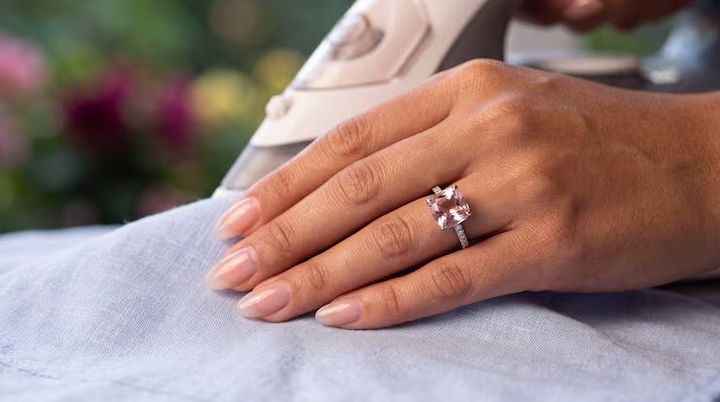
Halo engagement rings are designed around a central gemstone surrounded by a circle of smaller stones.
This framing creates a distinct outline and can change how the center diamond is perceived. Understanding halo designs, ring settings, and diamond shapes helps readers understand how different elements affect appearance, durability, and everyday wear.
Context
What a Halo Setting Means
A halo is a design style in which smaller diamonds or other gemstones surround a center stone. The surrounding stones create a visual frame, adding detail around the main gem and sometimes making the center stone appear larger. Halo designs can use a single row of accent stones, a double halo, or arrangements with colored gemstones.
It is useful to distinguish a ring's setting from its overall style. The setting describes how a gemstone is held in place, such as by prongs, a bezel, or a channel. The halo describes the surrounding design, so a halo ring can combine with several different setting methods. GIA's recent guidance also explains that halo designs can influence appearance, light performance, and wearability.
How Halo Designs Developed
Halo jewelry has connections with historical decorative styles, including Georgian, Victorian, and Art Deco influences. Earlier designs often placed diamonds or colored gemstones around a central stone to create a framed appearance.
Modern halo engagement rings continue this concept while using different metals, diamond shapes, proportions, and setting techniques. Some designs have a delicate outline, while others use wider halos, multiple rows, or geometric patterns.
Importance
Why the Center Shape Matters
Diamond shape is one of the most visible parts of a halo engagement ring. Round, oval, cushion, pear, emerald, princess, marquise, and heart shapes can create different visual effects.
Elongated shapes such as oval, pear, and marquise can create a longer outline, while round and cushion shapes produce more compact proportions. Step-cut shapes such as emerald cuts have broad, open facets that emphasize reflections and clarity rather than the dense sparkle associated with many brilliant cuts. GIA explains that shape, cut style, symmetry, and setting work together to influence a diamond's appearance.
Common Design Combinations
A halo can be paired with different center stones and band designs. Common combinations include:
- Round center with a circular halo
- Oval center with a slightly elongated halo
- Cushion center with a soft, rounded halo
- Pear center with a pointed or teardrop outline
- Emerald center with a rectangular halo
- Marquise center with a narrow, elongated frame
The halo does not have to match the center stone exactly. A round halo around a cushion or rectangular center can create contrast, while a shaped halo can follow the outline of the central stone.
Settings and Everyday Wear
Prong settings hold a gemstone with small metal claws, leaving more of the stone visible. Bezel settings surround the edge of a gemstone with metal and can provide additional protection, while channel settings hold smaller stones within a metal channel.
Halo designs contain many small stones, so the condition of these stones and their securing points matters. GIA notes that halo rings may require routine checks because small stones and their prongs can experience wear over time. Pointed shapes such as pear and marquise diamonds also need careful protection around their tips.
Simple Comparison of Shapes
| Diamond shape | General appearance | Common halo approach | Main consideration |
|---|---|---|---|
| Round | Balanced and symmetrical | Circular halo | Proportion and symmetry |
| Oval | Elongated and smooth | Oval or rounded halo | Length-to-width proportion |
| Cushion | Soft square or rectangle | Rounded halo | Corner shape and facets |
| Pear | Teardrop outline | Pear or rounded halo | Protection for pointed tip |
| Emerald | Rectangular and linear | Rectangular halo | Clarity and facet visibility |
| Marquise | Long with pointed ends | Elongated halo | Protection at both points |
| Princess | Square with sharp corners | Square halo | Corner protection |
Recent Updates
Changing Interest in Diamond Shapes
Recent engagement-ring coverage has highlighted renewed interest in elongated and vintage-inspired shapes. The Knot's 2025 trend reporting pointed to increased attention around marquise shapes and antique-style diamond cuts, while traditional shapes such as round, oval, and pear remained significant in its reported data. These developments show how halo designs can adapt to different center-stone preferences.
More Attention to Setting Details
In 2025 and 2026, educational guidance from GIA has placed emphasis on understanding the difference between a setting and a ring style. Its August 2026 guide explains that setting construction influences gemstone security, light performance, and wearability, while halo designs can range from subtle frames to larger decorative arrangements.
This practical focus is useful because appearance is only one part of ring design. The relationship between the center stone, halo, metal, prongs, band width, and everyday activities can influence how a ring performs during regular wear.
Laboratory-Grown Diamonds in the Conversation
Laboratory-grown diamonds have also become more visible in discussions about engagement rings. GIA's 2024 research described continued growth in the quantity, size, and quality of laboratory-grown diamonds and explained the two principal growth methods, HPHT and CVD. A halo setting can be designed around either a laboratory-grown or naturally formed diamond, so the basic setting concepts remain relevant to both.
Tools and Resources
Diamond Shape References
A diamond shape guide can help readers compare outlines, proportions, and facet patterns before considering a halo design. Educational references from gemological organizations can also explain differences between shape, cut style, clarity, and color.
Ring Measurement and Proportion Tools
Ring-size charts and measurement guides can help explain finger circumference and ring sizing. Visual proportion tools can also help readers compare a center stone with different halo widths, although screen-based previews may not reproduce real-world scale exactly.
Diamond Grading Reports
A diamond grading report provides documented information about characteristics such as shape, measurements, color, clarity, and other grading details. For a ring containing several stones, readers may also want to understand whether documentation applies to the center diamond, the smaller halo stones, or both.
Setting and Maintenance Checklists
A simple checklist can include prong condition, stone security, metal wear, surface cleanliness, and fit. These points are particularly relevant to halo designs because they contain multiple small stones and securing points.
FAQs
What are halo engagement rings?
Halo engagement rings feature a center gemstone surrounded by smaller stones, usually diamonds. The surrounding frame adds visual detail and can make the center stone appear larger.
Which diamond shapes work with halo engagement rings?
Round, oval, cushion, pear, emerald, marquise, princess, and heart shapes can all be used in halo engagement rings. The halo can follow the center stone's outline or create visual contrast.
Do halo engagement rings require more maintenance?
They can require closer routine inspection because they contain multiple small stones and securing points. GIA notes that halo prongs may experience wear over time, making periodic checks relevant.
What is the difference between a halo and a bezel setting?
A halo surrounds the center stone with smaller accent stones, while a bezel uses a metal rim around the gemstone's edge to hold and protect it. A ring can incorporate a halo design with different methods of securing the center stone.
Are laboratory-grown diamonds suitable for halo designs?
A laboratory-grown diamond can be used as the center stone in a halo design. Its suitability for a particular setting depends on the stone's shape, measurements, setting construction, and intended wear conditions.
Conclusion
Halo engagement rings combine a central gemstone with a surrounding frame of smaller stones, creating many possible visual arrangements. Diamond shape, setting method, halo proportion, metal, and stone protection all contribute to the final design and everyday characteristics. Recent guidance from 2024–2026 shows continued attention to varied shapes, vintage-inspired cuts, practical setting details, and laboratory-grown diamonds. Understanding these elements provides a clearer foundation for comparing different halo ring designs.