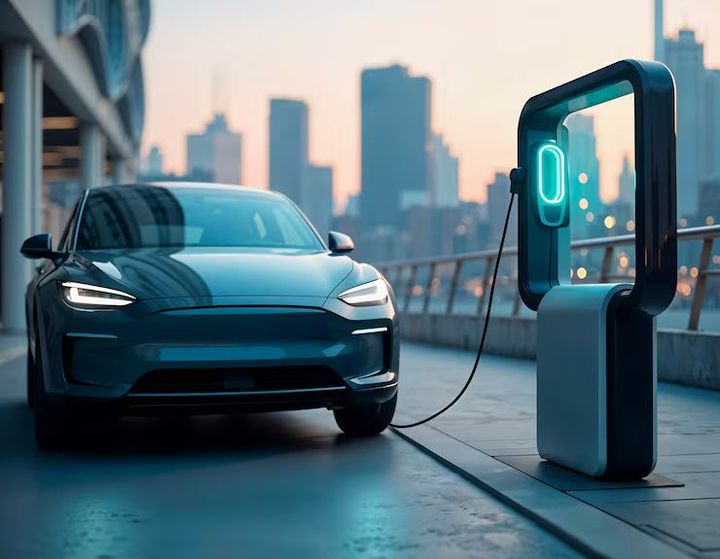
Electric Vehicles: Explore Essential Basics and Key Information
Electric Vehicles, commonly called EVs, are vehicles that use electric motors for propulsion instead of relying only on an internal combustion engine. They receive electrical energy from a battery or another electrical source, which is then converted into motion. EVs include two-wheelers, three-wheelers, passenger cars, buses, trucks, and other specialized vehicles.
The basic idea of electric transportation is not new. Early electric vehicles appeared during the development of automobiles, but limitations involving battery capacity, charging infrastructure, vehicle range, and manufacturing made petrol and diesel vehicles more common for many decades. Advances in batteries, electronics, electric motors, and digital controls have renewed interest in electric mobility.
A modern electric vehicle generally contains a battery pack, electric motor, power electronics, charging system, thermal-management components, and electronic control systems. Instead of sending fuel to an engine for combustion, electrical energy is delivered to the motor through power-control equipment.
Main Types of Electric Vehicles
Electric vehicles can be classified according to how they receive and use energy.
- Battery Electric Vehicles: These rely entirely on rechargeable batteries and electric motors for propulsion.
- Hybrid Electric Vehicles: These combine an internal combustion engine with an electric motor and battery.
- Plug-in Hybrid Electric Vehicles: These can recharge their batteries from an external electrical source and also contain an internal combustion engine.
- Fuel-cell Electric Vehicles: These use hydrogen in a fuel cell to produce electricity for an electric motor. Their availability varies considerably by region.
Battery electric vehicles are particularly visible in India's two-wheeler, three-wheeler, passenger-vehicle, bus, and emerging commercial-vehicle segments.
How Electric Vehicles Work
When an EV is switched on, electrical energy from the battery passes through power electronics that regulate the flow of electricity to the motor. The motor converts this electrical energy into mechanical rotation, which turns the vehicle's wheels.
During braking, many EVs can use regenerative braking. In this process, the electric motor can operate as a generator and send some electrical energy back toward the battery. The amount recovered depends on vehicle design, driving conditions, battery state, and control settings.
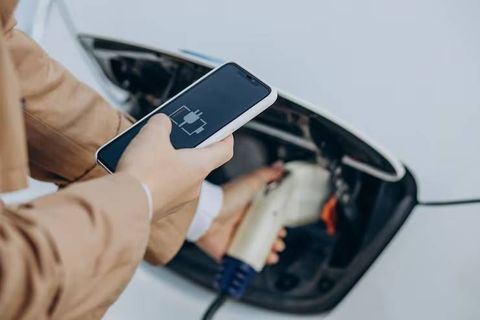
Charging can take place through different equipment and power levels. Charging time depends on battery capacity, charger characteristics, vehicle limits, battery temperature, and the amount of energy that needs to be restored.
Importance
Electric Vehicles matter because transportation is closely connected with energy use, air quality, urban mobility, and technological development. EVs can have no tailpipe emissions while operating, although their overall environmental impact also depends on electricity generation, battery production, manufacturing, and eventual battery processing.
For drivers, one important difference is the way energy is delivered to the vehicle. An EV can be charged at a suitable charging point rather than relying on a conventional liquid-fuel refuelling process. This changes how vehicle use may be planned, particularly for people who have access to charging where they live or work.
EVs also affect cities and transportation systems. Electric buses and three-wheelers can be used in public and shared transportation, while electric two-wheelers are increasingly relevant for short-distance travel.
Factors That Affect EV Use
The practical experience of using an electric vehicle depends on several factors rather than battery capacity alone.
| Factor | What it means | Effect on use |
|---|---|---|
| Battery capacity | Amount of electrical energy the battery can store | Influences possible driving distance |
| Charging power | Rate at which electricity can enter the battery | Affects charging duration |
| Driving conditions | Traffic, speed, temperature, road conditions, and load | Influences energy consumption |
| Vehicle weight | Total mass of the vehicle and occupants | Can affect energy requirements |
| Regenerative braking | Recovery of some energy during deceleration | Can improve energy recovery |
| Charging access | Availability of suitable charging points | Influences travel planning |
| Battery temperature | Thermal condition of the battery | Can affect charging and performance |
| Vehicle design | Motor, aerodynamics, tyres, controls, and other features | Influences overall efficiency |
Battery Basics
Most modern EVs use rechargeable lithium-ion battery systems, although battery chemistry varies between models. A battery pack contains many individual cells grouped into modules or larger assemblies.
A battery-management system monitors conditions such as voltage and temperature. It helps control charging and discharging within the limits defined by the vehicle's design.
Battery life is influenced by factors such as temperature, charging patterns, depth of discharge, usage conditions, and battery chemistry. Manufacturers specify operating limits and maintenance requirements for particular vehicles.
Recent Updates
From 2024 through 2026, India's electric-vehicle sector has seen continued development in vehicle adoption, charging infrastructure, battery technology, domestic manufacturing, and government policy.
Government data shows that registered EVs increased from 1.74 lakh in financial year 2019–20 to 19.68 lakh in 2024–25. EV penetration among registered vehicles reached 7.50% in 2024–25 according to data presented by the Ministry of Heavy Industries using the Vahan portal.
The PM E-DRIVE scheme has been a major part of India's recent electric-mobility framework. The scheme was introduced in 2024 and has subsequently undergone amendments and extensions. The current official PM E-DRIVE portal states that the scheme has been extended to 31 March 2028 for several vehicle categories, with different treatment for particular segments.
The scheme covers areas including electric two-wheelers, three-wheelers, ambulances, trucks, buses, charging infrastructure, and testing-agency upgrades. Its implementation has also included developments involving electric trucks, buses, ambulances, and public charging infrastructure.
Charging infrastructure is another area of development. The Ministry of Power issued guidelines concerning electric-vehicle charging infrastructure and later published guidelines covering battery charging and battery-swapping stations. These measures address infrastructure, electricity connections, standards, and operational arrangements.
Battery swapping is receiving attention as an alternative to conventional plug-in charging for suitable vehicle categories. Instead of waiting for a vehicle battery to recharge, a compatible depleted battery can be replaced with a charged battery at an appropriate swapping station. The approach requires compatible battery designs, safety procedures, station infrastructure, and suitable operational systems.
Another trend is greater attention to domestic manufacturing. Government programs have included measures related to advanced automotive technology, vehicle components, batteries, and manufacturing capabilities. These developments are intended to strengthen India's broader electric-mobility ecosystem.
Laws or Policies
Electric Vehicles in India are shaped by national schemes, vehicle regulations, electricity rules, safety standards, environmental requirements, and state-level policies. The exact requirements depend on the vehicle category, location, use, and charging arrangement.
The PM E-DRIVE scheme is one of the central national programs supporting electric mobility. The official scheme information identifies eligible categories and provides operational guidelines for different vehicle segments and charging infrastructure. Current notifications should be checked because eligibility, timelines, and implementation provisions can change.
The earlier FAME II scheme operated from 2019 to 2024 and supported various electric-vehicle categories and charging infrastructure. Government information records support for electric two-wheelers, three-wheelers, passenger cars, buses, and charging points under the scheme.
Charging infrastructure is also governed by national guidelines. The Ministry of Power's 2025 guidance on battery charging and swapping stations established provisions relating to battery charging stations, swapping stations, electricity connections, and operating arrangements.
Vehicle safety and technical requirements are handled through applicable automotive regulations and standards. These can cover battery systems, electrical components, vehicle construction, testing, and other technical aspects. Requirements can differ according to vehicle classification.
State governments may also have their own electric-mobility policies covering areas such as registration-related measures, charging infrastructure, public transportation, manufacturing, and local implementation. Consequently, the rules applicable to an EV can vary between states.
For readers researching a particular vehicle or charging installation, official information from the Ministry of Heavy Industries, Ministry of Power, Ministry of Road Transport and Highways, BIS, and the relevant state authority provides the appropriate regulatory reference.
Tools and Resources
Several resources can help readers understand Electric Vehicles and their operation.
Vahan Portal provides official vehicle-registration information and is used by government departments for vehicle-related data. It can help readers understand broader registration trends when official datasets are published.
PM E-DRIVE Portal provides information about the national electric-mobility scheme, eligible vehicle categories, notifications, operational guidelines, and scheme updates.
Charging maps and navigation applications can help users identify charging locations and plan journeys. Their coverage and information accuracy can vary, so users may need to verify whether a particular charging point is operational and compatible with their vehicle.
EV range calculators can help estimate energy requirements based on distance, vehicle efficiency, weather, traffic, and other assumptions. Such calculations are estimates rather than precise predictions.
Battery-health information can help explain battery capacity, charging cycles, temperature, and degradation. Vehicle manuals and manufacturer documentation provide model-specific information about charging limits and battery care.
Government policy portals are useful for checking current rules and scheme notifications. Because EV policies can change, current government documents are more reliable than older summaries.
FAQs
What are Electric Vehicles?
Electric Vehicles are vehicles that use electric motors for propulsion. They may receive energy from rechargeable batteries, hydrogen fuel cells, or a combination of electric and conventional power systems, depending on the vehicle type.
How do Electric Vehicles work?
Electric Vehicles use stored electrical energy to power an electric motor. Power electronics regulate electricity between the battery and motor, while regenerative braking can recover some energy during deceleration.
How long does it take to charge an Electric Vehicle?
Charging time varies according to battery capacity, charger power, vehicle charging limits, battery temperature, and the amount of energy required. A higher-power charger can generally transfer energy more quickly when the vehicle supports that charging level.
What affects Electric Vehicle range?
Range can be influenced by battery capacity, vehicle weight, speed, traffic, road conditions, temperature, driving style, tyre condition, climate-control use, and other factors. The stated range of a vehicle is therefore not necessarily identical to the distance achieved under every driving condition.
What is the PM E-DRIVE scheme for Electric Vehicles?
PM E-DRIVE is an Indian government scheme supporting electric mobility through measures covering selected vehicle categories, charging infrastructure, and testing capabilities. The scheme has undergone several amendments and extensions, so current official notifications determine applicable provisions.
Conclusion
Electric Vehicles use electric propulsion systems to convert stored electrical energy into motion and can include two-wheelers, three-wheelers, cars, buses, trucks, and other vehicle categories. Their operation depends on batteries, motors, charging systems, power electronics, and supporting infrastructure. India's EV ecosystem has expanded through vehicle adoption, charging development, domestic manufacturing programs, and evolving national and state policies. Understanding battery capacity, charging, range, safety, infrastructure, and current regulations provides a useful foundation for learning about electric mobility.