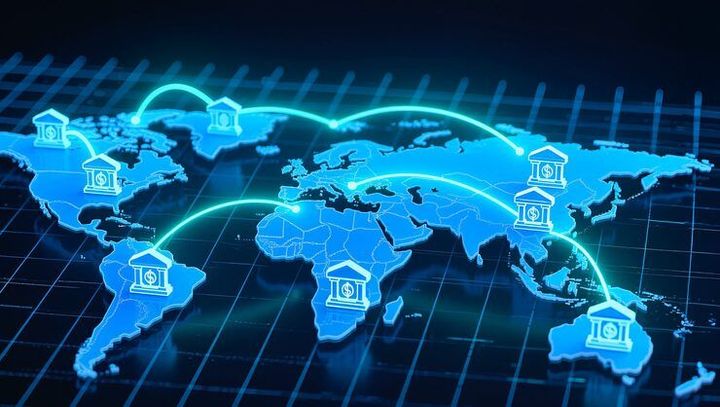
Cross-Border Payment Infrastructure: Guide to Systems and Practical Insights
Cross-border payment infrastructure is the network of banks, payment institutions, financial messaging systems, clearing arrangements, payment processors, foreign-exchange mechanisms, and technology platforms that enable money to move between different countries.
Unlike a domestic payment, a cross-border transaction may involve multiple currencies, financial institutions, regulatory systems, and settlement networks. A payment from a company in Germany to a supplier in Japan, for example, can pass through several financial institutions before the recipient receives the funds.
The infrastructure behind these transactions is designed to connect different financial systems while handling currency conversion, identity checks, transaction records, settlement, and regulatory requirements.
Main Participants
Several participants can contribute to a cross-border payment:
Sender: The individual or organization initiating the transaction.
Originating bank or payment institution: Receives the payment instruction and starts processing.
Correspondent bank: Provides access to another country's banking network when direct connections are unavailable.
Payment processor: Handles transaction processing between participating institutions.
Clearing system: Helps calculate and exchange payment obligations between financial institutions.
Settlement institution: Facilitates the final transfer of funds.
Foreign-exchange provider: Supports conversion between currencies.
Recipient institution: Credits the funds to the final recipient.
Regulatory authorities: Establish rules for financial crime prevention, reporting, and payment operations.
How a Cross-Border Payment Works
A simplified transaction can follow this sequence:
The sender provides payment instructions.
The originating institution verifies the transaction and sender information.
The payment instruction is transmitted through an appropriate financial messaging or payment network.
Intermediary institutions may process the transaction when required.
Currency conversion can occur when the sender and recipient use different currencies.
Clearing and settlement take place between participating institutions.
The recipient's institution receives the funds.
The recipient's account is credited after required checks are completed.
The actual process varies according to the countries, currencies, institutions, payment method, and regulatory framework involved.
Importance
International Trade
Cross-border payment infrastructure supports international trade by allowing companies to pay suppliers, receive international revenue, manage invoices, and transfer funds across jurisdictions.
Manufacturers, distributors, technology companies, exporters, and importers can all depend on international payment networks as part of their financial operations.
Global Workforce Payments
Companies with international teams may need to transfer funds to employees, contractors, and other recipients located in different countries. The payment infrastructure must accommodate different currencies, banking systems, identification requirements, and local regulations.
International Commerce
Digital commerce has expanded the number of transactions involving multiple countries. A customer may purchase from a company registered in another jurisdiction while using a different currency and payment method.
Payment infrastructure connects the merchant's financial system with the customer's payment environment.
Financial Inclusion
Cross-border payment systems can also connect individuals and businesses to international financial networks. Account-based payments, mobile payment systems, digital wallets, and other electronic channels can expand access to international transactions where regulatory and infrastructure conditions permit.
Risk Management
Payment infrastructure also contributes to transaction monitoring and financial controls. Institutions can use automated systems to identify unusual transaction patterns, screen participants, verify information, and maintain records required by applicable regulations.
Recent Updates
Faster International Payments
Payment infrastructure has increasingly moved toward faster processing and more direct connectivity. Instant-payment networks in individual countries and regional systems can provide foundations for faster international transactions when interoperability arrangements exist.
Initiatives such as the G20 roadmap for improving cross-border payments have focused on increasing speed, transparency, accessibility, and efficiency across international payment systems.
ISO 20022 Adoption
ISO 20022 is an international financial messaging standard that provides a structured way to exchange payment information.
Its adoption across major financial infrastructures has become an important development in international payments. Structured data can provide more detailed information about parties and transactions, which can support payment processing, compliance checks, reconciliation, and reporting.
API-Based Connectivity
Application programming interfaces, commonly called APIs, allow financial institutions and payment platforms to connect software systems directly.
APIs can support functions such as payment initiation, account information, transaction status, foreign-exchange information, and reconciliation. This reduces dependence on manual data entry and can make payment workflows easier to integrate into business software.
Greater Use of Automation
Payment providers increasingly use automation for transaction screening, reconciliation, routing, exception handling, and operational monitoring.
Automated workflows can process large transaction volumes while applying predefined rules to individual transactions.
Digital Currency Experiments
Central banks and financial institutions in several jurisdictions continue to research or pilot central bank digital currencies and other digital payment infrastructure.
These projects vary considerably by country. Some focus on domestic payments, while others investigate wholesale settlement, international interoperability, or cross-border applications.
Increased Focus on Transparency
International payment systems are also receiving greater attention regarding transaction status, fees, foreign-exchange information, and delivery times.
Greater transparency can help businesses reconcile international transactions and understand where a payment is within the processing chain.
Laws or Policies
Cross-border payments operate within multiple legal and regulatory frameworks. Requirements differ between countries, so organizations must evaluate the rules applicable to each transaction corridor.
Anti-Money Laundering Requirements
Financial institutions generally maintain anti-money-laundering controls designed to detect and prevent the movement of funds associated with illegal activities.
These controls can include transaction monitoring, customer identification, recordkeeping, and reporting requirements.
Know Your Customer Requirements
Know Your Customer, or KYC, procedures help financial institutions establish the identity and relevant information of customers.
For international transactions, institutions may need information about individuals, companies, beneficial owners, business relationships, and transaction purposes.
Sanctions Screening
International payments may be screened against sanctions and restricted-party lists maintained by relevant authorities.
A payment involving a restricted party, jurisdiction, vessel, organization, or other designated entity may require additional review or may be prohibited depending on applicable law.
Data Protection
Cross-border transactions involve financial and personal information. Data protection requirements can therefore affect how payment information is collected, stored, processed, and transferred internationally.
Organizations operating across multiple jurisdictions may need to consider privacy regulations in both the originating and receiving countries.
Foreign-Exchange Regulations
Some countries maintain specific rules governing foreign-currency transactions, reporting, documentation, or movement of funds across national borders.
Businesses should determine which requirements apply to their particular payment corridor rather than assuming that one country's rules apply universally.
Payment Licensing
Payment institutions, electronic-money institutions, money-transfer businesses, and other financial intermediaries may require authorization from relevant regulatory authorities.
Licensing frameworks differ significantly between jurisdictions and may impose requirements related to capital, governance, safeguarding, reporting, cybersecurity, and consumer protection.
Systems and Infrastructure Components
| Component | Primary Function | Typical Role |
|---|---|---|
| Correspondent banking | Connects institutions across countries | International bank transfers |
| Payment processors | Processes transaction instructions | Digital and commercial payments |
| Clearing systems | Calculates payment obligations | Interbank processing |
| Settlement systems | Finalizes movement of funds | Bank and institutional settlement |
| Messaging networks | Exchanges structured payment information | Payment instructions and status |
| APIs | Connects software systems | Automated payment workflows |
| FX infrastructure | Handles currency conversion | Multi-currency transactions |
| Compliance platforms | Screens and monitors transactions | Regulatory controls |
| Digital wallets | Stores and transfers electronic funds | Consumer and business payments |
| Reconciliation systems | Matches payments with records | Accounting and financial operations |
Tools and Resources
Payment Gateways and Processing Platforms
Businesses operating internationally can integrate payment processing platforms with websites, applications, accounting systems, or enterprise software.
The appropriate architecture depends on transaction volume, countries served, supported currencies, payment methods, and regulatory requirements.
Banking APIs
Banking APIs can connect internal financial applications with external banking or payment infrastructure.
Common functions include payment initiation, transaction status updates, account information, and automated reconciliation.
Treasury Management Systems
Large organizations may use treasury technology to manage multiple bank accounts, currencies, liquidity positions, payment schedules, and financial exposures.
These systems can provide centralized visibility across international financial operations.
Reconciliation Software
International transactions can involve multiple currencies and transaction references. Reconciliation tools help match bank records, invoices, payment instructions, and accounting entries.
Automated reconciliation is particularly useful when transaction volumes are high.
Compliance Technology
Compliance platforms can support identity verification, sanctions screening, transaction monitoring, risk assessment, and regulatory reporting.
The exact controls required depend on the institution, jurisdiction, transaction type, and applicable regulations.
FAQs
What is cross-border payment infrastructure?
Cross-border payment infrastructure is the combination of financial institutions, payment networks, clearing and settlement systems, technology platforms, messaging standards, and regulatory processes that enable funds to move between countries.
How does cross-border payment infrastructure work?
A transaction generally begins with a sender's payment instruction, followed by verification, transmission, possible intermediary processing, currency conversion, clearing, settlement, and crediting of the recipient's account.
Why is ISO 20022 important for international payments?
ISO 20022 provides structured financial messaging that can carry detailed payment information. Its adoption can support automation, reconciliation, compliance processes, and more consistent communication between financial institutions.
What regulations affect cross-border payments?
Depending on the transaction, relevant requirements can include anti-money-laundering rules, KYC procedures, sanctions controls, data protection requirements, foreign-exchange regulations, payment licensing rules, and reporting obligations.
What technologies support cross-border payments?
Common technologies include APIs, payment gateways, banking platforms, automated compliance systems, digital wallets, structured messaging standards, treasury systems, reconciliation software, and modern clearing and settlement infrastructure.
Conclusion
Cross-border payment infrastructure connects financial institutions, businesses, individuals, and payment networks across national boundaries. Its operation involves multiple layers, including payment initiation, messaging, compliance, foreign-exchange processing, clearing, and settlement.
Recent developments are focused on faster processing, structured financial data, API connectivity, automation, interoperability, and greater transaction transparency. At the same time, international payments remain closely connected to regulatory requirements involving identity verification, financial crime controls, sanctions, privacy, and currency regulations.
Understanding these components helps businesses and financial technology teams evaluate how international payment flows operate and how different systems interact. As payment networks continue to evolve, interoperability and standardized data are likely to remain important parts of the international financial infrastructure.