Colorcon: Pharmaceutical Excipients & Film Coatings Guide
Colorcon is a company focused on technologies used in pharmaceutical formulation and manufacturing, particularly for solid oral dosage forms. Its portfolio includes pharmaceutical excipients, film coating systems, controlled-release technologies, and packaging solutions. Colorcon states that it has operated in the industry since 1961 and has developed expertise across pharmaceutical formulation and manufacturing.
Understanding Colorcon is useful when studying how tablets and capsules are formulated, coated, protected, and designed to release active pharmaceutical ingredients (APIs) in specific ways.
Pharmaceutical excipients and coating technologies may appear inactive compared with the API, but they can have important roles in manufacturing, stability, dosage-form performance, and drug release.
What Is Colorcon?
Colorcon is a global company serving pharmaceutical, nutraceutical, and animal-health applications. Its pharmaceutical portfolio includes core excipients, film coatings, controlled-release technologies, and controlled-atmosphere packaging.
The company is particularly associated with technologies for solid oral dosage forms, including tablets and multiparticulate formulations.
Its major technology areas include:
- Pharmaceutical excipients
- Tablet film coating
- Controlled-release drug delivery
- Enteric coating technology
- Pharmaceutical polymers
- Drug layering substrates
- Moisture protection
- Controlled-atmosphere packaging
- Nutraceutical formulation technologies
Why Pharmaceutical Excipients Matter
Pharmaceutical excipients are ingredients other than the active pharmaceutical ingredient. They can perform several technical functions during formulation and manufacturing.
According to Colorcon's educational material, core excipients can function as binders, lubricants, fillers or diluents and can contribute to the stability and performance of solid oral dosage forms.
Common Functions of Excipients
Depending on the formulation, excipients may help with:
- Tablet formation
- Powder flow
- Compression
- Dosage uniformity
- Physical stability
- Lubrication during manufacturing
- Drug release characteristics
- Tablet coating
- Taste masking
- Moisture protection
Selecting an appropriate excipient is therefore an important part of pharmaceutical formulation development.
Colorcon Pharmaceutical Product Categories
Colorcon's product portfolio covers several areas associated with pharmaceutical manufacturing and drug delivery.
Core Excipients
Core excipients are used within the tablet or dosage-form core. Colorcon lists binders, diluents, lubricants and drug-layering substrates among its core excipient categories.
Examples of functions include:
- Supporting tablet compression
- Improving powder handling
- Reducing friction during manufacturing
- Providing a suitable matrix for active ingredients
- Supporting consistent dosage-form production
Film Coatings
Film coating is an important technology in tablet manufacturing. A coating can provide protection, modify the tablet's surface characteristics, support identification, and contribute to taste or swallowing characteristics.
Colorcon's film-coating portfolio includes systems for immediate-release, enteric and sustained-release applications.
Controlled Release
Controlled-release technology is used to modify how an active pharmaceutical ingredient is released from a dosage form.
Colorcon describes controlled-release technologies based on mechanisms such as barrier membranes and osmotic systems.
Pharmaceutical Packaging
Packaging can also affect pharmaceutical product stability. Controlled-atmosphere packaging technologies are designed to help maintain the internal environment of a package and protect products from degradation-related factors.
Understanding Pharmaceutical Film Coating
Pharmaceutical film coating involves applying a thin layer of coating material to the surface of a tablet, multiparticulate, or other dosage form.
The coating process can have several purposes depending on the formulation.
Protection
A coating can provide a barrier between the dosage form and external environmental conditions.
Protection may be relevant when a formulation is sensitive to:
- Moisture
- Light
- Environmental exposure
- Handling conditions
Taste Masking
Some active ingredients have an unpleasant taste. Appropriate coating technologies can help reduce direct contact between the active ingredient and taste receptors.
This can be particularly relevant to certain oral dosage forms.
Enteric Coating
Enteric coating is designed to delay drug release until the dosage form reaches conditions where the coating is intended to dissolve.
Colorcon lists Acryl-EZE® as an aqueous acrylic enteric system designed for delayed-release applications.
Appearance and Identification
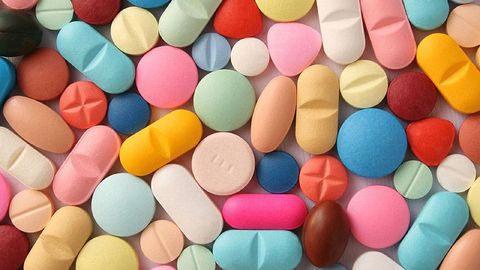
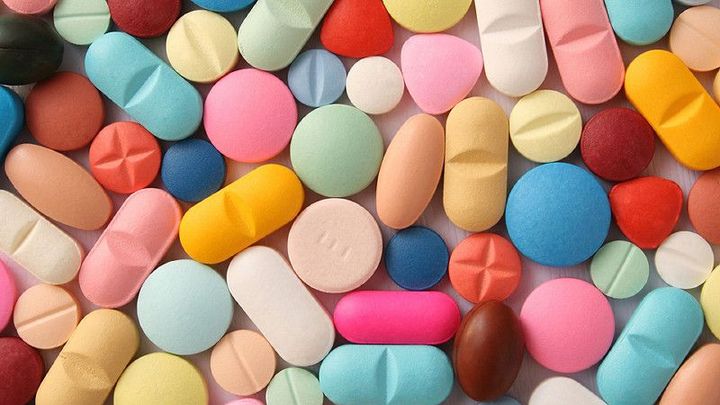
Film coatings can also provide color and surface characteristics that help distinguish different tablets.
However, appearance is only one part of pharmaceutical coating technology. Formulation performance, process control and product quality are also important considerations.
Controlled Release Drug Delivery
Controlled-release drug delivery aims to regulate the release of an active ingredient over a defined period or under specific conditions.
Instead of releasing the active ingredient immediately, a controlled-release formulation can use formulation components or coating technologies to influence the release profile.
Colorcon's controlled-release portfolio includes formulated systems and distributed polymers for different formulation requirements.
Sustained Release
Sustained-release formulations are designed to extend the release of an active ingredient over time.
The objective is generally to create a controlled release profile rather than an immediate release of the entire drug content.
Osmotic Drug Delivery
Osmotic systems use osmotic pressure as part of the mechanism controlling drug release.
Colorcon's Corelease® portfolio includes osmotic coating and push-layer technologies.
Polymer-Based Release Control
Polymers can act as important components in controlled-release formulations.
Colorcon lists hypromellose and ethylcellulose polymer technologies among its controlled-release offerings.
The selection of a polymer depends on formulation objectives, processing conditions, API characteristics and the desired release profile.
Pharmaceutical Formulation and Drug Development
Pharmaceutical formulation is the process of developing a dosage form that delivers an API in an appropriate and reproducible manner.
For solid oral dosage forms, formulation development can involve several components.
Active Pharmaceutical Ingredient
The API is the pharmacologically active component of the medicine. Its physical and chemical characteristics influence formulation decisions.
Important properties can include:
- Solubility
- Particle size
- Stability
- Moisture sensitivity
- Chemical compatibility
- Dose requirements
Excipients
Excipients provide supporting functions within the dosage form.
Different excipients can be selected for:
- Binding
- Dilution
- Lubrication
- Disintegration
- Release modification
- Coating
- Stability
Manufacturing Process
The manufacturing process can include operations such as blending, granulation, compression, coating and packaging.
Process parameters must be controlled to achieve consistent product characteristics.
Colorcon and Solid Oral Dosage Forms
Solid oral dosage forms include tablets, capsules and multiparticulate systems.
Colorcon states that its pharmaceutical activities have focused strongly on solid oral dosage development and design. Its portfolio includes products for tablet cores, coatings, controlled release and packaging.
Tablet Manufacturing
A simplified tablet manufacturing sequence may include:
- Raw material selection
- API and excipient preparation
- Blending
- Granulation when required
- Drying and sizing
- Lubrication
- Tablet compression
- Film coating when required
- Quality testing
- Packaging
The exact process varies according to the formulation and manufacturing technology.
Multiparticulate Systems
Multiparticulate dosage forms use multiple small units rather than a single tablet core.
These systems may use coating technologies to modify the release characteristics of individual particles.
Controlled-release formulations can therefore involve a combination of API properties, excipient selection, polymer characteristics and coating-process parameters.
Pharmaceutical Quality and Regulatory Considerations
Pharmaceutical manufacturing operates within strict quality and regulatory frameworks.
Excipients and coating materials must be evaluated according to their intended application, specifications, compatibility and applicable regulatory requirements.
Important areas of pharmaceutical quality include:
- Raw material quality
- Identity testing
- Purity
- Stability
- Manufacturing consistency
- Process controls
- Documentation
- Analytical testing
- Packaging integrity
- Regulatory compliance
Colorcon also highlights regulatory requirements as an important consideration in pharmaceutical development and manufacturing.
Recent Developments in Pharmaceutical Technology
Pharmaceutical formulation continues to evolve as manufacturers work with increasingly complex APIs and dosage-form requirements.
Recent areas of interest include:
Advanced Drug Delivery
Drug delivery research increasingly focuses on controlling release characteristics and improving the performance of different dosage forms.
Controlled-release technologies remain an important area of pharmaceutical formulation development.
Excipient Innovation
Modern excipient development focuses on functionality, processing performance, stability and compatibility with increasingly complex formulations.
Colorcon's recent educational material has highlighted the role of excipient technology in drug delivery and pharmaceutical development.
Alternative Coating Technologies
Film-coating technologies continue to evolve for applications including moisture protection, enteric release, taste masking and controlled release.
The pharmaceutical industry also continues to evaluate coating systems that address manufacturing efficiency and formulation requirements.
Sustainability Considerations
Sustainability is becoming increasingly relevant across pharmaceutical manufacturing.
Areas of consideration can include:
- Raw material sourcing
- Manufacturing efficiency
- Solvent use
- Packaging materials
- Energy consumption
- Waste reduction
- Supply-chain resilience
These factors can influence future pharmaceutical formulation and manufacturing strategies.
Key Benefits of Understanding Pharmaceutical Excipients
Learning about excipients helps explain why pharmaceutical products are more complex than simply combining an API with a tablet-forming material.
Excipients can influence:
- Manufacturing performance
- Dosage-form stability
- Tablet characteristics
- Drug release
- Taste masking
- Coating performance
- Product consistency
For students, researchers and professionals, understanding excipient functionality provides a useful foundation for learning about pharmaceutical formulation.
Colorcon in the Pharmaceutical Industry
Colorcon operates across several areas that support pharmaceutical formulation and manufacturing. Its stated portfolio includes core excipients, film coatings, controlled-release technologies and controlled-atmosphere packaging.
The company's history dates to 1961, and its website reports more than 40 global locations and 16 manufacturing facilities.
Its technology areas demonstrate how pharmaceutical development combines chemistry, materials science, process engineering, quality control and regulatory knowledge.
Important Terms to Know
The following terms are useful when researching Colorcon and pharmaceutical formulation:
| Term | Meaning |
|---|---|
| API | Active Pharmaceutical Ingredient |
| Excipient | An inactive ingredient used for a functional purpose in a dosage form |
| Film Coating | A layer applied to a dosage form |
| Enteric Coating | A coating designed to delay release under specific conditions |
| Controlled Release | Technology used to regulate drug release |
| Sustained Release | A formulation approach intended to extend drug release |
| Binder | An excipient that helps particles adhere during tablet formation |
| Diluent | An excipient used to provide bulk to a formulation |
| Lubricant | An excipient that helps reduce friction during manufacturing |
| Polymer | A material that can provide specific formulation or release properties |
| Multiparticulate | A dosage form containing multiple small units |
| Drug Layering | Application of an API onto a substrate or particle |
Conclusion
Colorcon is associated with several important areas of pharmaceutical formulation, particularly excipients, tablet film coatings, controlled-release technologies and pharmaceutical packaging.
Its technologies illustrate the important role that excipients and functional coatings play in modern drug manufacturing. Although excipients are not generally the active therapeutic component, their properties can influence manufacturing, stability, dosage-form characteristics and drug release.
Understanding these technologies provides useful background for anyone researching pharmaceutical manufacturing, drug formulation, pharmaceutical excipients, tablet coating, controlled-release drug delivery and pharmaceutical quality.
Because pharmaceutical products are highly regulated, technical information about a specific formulation should always be interpreted in the context of applicable scientific, quality and regulatory requirements.
Note: The article is structured as informational content and avoids making unsupported claims or presenting financial/medical/legal advice. Product names and capabilities are described based on Colorcon's published information.