Chemical Storage Tanks: Insights Into Design, Materials, and Storage Needs
Chemical storage tanks are containers designed to hold liquids or, in some applications, gases used in industrial, agricultural, laboratory, water-treatment, and manufacturing activities.
Their purpose is to keep chemical materials contained while reducing the risk of leaks, contamination, evaporation, or unwanted reactions. Chemical storage tanks can range from relatively small containers to large stationary tanks used at industrial facilities.
The design of a tank depends heavily on what it stores. A corrosive acid may require different materials and protective measures than a solvent, fertilizer solution, cleaning chemical, or water-treatment compound. Temperature, concentration, pressure, storage duration, and the physical properties of the chemical can also influence the tank design.
Common Tank Materials
Materials used for chemical storage tanks include carbon steel, stainless steel, fiberglass-reinforced plastic, polyethylene, and other engineered plastics. Each material has different resistance characteristics, structural properties, temperature limits, and compatibility considerations.
| Tank Material | Common Characteristics | Typical Considerations |
|---|---|---|
| Carbon steel | Strong and suitable for many industrial applications | Corrosion protection may be necessary |
| Stainless steel | Good strength and corrosion resistance for many chemicals | Chemical compatibility still needs evaluation |
| Polyethylene | Lightweight and resistant to many corrosive chemicals | Temperature and structural limits require attention |
| Fiberglass-reinforced plastic | Corrosion-resistant and relatively lightweight | Resin selection affects chemical compatibility |
| Specialty-lined steel | Combines structural strength with an internal protective layer | Lining condition requires inspection |
Material selection should be based on the chemical's composition and operating conditions rather than appearance or general material reputation. Compatibility information from chemical manufacturers, tank standards, and qualified technical sources is commonly used during planning.
Basic Design Features
Chemical storage tanks can include several supporting components. These may include fill connections, discharge piping, vents, level indicators, inspection openings, mixers, temperature monitoring equipment, overflow protection, and pressure or vacuum protection where applicable.
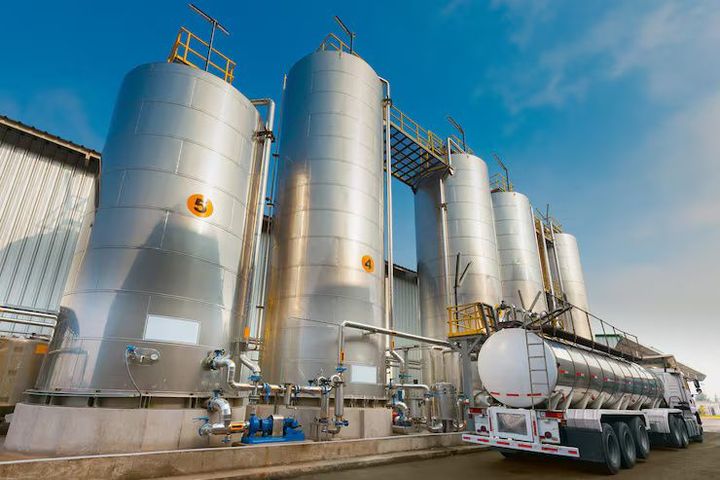
Tank geometry also varies. Vertical cylindrical tanks are widely used for stationary storage, while horizontal tanks can be useful where site layout or transportation requirements influence the design. Some chemicals require specialized tanks because of temperature sensitivity, vapor characteristics, or pressure conditions.
Importance
Why Chemical Storage Matters
Chemical storage tanks matter because poor containment can affect workers, surrounding facilities, soil, water, and air quality. A damaged tank, incompatible material, excessive pressure, or faulty connection can create a release that requires controlled handling and cleanup.
Proper storage also supports consistent industrial processes. Manufacturing plants, laboratories, farms, water-treatment facilities, and other operations may depend on chemicals being available in controlled quantities and protected from contamination or environmental exposure.
Safety and Containment Considerations
Secondary containment is an important concept in chemical storage. It creates an additional barrier around a primary tank so that a leak can be captured rather than immediately reaching surrounding surfaces or drainage systems. Depending on the facility and applicable regulations, containment may involve bunds, dikes, double-wall tanks, collection areas, or engineered liners.
Tank operators also need to consider:
- Chemical compatibility between the stored material and tank construction.
- Protection from overfilling, excessive pressure, and unwanted temperature changes.
- Corrosion, cracking, deformation, and deterioration.
- Safe access for inspection and maintenance.
- Proper labeling and identification of stored substances.
- Separation of chemicals that could react dangerously if mixed.
- Appropriate ventilation and vapor management where required.
These considerations become particularly important when several different chemicals are stored at the same location.
Environmental Considerations
A chemical release can create environmental concerns depending on the substance, quantity, location, and pathway of exposure. Containment systems and inspection programs are therefore important parts of storage planning.
For underground storage systems, regulations in some jurisdictions include requirements related to secondary containment, corrosion protection, release detection, and operator practices. Requirements vary according to the chemical, tank type, location, and applicable jurisdiction.
Recent Updates
Changes in Standards and Regulation
Chemical storage requirements continue to evolve as regulators and industry organizations address accident prevention, emissions, leak detection, and environmental protection. In the United States, the Environmental Protection Agency published the Risk Management Program Safer Communities by Chemical Accident Prevention final rule in March 2024. The rule included additional measures related to chemical accident prevention, incident investigation, auditing, and evaluation of safer technologies.
The regulatory environment has also continued to change. In March 2025, the EPA announced that it was reconsidering the 2024 Risk Management Program rule, and in February 2026 it announced a proposed approach for further revisions. This illustrates why facilities need to check the rules that apply to their location and chemical inventory rather than relying on an older regulatory interpretation.
Updated Technical Standards
Tank-related technical standards have also continued to develop. The American Petroleum Institute lists a 14th edition of API 650, Welded Tanks for Oil Storage, published in August 2025, while API's standards plan records updates to other storage-tank documents during 2025. These standards are particularly relevant to applicable aboveground tank designs and related inspection or construction practices.
Another recent development concerns emissions estimation and monitoring. The EPA's AP-42 materials for organic liquid storage tanks were revised, and its TANKS software documentation was updated in 2026. Such resources reflect continuing attention to estimating emissions from certain types of storage vessels.
Greater Attention to Monitoring
Current chemical storage practices increasingly emphasize leak detection, condition monitoring, inspection records, and secondary containment. Double-wall systems and interstitial monitoring can help identify releases occurring between primary and secondary barriers in applicable underground storage systems.
Digital level monitoring, automated alarms, corrosion monitoring, and recorded inspection data are also becoming more common in modern facilities. These technologies can help operators identify unusual conditions earlier, although their suitability depends on the tank design and operating environment.
Tools and Resources
Tank Selection and Compatibility Resources
Chemical compatibility charts can help compare materials against specific chemicals, concentrations, and temperatures. They should be treated as screening resources rather than a substitute for detailed engineering evaluation.
Safety Data Sheets are another important resource. They provide information about chemical properties, hazards, handling requirements, storage conditions, and incompatibilities. Reviewing the relevant sections before selecting a tank can help establish the storage conditions that need to be considered.
Calculation and Planning Tools
Tank volume calculators can help estimate storage capacity from dimensions such as diameter, length, or height. Secondary-containment calculations can help determine the capacity required around a tank under a particular regulatory framework.
Facility planners may also use inspection checklists, tank inventory templates, level-monitoring records, corrosion inspection forms, and maintenance logs. For certain organic-liquid storage applications, the EPA's TANKS software and related documentation provide resources for estimating emissions.
Applicable codes and standards should also be reviewed for the specific tank type. Requirements can differ between aboveground and underground tanks, atmospheric and pressurized systems, and different chemical categories.
FAQs
What are chemical storage tanks used for?
Chemical storage tanks are used to contain liquids or other chemical materials in controlled conditions. They are found in manufacturing, agriculture, laboratories, water treatment, chemical processing, and other industrial environments.
How are chemical storage tanks designed?
Chemical storage tanks are designed around factors such as chemical compatibility, capacity, temperature, pressure, material strength, corrosion risk, ventilation, access, and containment requirements. The exact design depends on the stored substance and applicable standards.
Which materials are used in chemical storage tanks?
Common materials include carbon steel, stainless steel, polyethylene, fiberglass-reinforced plastic, and lined metals. The appropriate material depends on the chemical properties and operating conditions.
Why is secondary containment important for chemical storage tanks?
Secondary containment provides an additional barrier around a primary tank. It can help capture a leak and reduce the chance of the material reaching soil, drainage systems, or nearby water.
What should be checked during chemical storage tank inspections?
Inspections may examine the tank body, seams, fittings, valves, piping, supports, coatings, containment areas, level equipment, and signs of corrosion or leakage. The inspection frequency and methods depend on the tank type, stored material, regulations, and operating conditions.
Conclusion
Chemical storage tanks are designed around the properties of the materials they contain, the surrounding environment, and the conditions under which storage takes place. Material compatibility, structural design, secondary containment, monitoring, inspection, and regulatory requirements are important parts of the overall storage approach. Developments from 2024 through 2026 show continued attention to chemical accident prevention, tank standards, emissions management, and release detection. Understanding these factors provides a clearer view of how chemical storage systems are planned and maintained.