Electronic Components Guide: Learning About Modern Devices and Circuit Elements
Electronic components are the individual parts that allow electrical and electronic systems to function.
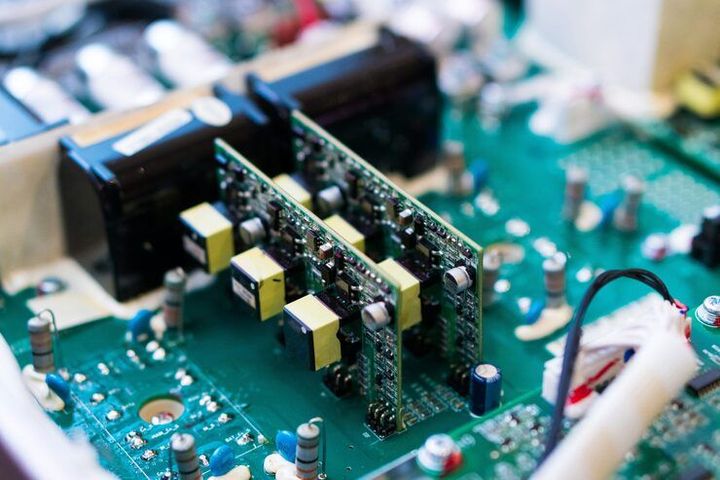
They include resistors, capacitors, diodes, transistors, integrated circuits, connectors, switches, and sensors. Together, these parts control current, store energy, process signals, detect changes, and connect different sections of a circuit. Understanding their basic roles makes it easier to understand devices used in homes, transportation, communication, manufacturing, healthcare, and computing.
Context
What Electronic Components Are
An electronic component is a physical element used within an electrical or electronic circuit. Some components control the flow of electricity, while others store energy, convert signals, process information, or detect physical conditions such as temperature, light, pressure, or motion.
Modern components developed from earlier electrical technologies and advances in materials science. Semiconductor devices made it possible to create smaller and more capable circuits, while integrated circuits placed many electronic functions into compact packages. Today, one device can contain many different component types working together.
Main Types of Components
Electronic components can be grouped by their main function. Passive components generally do not provide signal amplification, while active components can control or amplify electrical signals. Other components provide physical connections or detect conditions around them.
| Component type | Main function | Common example |
|---|---|---|
| Resistor | Limits or controls current | LED circuit |
| Capacitor | Stores electrical energy temporarily | Power filtering |
| Inductor | Stores energy in a magnetic field | Power supply |
| Diode | Controls current direction | Rectifier |
| Transistor | Switches or amplifies signals | Digital circuit |
| Integrated circuit | Combines many functions | Microcontroller |
| Sensor | Detects a physical condition | Temperature sensor |
| Connector | Joins electrical paths | USB connector |
These categories can overlap. For example, a system-on-chip can contain processing logic, memory, communication functions, and other circuit elements within one package.
Importance
Why Components Matter
Electronic components are fundamental to everyday technology. A smartphone, computer, vehicle, household appliance, medical instrument, or communication system depends on circuits made from combinations of these parts. Even when users cannot see them, components determine how a device receives power, processes information, communicates, and responds to its surroundings.
Their importance also extends to energy management. Power electronics use transistors, diodes, capacitors, inductors, and controllers to regulate electrical energy. These circuits appear in chargers, battery systems, industrial equipment, renewable-energy systems, and electric transportation.
Reliability and Circuit Design
Component selection affects electrical performance, thermal behavior, physical durability, and compatibility. Engineers consider resistance, capacitance, voltage rating, current rating, frequency range, temperature range, package dimensions, and tolerance.
Incorrect selection can cause overheating, unstable operation, signal distortion, premature failure, or damage to connected parts. Circuit documentation and manufacturer specifications therefore play an important role when a component is identified or replaced.
For general readers, several markings are useful to understand:
- Part number: identifies a particular component model or family.
- Rating: describes limits such as voltage, current, power, or temperature.
- Tolerance: indicates how much a specified value may vary.
- Package: describes the physical form and connection arrangement.
- Polarity: indicates whether the component must be connected in a particular direction.
Recent Updates
Semiconductor Growth and AI
From 2024 through 2026, semiconductor technology has been strongly influenced by artificial intelligence, advanced computing, communications, vehicles, and data-center infrastructure. The Semiconductor Industry Association reported worldwide semiconductor sales of $630.5 billion in 2024 and $791.7 billion in 2025. Its 2026 reporting describes continued expansion connected with AI and other computing applications. These figures refer to semiconductors rather than every type of electronic component.
AI systems also rely on a broad range of components rather than a single chip category. Current AI infrastructure uses logic processors, memory, networking devices, power-management circuits, sensors, and analog components. A 2026 SIA-Deloitte study highlights the importance of several semiconductor categories within AI data-center infrastructure.
Supply Chains and Semiconductor Policy
Another recent trend is greater attention to semiconductor production capacity and supply-chain resilience. The European Commission proposed a Chips Act 2.0 in 2026, with measures aimed at strengthening semiconductor capacity and reducing strategic dependencies. This follows the EU Chips Act framework established earlier to support technology development, production capacity, and supply resilience.
Electronic systems are also facing stronger cybersecurity requirements. The European Union's Cyber Resilience Act, adopted in 2024, establishes cybersecurity requirements for products with digital elements, including requirements related to design, development, production, and vulnerability handling. This connects electronic hardware with software security and long-term product maintenance.
Tools and Resources
Identification and Design Tools
Several resources can help readers understand electronic components and circuits:
- Datasheets: Technical documents explaining ratings, pin layouts, electrical characteristics, and operating limits.
- Multimeters: Instruments used to measure voltage, resistance, current, and other electrical quantities.
- Circuit simulators: Software environments that model circuit behavior before physical construction.
- Component databases: Searchable catalogs for identifying part numbers, specifications, packages, and electrical characteristics.
- Schematic tools: Applications used to draw circuit diagrams and organize electronic connections.
- Calculators: Resistance, capacitance, power, voltage-divider, and unit-conversion calculators can help with basic circuit analysis.
A datasheet is particularly important because two components that look similar may have different electrical limits or connection arrangements. Manufacturer documentation helps prevent assumptions based only on appearance.
Basic Learning Resources
Beginners can start by learning Ohm's law, voltage, current, resistance, power, series and parallel circuits, and basic semiconductor behavior. From there, digital logic, microcontrollers, sensors, communication interfaces, and power electronics provide a path toward more advanced understanding.
Hands-on learning can involve simple low-voltage circuits when appropriate electrical safety practices are followed. Mains electricity and high-energy systems require additional knowledge and precautions.
FAQs
What are electronic components?
Electronic components are physical parts used in circuits to control electricity, process signals, store energy, detect conditions, or connect electrical paths. Examples include resistors, capacitors, diodes, transistors, sensors, and integrated circuits.
What are the main types of electronic components?
Common groups include passive components, active semiconductor devices, sensors, connectors, switches, and integrated circuits. Each group performs different functions within an electronic system.
How do electronic components work together?
Components interact through electrical connections defined by a circuit design. For example, a power section may regulate voltage, a processor may handle digital information, and sensors may provide measurements that the processor can interpret.
What is the difference between a resistor and a capacitor?
A resistor limits current and produces a voltage drop related to the current flowing through it. A capacitor stores electrical energy in an electric field and can be used for filtering, timing, coupling, or energy buffering.
Why are semiconductor components important?
Semiconductors provide the foundation for many modern electronic functions, including computation, memory, signal processing, sensing, and power control. They are used in devices ranging from personal electronics to vehicles and data-center equipment.
Conclusion
Electronic components are the building blocks of circuits used across modern technology. Resistors, capacitors, diodes, transistors, integrated circuits, sensors, and connectors each have distinct roles, while complex devices combine many component types into coordinated systems. Recent developments through 2026 show continued attention to semiconductor capacity, AI-related computing, supply-chain resilience, and digital security. Understanding component functions, ratings, and documentation provides a useful foundation for learning how electronic devices operate.