Case Packing Machines: From Product to Sealed Case
Case packing machines are automated or semi-automated packaging systems that arrange individual products into cartons, cases, or trays for handling, storage, and distribution.
These machines coordinate product feeding, grouping, case forming or positioning, loading, closing, and sealing.
Modern case packing machines are used across food and beverage, pharmaceuticals, personal care, household products, consumer goods, and industrial packaging. The appropriate system depends on product characteristics, case dimensions, production volume, loading pattern, and required automation.
Why Case Packing Machines Matter
Packaging individual products into larger cases requires consistent positioning and controlled handling. Manual processes can become difficult when production volumes increase or products require precise case arrangements.
Case packing equipment automates repetitive stages and can synchronize product movement with case handling. Depending on the machine design, products can be loaded vertically, horizontally, robotically, or through wraparound case forming.
Key factors include:
- Product dimensions
- Product weight
- Case size
- Case configuration
- Loading pattern
- Production rate
- Packaging material
- Sealing method
- Automation level
- Product handling requirements
How Case Packing Machines Work
Although machine designs differ, the general process follows several stages from product entry to completed case.
1. Product Feeding
Products enter the packaging system through a conveyor or feeding mechanism.
Sensors and guides help control product spacing and orientation. Proper product flow is important because the case-packing process depends on consistent movement.
Products may include bottles, cans, cartons, pouches, trays, boxes, and other packaged items.
2. Product Grouping
The machine organizes individual products into a predefined pattern before loading them into the case.
For example, a case may contain multiple rows and columns of products. The grouping pattern depends on product dimensions, case size, and the desired packaging configuration.
Common grouping methods include:
- Lane accumulation
- Conveyor indexing
- Mechanical grouping
- Robotic grouping
- Servo-controlled positioning
3. Case Preparation
Depending on the equipment, cases may arrive pre-formed or be created within the packaging machine.
For corrugated cases, a case erector can open flat blanks and form them into the required shape. Flaps may then be positioned for subsequent product loading.
Some systems use wraparound case blanks that are folded around the product group during the packing process.
4. Product Loading
The grouped products are transferred into the case.
Different machines use different loading mechanisms.
Top-load systems place products downward into an open case.
Side-load systems move products horizontally into the case.
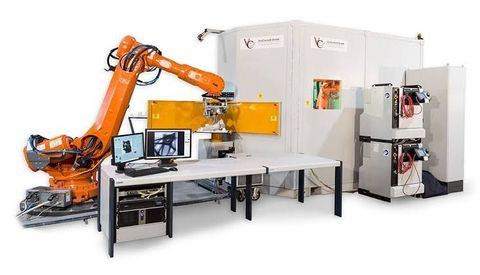
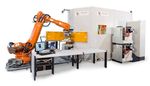
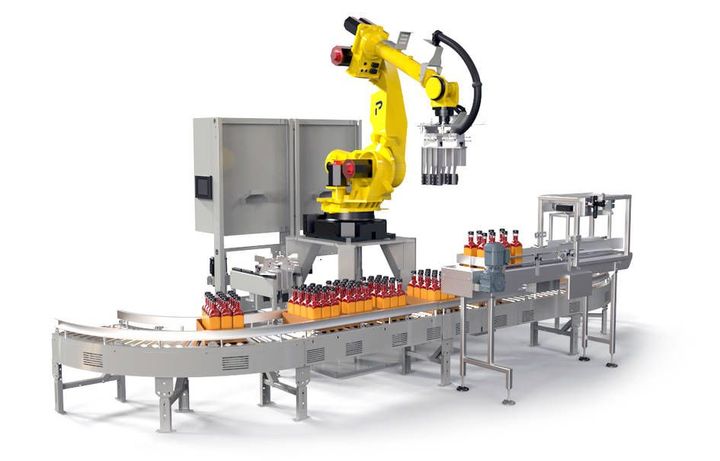
Robotic systems use programmable robotic arms and grippers to arrange and place products.
The appropriate method depends on product shape, orientation, fragility, and case configuration.
5. Case Closing
Once the products are inside, the case is closed.
Flap-folding mechanisms position the top flaps into the appropriate configuration. Depending on the packaging system, adhesive or another closure method can be applied during this stage.
6. Case Sealing
The final case is sealed to maintain its closed configuration.
Common sealing methods include:
- Pressure-sensitive tape
- Hot-melt adhesive
- Mechanical locking
- Combination closure systems
Sealing requirements depend on case material, product weight, handling conditions, and downstream logistics.
7. Case Discharge
After sealing, the finished case moves onto a conveyor or downstream packaging system.
The case may then proceed to palletizing, labeling, coding, inspection, storage, or distribution.
Types of Case Packing Machines
Top-Load Case Packing Machines
Top-load systems place products vertically into an open case.
They are commonly used for products that can be arranged efficiently from above and are suitable for various case configurations.
Side-Load Case Packing Machines
Side-load systems insert products horizontally into cases.
This approach can be useful for cartons, trays, bottles, and other products that are easier to group and transfer horizontally.
Wraparound Case Packers
Wraparound machines use a flat corrugated blank that is folded around the product group.
The machine forms the case and closes it as part of the same packaging sequence.
This design can create compact packaging configurations and is frequently integrated into automated packaging lines.
Robotic Case Packing Machines
Robotic case packers use programmable robotic arms to pick, arrange, and place products into cases.
Robotic systems can handle different product patterns and may provide greater flexibility when multiple packaging formats are required.
Continuous Motion Case Packers
Continuous motion systems keep products and packaging components moving while packing operations occur.
They are designed for high-speed production environments where synchronized product handling and case movement are important.
Intermittent Motion Case Packers
Intermittent systems temporarily stop or index products and cases during specific packing stages.
This approach can provide controlled positioning for operations that require precise product placement.
Automatic Case Packing Systems
Fully automatic case packing systems can integrate product feeding, case erection, loading, closing, sealing, and discharge.
They can also connect with upstream filling or cartoning equipment and downstream palletizing systems.
Comparison of Case Packing Machines
| Machine Type | Loading Method | Typical Characteristic |
|---|---|---|
| Top-load | Vertical | Flexible product placement |
| Side-load | Horizontal | Efficient horizontal loading |
| Wraparound | Folding around product | Integrated case forming |
| Robotic | Robotic pick-and-place | Flexible configurations |
| Continuous motion | Moving product/case | High-speed operation |
| Intermittent motion | Indexed movement | Precise positioning |
| Automatic system | Integrated stages | End-to-end automation |
Main Components of Case Packing Machines
A complete case packing line may contain several interconnected components.
| Component | Function |
|---|---|
| Product conveyor | Transfers products |
| Accumulation system | Groups products |
| Case magazine | Stores flat case blanks |
| Case erector | Forms cases |
| Loading mechanism | Transfers products into cases |
| Robotic arm | Performs automated picking |
| Flap folder | Positions case flaps |
| Sealing system | Closes the case |
| Sensors | Detect products and cases |
| Control system | Coordinates machine operations |
| Discharge conveyor | Transfers finished cases |
How to Select Case Packing Machines
Product Characteristics
Evaluate product dimensions, weight, shape, rigidity, orientation, and sensitivity to mechanical handling.
Case Configuration
Determine the required case dimensions and product arrangement. The number of products per case can influence machine design and loading method.
Production Requirements
Production volume affects machine speed, conveyor configuration, number of packing lanes, and automation requirements.
Loading Method
Top-load, side-load, wraparound, and robotic systems have different operating characteristics. Select the approach that matches the product and case design.
Case Material
Corrugated board grade, case dimensions, blank configuration, and closure requirements should be considered during equipment selection.
Automation Requirements
Consider product accumulation, case erection, loading, sealing, inspection, and downstream palletizing when designing the complete line.
Applications of Case Packing Machines
Case packing systems are used across numerous industries.
Common applications include:
- Food and beverage packaging
- Pharmaceutical packaging
- Cosmetic products
- Personal-care products
- Household products
- Consumer goods
- Electronics packaging
- Industrial components
- Bottled products
- Carton packaging
Frequently Asked Questions
What are case packing machines?
Case packing machines are packaging systems that arrange individual products into cartons, cases, or trays and then close and seal the completed package.
How does a case packing machine work?
A typical system feeds products, groups them into a defined pattern, prepares or positions a case, loads the products, closes the case, seals it, and transfers the finished case to the next production stage.
What is the difference between top-load and side-load case packing?
Top-load machines place products vertically into an open case, while side-load machines transfer products horizontally into the case.
What is a robotic case packing machine?
A robotic case packing machine uses programmable robotic arms to pick, arrange, and place products into cases according to a predetermined pattern.
What factors affect case packing machine selection?
Product dimensions, product weight, case size, loading pattern, production volume, packaging material, sealing method, and automation requirements all influence equipment selection.
Conclusion
Case packing machines transform individual products into organized, sealed cases through coordinated feeding, grouping, case preparation, loading, closing, and sealing operations.
Top-load, side-load, wraparound, robotic, continuous motion, intermittent motion, and fully automatic systems each address different packaging requirements. The appropriate configuration depends on product characteristics, case design, production volume, loading pattern, and desired automation.
Understanding the complete process from product feeding to sealed-case discharge provides a useful foundation for evaluating case packing equipment and designing an efficient packaging line.