Bottle Manufacturing Machines: From Resin to Finished Bottle
Bottle manufacturing machines transform polymer materials into containers used across beverage, food, pharmaceutical, cosmetic, household, and industrial packaging.
The production method depends on the bottle material, shape, size, neck design, and required performance.
Modern bottle manufacturing machines can include injection molding systems, extrusion blow molding equipment, injection stretch blow molding systems, cooling units, trimming equipment, inspection systems, and automated handling equipment. Understanding how these stages work helps manufacturers select an appropriate production setup.
Why Bottle Manufacturing Machines Matter
Bottle production requires consistent dimensions, controlled wall thickness, reliable neck finishes, and resistance to impact or pressure. Automated equipment helps maintain these characteristics across large production volumes.
The choice of machinery also depends on the polymer being processed. PET, HDPE, PP, and other plastics have different processing requirements and may use different molding technologies.
Key factors include:
- Bottle material and grade
- Container size and shape
- Production volume
- Mold configuration
- Wall-thickness requirements
- Neck and closure design
- Cooling requirements
- Quality-control specifications
- Level of production automation
From Resin to Finished Bottle
The bottle manufacturing process varies by technology, but several common stages are involved.
1. Polymer Preparation
Plastic resin is prepared before entering the molding equipment. Materials such as PET may require controlled drying because moisture can affect processing and finished-bottle quality.
Material handling systems can automatically transfer resin to drying and processing equipment, helping maintain consistent material conditions.
2. Melting and Plasticizing
The polymer enters a heated processing system where it is melted and mixed. An injection molding machine or extruder may be used depending on the selected bottle manufacturing process.
Temperature control is important because excessive or insufficient heating can affect material flow, molding accuracy, and product consistency.
3. Preform or Parison Formation
The next stage depends on the bottle technology.
PET bottles commonly begin as preforms produced through injection molding. A preform resembles a small, thick-walled version of the bottle and contains the finished neck geometry.
Extrusion blow molding generally creates a molten plastic tube called a parison. The parison is positioned inside a mold before compressed air expands it against the mold walls.
4. Bottle Forming
The forming stage converts the preform or parison into the final container.
For PET, injection stretch blow molding can simultaneously stretch and expand the heated preform. Stretching helps orient the polymer and can improve mechanical and barrier characteristics.
For HDPE and PP containers, extrusion blow molding is commonly used. Air pressure expands the molten parison until it conforms to the internal shape of the mold.
5. Cooling
Once the bottle reaches the mold shape, controlled cooling helps stabilize its dimensions. Cooling channels within the mold circulate a cooling medium to remove heat from the plastic.
Efficient temperature management can improve cycle consistency and dimensional stability.
6. Trimming and Deflashing
Some bottle manufacturing processes leave excess plastic around areas such as the base or pinch-off region. Trimming or deflashing equipment removes unwanted material.
Automated trimming systems can integrate with conveyors and downstream inspection equipment for continuous production.
7. Inspection and Testing
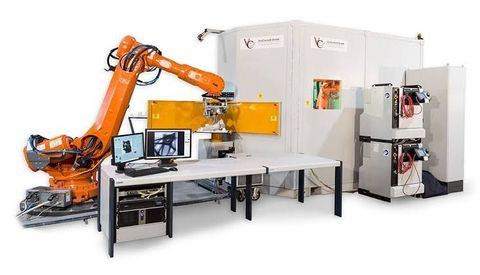
Quality control is an important part of modern bottle production. Automated inspection systems can identify dimensional variations, visual defects, contamination, and other inconsistencies.
Common checks include:
| Quality Check | What It Evaluates |
|---|---|
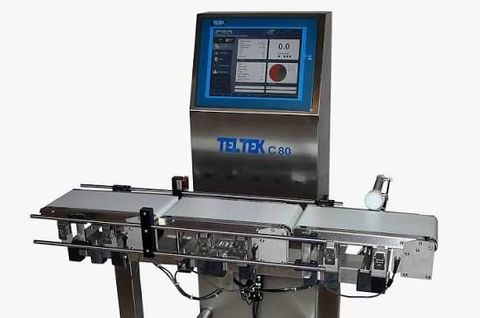
| Weight measurement | Material consistency |
| Dimensional inspection | Bottle geometry |
| Wall-thickness testing | Material distribution |
| Leak testing | Container integrity |
| Drop testing | Impact resistance |
| Top-load testing | Compression strength |
| Neck inspection | Closure compatibility |
| Visual inspection | Surface and molding defects |
Types of Bottle Manufacturing Machines
Different container designs require different production technologies.
Injection Molding Machines
Injection molding machines are widely used to manufacture PET preforms and certain rigid plastic components. They provide precise control over mold filling, pressure, temperature, and cycle time.
Extrusion Blow Molding Machines
These systems form a molten parison and expand it inside a mold. They are commonly used for HDPE and PP containers, including bottles with handles or specialized shapes.
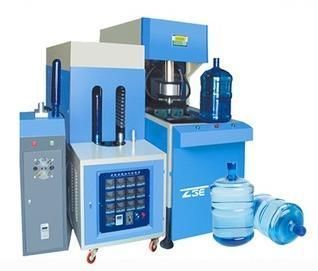
Injection Stretch Blow Molding Machines
ISBM equipment is commonly associated with PET bottles. The process uses a preform that is reheated, stretched, and expanded inside a bottle mold.
Supporting Equipment
A complete production line may also include:
- Resin dryers
- Material conveying systems
- Preform molds
- Bottle molds
- Air compressors
- Chillers
- Cooling systems
- Trimming equipment
- Leak testers
- Vision inspection systems
- Conveyors and handling automation
How to Select Bottle Manufacturing Equipment
Equipment selection should begin with the container specifications rather than the machine alone.
Consider the following:
- Material: Determine whether the bottle uses PET, HDPE, PP, or another polymer.
- Container design: Evaluate volume, neck finish, shape, and wall structure.
- Production requirements: Determine the required output and cycle characteristics.
- Molding technology: Select injection molding, extrusion blow molding, or stretch blow molding as appropriate.
- Quality requirements: Define dimensional, strength, leak, and visual inspection requirements.
- Automation: Consider material handling, mold changes, inspection, and downstream handling.
- Utilities: Review electrical power, compressed air, cooling, and environmental requirements.
Who Uses Bottle Manufacturing Machines?
Bottle manufacturing equipment is used across several industries where consistent plastic containers are required.
Common applications include:
- Beverage packaging for water, soft drinks, juices, and other beverages
- Food packaging for sauces, oils, and liquid ingredients
- Pharmaceutical packaging for selected liquid and solid products
- Cosmetic packaging for shampoos, lotions, and personal-care products
- Household packaging for detergents and cleaning formulations
- Industrial packaging for selected chemicals and other liquid materials
Frequently Asked Questions
What are bottle manufacturing machines?
Bottle manufacturing machines are industrial systems that form plastic materials into bottles using processes such as injection molding, extrusion blow molding, and injection stretch blow molding.
Which machines are used to make PET bottles?
PET bottles commonly use injection molding equipment to produce preforms, followed by stretch blow molding equipment to form the finished bottles.
How are plastic bottles manufactured?
Plastic bottles are typically produced by preparing polymer resin, melting the material, forming a preform or parison, molding the container, cooling it, and performing inspection and finishing operations.
What machine is used for HDPE bottles?
Extrusion blow molding machines are commonly used for HDPE bottles because they can form hollow containers directly from an extruded molten parison.
What quality checks are performed on bottles?
Common checks include bottle weight, dimensions, wall thickness, neck finish, leak integrity, visual appearance, drop resistance, and compression strength.
Conclusion
Bottle manufacturing machines connect material preparation, molding, cooling, finishing, and quality control into a coordinated production process. The appropriate technology depends on the polymer, container design, production requirements, and quality specifications.
Understanding the complete path from resin to finished bottle makes it easier to evaluate molding technologies and supporting equipment. A well-planned production system can maintain consistent bottle geometry, material distribution, and quality across repeated manufacturing cycles.