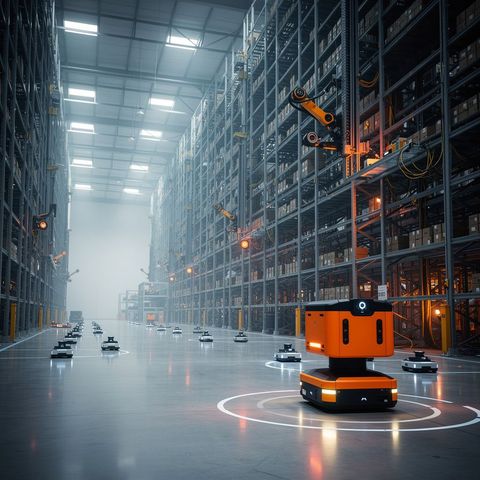
Automated Warehouses: The Ultimate Guide
Learn how automated warehouses revolutionize logistics and supply chain management. Explore technologies, benefits, and implementation strategies for modern warehouse operations.
Automated warehouses have become essential infrastructure for modern businesses managing complex supply chains and high-volume distribution operations. These facilities leverage cutting-edge technologies to optimize inventory management, increase operational efficiency, and reduce costs associated with manual labor and human error. Understanding how automated warehouses function and their impact on business operations is crucial for logistics professionals, supply chain managers, and organizational leaders.

Understanding Automated Warehouses
An automated warehouse is a facility that uses technology-driven systems to manage inventory, handle materials, and fulfill orders with minimal human intervention. These systems integrate robotics, conveyor systems, software platforms, and data analytics to create seamless operations from receiving to shipping. Modern automated warehouses can process thousands of items daily while maintaining accuracy rates exceeding 99 percent, significantly outperforming traditional manual warehouses.
The core principle behind warehouse automation is replacing repetitive, labor-intensive tasks with intelligent machines and software systems. This transformation extends beyond simple mechanization to include sophisticated decision-making systems that optimize storage locations, picking sequences, and shipping routes in real-time.
Benefits and Limitations
Automated warehouses deliver substantial advantages to organizations willing to invest in modernization. The primary benefit is increased operational efficiency, with automated systems processing orders faster and more accurately than manual methods. Labor cost reduction represents another significant advantage, as automation handles repetitive tasks that previously required large workforces.
Additional benefits include improved inventory accuracy, enhanced worker safety by removing employees from hazardous tasks, scalability to handle demand fluctuations, and data-driven insights for continuous improvement. Automated systems operate continuously without fatigue, enabling 24/7 operations that manual warehouses cannot sustain.
However, automated warehouses face notable limitations. Initial capital investment is substantial, often requiring millions of dollars in equipment and software. Implementation timelines extend over months or years, disrupting existing operations. Maintenance complexity increases significantly, requiring specialized technical expertise. Additionally, automation struggles with irregular items, fragile products, and items requiring quality inspection, necessitating hybrid approaches combining automation with human workers.
Types of Automated Warehouse Systems
Different automation technologies serve various warehouse functions and operational requirements. Understanding these categories helps organizations select appropriate solutions for their specific needs.
Automated Storage and Retrieval Systems (ASRS)
ASRS uses computer-controlled machines to automatically place and retrieve items from storage locations. These systems maximize vertical space utilization and dramatically reduce retrieval times compared to manual picking. Common ASRS configurations include carousel systems, vertical lift modules, and shuttle-based systems.
Robotic Automation
Mobile robots and robotic arms handle material movement, sorting, and packing tasks. Collaborative robots work alongside human workers, while autonomous mobile robots navigate warehouse floors independently, transporting items between stations. Robotic arms perform precise picking and assembly operations, particularly valuable for delicate or complex items.
Conveyor and Sortation Systems
Automated conveyor networks transport items throughout the warehouse, while sortation systems automatically direct packages to appropriate destinations based on programmed criteria. These systems create continuous material flow, eliminating bottlenecks in the distribution process.
Warehouse Management Systems (WMS)
Software-based systems that control and optimize warehouse operations. WMS platforms direct labor, manage inventory, optimize picking routes, and integrate with order management and shipping systems. These systems provide real-time visibility and decision support for warehouse managers.
Current Industry Trends
The warehouse automation landscape continues evolving rapidly. Artificial intelligence increasingly optimizes inventory placement, demand forecasting, and labor scheduling. Machine learning algorithms analyze historical data to predict peak periods and adjust operations accordingly.
Sustainability has become a significant focus, with automated systems designed to minimize energy consumption and waste. Companies implement green automation technologies including energy-efficient motors, LED lighting, and renewable energy integration.
The integration of Internet of Things (IoT) sensors enables real-time tracking of inventory and equipment performance. Predictive maintenance systems use sensor data to identify equipment issues before failures occur, reducing downtime and extending equipment lifespan.
Supply chain visibility has emerged as a critical trend, with automated warehouses providing end-to-end tracking capabilities. Customers increasingly expect real-time order status updates, driving demand for systems that provide granular visibility throughout the fulfillment process.
Essential Features of Modern Automated Warehouses
Effective automated warehouses incorporate several key features that work together to optimize operations.
| Feature | Function | Impact |
|---|---|---|
| Real-time Inventory Tracking | Continuous monitoring of stock levels and locations | Eliminates stockouts and overstock situations |
| Automated Picking Systems | Robots or systems retrieve items based on orders | Reduces picking errors and processing time |
| Integration Capabilities | Connects with ERP, e-commerce, and shipping platforms | Creates seamless data flow across business systems |
| Scalability | Systems expand capacity without major restructuring | Accommodates business growth and seasonal demand |
| Analytics and Reporting | Provides performance metrics and operational insights | Enables data-driven decision-making and optimization |
| Safety Systems | Automated monitoring and hazard detection | Protects workers and equipment from incidents |
Leading Companies in Warehouse Automation
Numerous organizations have established themselves as leaders in developing and implementing warehouse automation solutions. Major equipment manufacturers produce ASRS systems, conveyor networks, and robotic solutions. Software providers offer comprehensive WMS platforms that orchestrate warehouse operations. System integrators combine various technologies into cohesive solutions tailored to specific business needs.
Many companies operate automated fulfillment centers that serve as case studies for successful implementation. These facilities demonstrate the operational benefits of automation, including reduced delivery times, improved accuracy, and enhanced worker productivity in roles that complement automated systems.
Selecting an Automated Warehouse Solution
Organizations evaluating warehouse automation should follow a structured selection process. Begin by assessing current operations, identifying bottlenecks, and defining specific improvement objectives. Consider factors including current order volume, expected growth rates, product characteristics, and available space.
Evaluate different automation technologies against your specific requirements. Some solutions excel with high-volume, standardized items, while others handle diverse product ranges more effectively. Assess integration requirements with existing systems and consider the technical expertise available within your organization.
Financial analysis should extend beyond initial equipment costs to include implementation, training, maintenance, and potential operational disruptions. Calculate return on investment timelines and compare against alternative improvements like process optimization or workforce expansion.
Implementation Best Practices
Successful warehouse automation requires careful planning and execution. Establish clear objectives and success metrics before implementation begins. Engage stakeholders throughout the process, including warehouse staff, IT teams, and management, to ensure buy-in and identify potential issues early.
Phase implementation when possible, starting with lower-risk areas to build organizational capability and identify lessons learned. Invest in comprehensive training programs for staff who will operate and maintain automated systems. Develop contingency plans for system failures to ensure business continuity.
Monitor performance metrics closely during and after implementation. Track key indicators including order accuracy, processing speed, labor productivity, equipment utilization, and return on investment. Use this data to optimize system configuration and identify additional improvement opportunities.
Implementation Checklist
- Conduct comprehensive operational assessment and identify improvement opportunities
- Define clear objectives, success metrics, and timeline expectations
- Evaluate multiple automation solutions and technology providers
- Perform detailed financial analysis including all implementation costs
- Assess integration requirements with existing business systems
- Evaluate internal technical capability and training needs
- Develop detailed implementation plan with phased rollout approach
- Establish change management and communication strategy
- Create contingency plans for system failures and disruptions
- Implement comprehensive staff training programs
- Establish monitoring systems and performance dashboards
- Plan for ongoing maintenance and system optimization
Frequently Asked Questions
What is the typical cost of implementing warehouse automation?
Costs vary dramatically based on facility size, automation level, and technology selection. Small-scale implementations might cost hundreds of thousands of dollars, while large facilities can exceed tens of millions. Organizations should evaluate costs relative to expected efficiency gains and return on investment timelines specific to their operations.
How long does warehouse automation implementation typically take?
Implementation timelines range from several months for smaller projects to multiple years for comprehensive facility-wide automation. Phased approaches allow organizations to begin realizing benefits sooner while managing disruption to ongoing operations.
Can automated warehouses handle all types of products?
Automated systems excel with standardized items but struggle with irregular shapes, fragile goods, and items requiring quality inspection. Most organizations implement hybrid approaches combining automation for suitable products with manual processes for items requiring human judgment or delicate handling.
What workforce changes occur when implementing warehouse automation?
Rather than eliminating jobs, automation typically shifts workforce composition. Fewer workers handle routine picking and packing, while demand increases for technicians, system operators, quality inspectors, and supervisory roles. Organizations should plan comprehensive retraining programs to transition existing staff into new roles.
How do automated warehouses improve sustainability?
Automation reduces energy consumption through optimized operations, minimizes waste through improved accuracy, and enables integration of renewable energy sources. Efficient picking routes reduce transportation needs, and predictive maintenance extends equipment lifespan, decreasing overall environmental impact.
What security measures protect automated warehouse systems?
Modern systems incorporate multiple security layers including access controls, encryption, network security, and audit trails. Regular security updates and monitoring detect unauthorized access attempts. Organizations should implement comprehensive cybersecurity protocols to protect sensitive inventory and operational data.
Conclusion
Automated warehouses represent a fundamental transformation in how organizations manage inventory and fulfill customer orders. These facilities deliver substantial benefits including increased efficiency, improved accuracy, enhanced safety, and reduced operational costs. However, successful implementation requires careful planning, significant capital investment, and organizational commitment to change management.
The warehouse automation landscape continues evolving with advancing technologies including artificial intelligence, robotics, and IoT integration. Organizations evaluating automation should assess their specific operational challenges, define clear objectives, and select solutions aligned with their business requirements and growth trajectory.
Whether implementing comprehensive facility-wide automation or targeted improvements in specific areas, the fundamental principle remains consistent: using technology strategically to enhance human capabilities, optimize operations, and create competitive advantages in an increasingly demanding supply chain environment. By understanding the technologies, benefits, limitations, and implementation considerations outlined in this guide, organizations can make informed decisions about warehouse automation that align with their strategic objectives and operational requirements.