Arbitrage Trading Strategies: Guide to Market Inefficiencies and Risk Factors
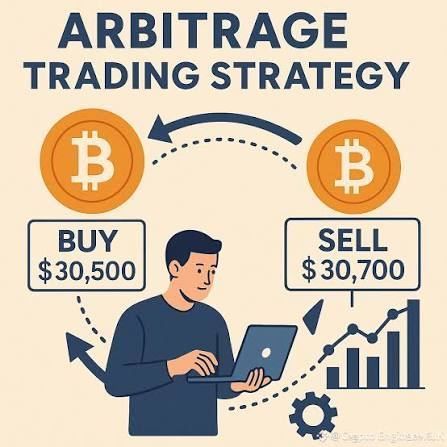
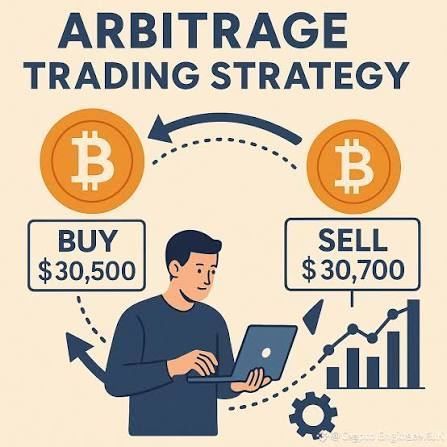
Arbitrage trading strategies involve identifying price differences for the same or closely related financial instruments across markets, exchanges, or trading periods.
The basic concept is to take advantage of differences in prices by entering offsetting positions, with the intention of capturing a potential price gap. Although arbitrage is often associated with relatively low directional market exposure, actual results depend on execution, transaction expenses, liquidity, and other risks.
Arbitrage has existed in financial markets for many years. As trading expanded across international exchanges and electronic platforms, price differences became easier to monitor and trading methods became more automated. Today, traders may use statistical models, computer programs, and algorithmic arbitrage trading to identify and respond to potential pricing discrepancies.
Arbitrage trading software can compare market prices, process historical data, and monitor trading conditions. Some systems operate through predefined rules, while others use statistical methods to estimate relationships between financial instruments. Automated arbitrage trading systems can also submit orders when specified conditions are met, depending on the platform and its configuration.
Common Types of Arbitrage Trading Strategies
Different strategies focus on different sources of price variation.
Spatial arbitrage: Involves price differences for the same instrument across separate exchanges or markets.
Triangular arbitrage: Examines exchange-rate relationships among three currencies to identify inconsistencies.
Statistical arbitrage: Uses mathematical models to identify pricing relationships that appear unusual relative to historical patterns.
Merger arbitrage: Examines the price relationship between a company involved in a proposed acquisition and the terms of the announced transaction.
Futures arbitrage: Studies price differences between futures contracts and related underlying assets or instruments.
Each approach requires different information, trading arrangements, and risk assessments. A price difference alone does not establish that a profitable opportunity exists.
Importance
Arbitrage trading strategies matter because financial markets do not always adjust prices simultaneously. Differences in trading activity, available information, liquidity, and market access can create temporary discrepancies between related instruments.
Arbitrage activity can contribute to price alignment as traders respond to differences between markets. However, these activities are not always accessible to individual participants because execution speed, available capital, technology, and trading rules can influence the outcome.
Understanding Market Inefficiencies
Market inefficiencies occur when related assets have prices that differ from what their relationships would normally suggest. Such differences may result from changing demand, delayed information, restricted market access, or temporary imbalances between buyers and sellers.
For example, a currency pair may be priced differently across connected markets. A trader examining the difference must account for exchange fees, currency conversion, execution delays, and the possibility that prices will change before both transactions are completed.
The Role of Technology
Algorithmic arbitrage trading uses computer instructions to identify conditions and execute transactions according to predefined rules. These systems can monitor multiple instruments and process market information faster than manual observation.
Statistical arbitrage strategies use historical data and mathematical analysis to estimate relationships between securities. A model might identify two assets that have usually moved together but have recently diverged. Their prices may later move closer together, but the relationship can also change permanently.
Major Risk Factors
Arbitrage does not eliminate financial risk. Several factors can affect whether an apparent price discrepancy produces a positive or negative result.
Execution risk: Prices may change before orders are completed.
Liquidity risk: There may not be enough market activity to complete all intended transactions.
Transaction expenses: Trading fees, exchange charges, and financing expenses can reduce the potential return.
Technology risk: Software errors, network interruptions, or delayed data can disrupt automated activity.
Model risk: Statistical relationships may fail when market conditions change.
Regulatory risk: Rules governing financial instruments, exchanges, and trading practices vary across jurisdictions.
These factors are particularly important when a strategy depends on small price differences or frequent transactions.
Recent Updates
From 2024 through 2026, arbitrage trading has continued to evolve alongside electronic markets, data processing tools, and algorithmic trading infrastructure. Greater automation has made it possible to analyze larger volumes of market information, although competition and technical complexity remain significant considerations.
AI and Algorithmic Analysis
Artificial intelligence and machine learning have gained attention in financial data analysis. These techniques can help examine market patterns, classify information, and detect changes in relationships among financial instruments.
However, AI-based predictions depend on the quality of the data and the suitability of the model. Historical patterns may not continue, and models can produce misleading signals when they encounter unusual market conditions.
Faster Data Processing and Automation
Modern trading environments increasingly rely on electronic market data, automated order handling, and systems designed to reduce processing delays. Arbitrage trading software may combine price feeds, analytics, risk limits, and order-management functions.
Automated arbitrage trading systems still require monitoring. Connectivity failures, incorrect settings, unexpected price movements, or differences between displayed and executable prices can affect their performance.
Market Access and Oversight
Financial markets continue to operate under rules covering trading conduct, market access, reporting, and risk management. The specific requirements depend on the instrument, exchange, participant, and jurisdiction.
The increasing use of automated trading has also maintained attention on system controls and operational resilience. Clear trading limits, reliable records, and appropriate supervision are relevant considerations when evaluating automated strategies.
| Strategy | Main Focus | Important Risk |
|---|---|---|
| Spatial arbitrage | Price differences across markets | Execution and transfer delays |
| Triangular arbitrage | Relationships among three currencies | Exchange-rate changes |
| Statistical arbitrage | Historical relationships between assets | Model failure |
| Merger arbitrage | Acquisition terms and market prices | Transaction cancellation |
| Futures arbitrage | Futures and underlying asset pricing | Financing and contract risks |
Tools and Resources
Tools used in arbitrage analysis range from basic spreadsheets to specialized trading platforms. Their suitability depends on the financial instruments being examined, the available market data, and the complexity of the strategy.
Market Data and Analysis Tools
Historical price datasets and real-time market feeds help traders compare instruments and examine changes over time. Spreadsheets can calculate price differences, percentage changes, currency conversions, and estimated transaction expenses.
Statistical analysis environments can support correlation analysis, regression testing, and time-series analysis. These methods are relevant to statistical arbitrage strategies, but their results depend on assumptions and data quality.
Software and Simulation Resources
Arbitrage trading software may include price comparison, alerts, order management, and automated execution features. Before relying on automated functions, users need to understand how the system handles failed orders, incomplete transactions, and changing market conditions.
Paper-trading environments and historical backtesting tools can help evaluate a strategy without immediately placing live trades. Backtesting results are simulations rather than evidence of future performance, particularly when they exclude realistic execution delays or transaction expenses.
Risk Assessment Resources
Risk calculators and spreadsheet templates can help estimate how transaction expenses affect a potential price difference. Useful calculations include the difference between quoted prices, estimated net returns, position exposure, and the effect of adverse price movements.
Educational materials from financial regulators, exchange documentation, and market structure resources can also explain trading rules and instrument characteristics. The availability and reliability of information vary by jurisdiction and platform.
FAQs
What are arbitrage trading strategies?
Arbitrage trading strategies seek to identify price differences between related financial instruments or markets. Their outcomes depend on execution, liquidity, transaction expenses, and other risks.
How does arbitrage trading software work?
Arbitrage trading software compares market information, identifies differences that meet specified conditions, and may generate alerts or submit orders. Its capabilities depend on the data sources, rules, and permissions configured in the system.
What are statistical arbitrage strategies?
Statistical arbitrage strategies use mathematical models to identify unusual price relationships between financial instruments. These relationships may change, so model accuracy and market conditions remain important risk factors.
What is algorithmic arbitrage trading?
Algorithmic arbitrage trading uses computer programs to identify potential pricing discrepancies and execute trades according to predefined instructions. Performance can be affected by data delays, technical failures, and changing prices.
Are automated arbitrage trading systems risk-free?
No. Automated arbitrage trading systems can experience execution failures, liquidity problems, software errors, and unexpected market movements. Automation does not guarantee positive results or remove the possibility of financial losses.
Conclusion
Arbitrage trading strategies focus on price differences and relationships between financial instruments across markets. Algorithmic methods, statistical models, and automated software have expanded the ways these differences can be identified and analyzed. However, transaction expenses, execution limitations, technical problems, and changing market conditions can affect outcomes. Understanding these factors provides a clearer view of both the purpose and the limitations of arbitrage trading.