Ultimate Guide to Industrial Robotics: Best Practices
Explore industrial robotics fundamentals, applications, and emerging technologies. Learn how automation transforms manufacturing, improves efficiency, and enhances workplace safety in modern industries.
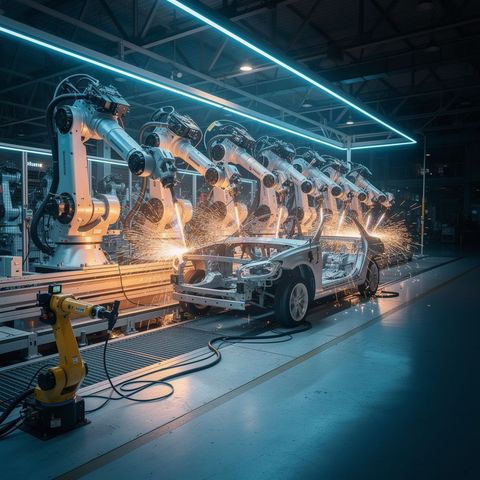
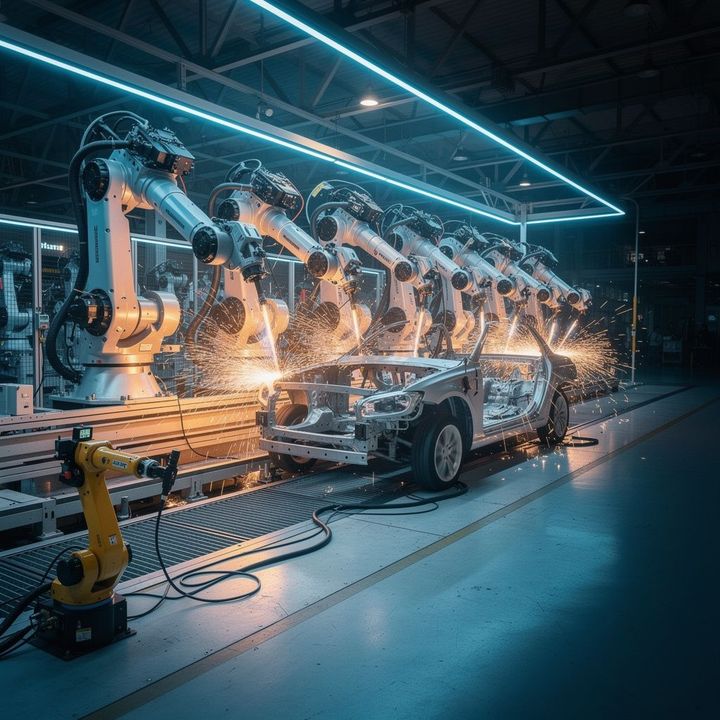
Industrial robotics has become a cornerstone of modern manufacturing, transforming how companies produce goods, improve quality, and maintain safety standards. From automotive assembly lines to pharmaceutical packaging, robots handle repetitive, dangerous, and precision-intensive tasks that would be challenging or impossible for human workers. Understanding industrial robotics fundamentals helps businesses make informed decisions about automation investments and operational efficiency.
Benefits and Limitations of Industrial Robotics
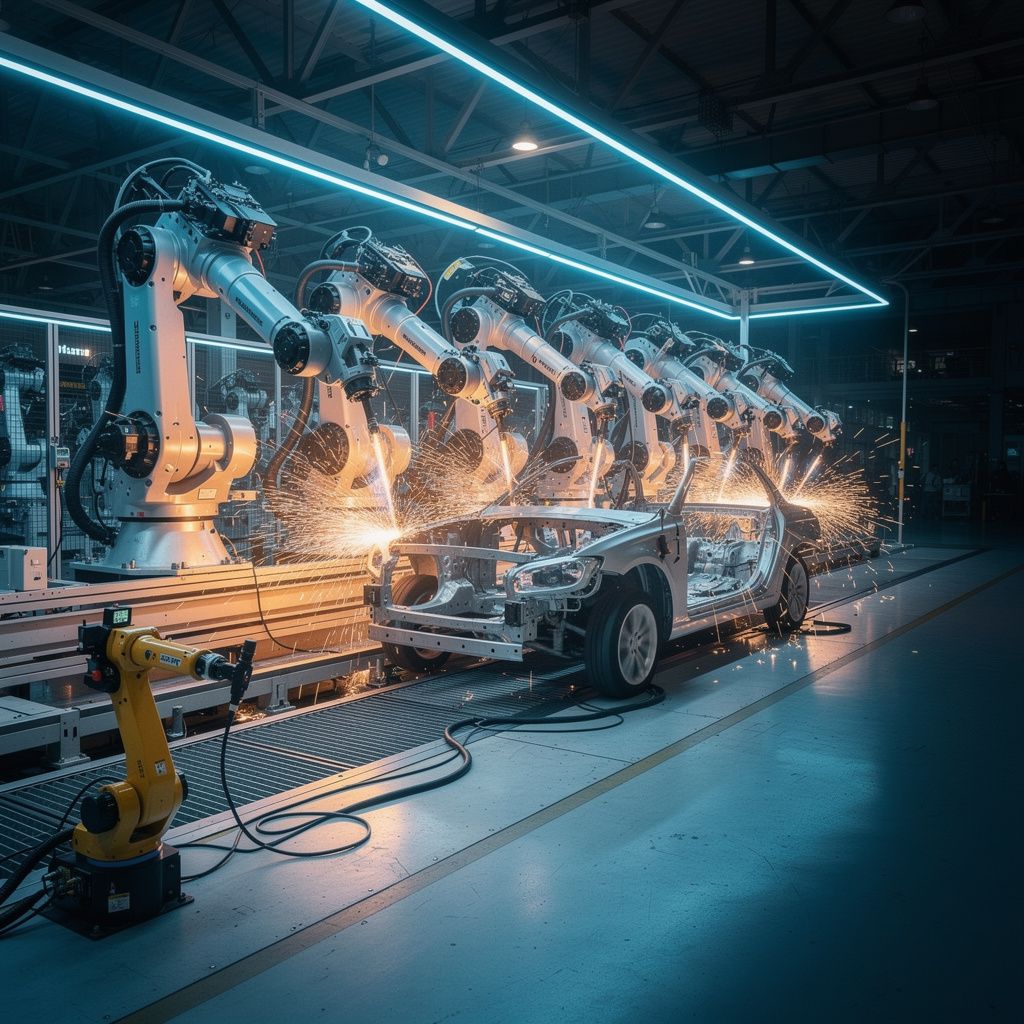
Industrial robots offer significant advantages that drive their widespread adoption across manufacturing sectors. These automated systems deliver consistent precision, operate continuously without fatigue, and handle hazardous environments safely. By reducing human exposure to dangerous conditions, robots improve workplace safety metrics while simultaneously increasing production output and product quality.
However, industrial robotics comes with important considerations. Initial capital investment can be substantial, requiring careful financial planning. Programming and integration demand specialized technical expertise. Robots perform best with repetitive, well-defined tasks and may struggle with high variability or complex decision-making. Additionally, workforce transitions and retraining needs require thoughtful management strategies.
Types of Industrial Robots
Industrial robots come in various configurations, each designed for specific applications and environments:
- Articulated Robots: Multi-jointed arms resembling human arms, ideal for welding, assembly, and material handling
- Cartesian Robots: Linear motion systems moving along X, Y, and Z axes, perfect for pick-and-place operations
- SCARA Robots: Selective Compliance Assembly Robot Arms, excellent for horizontal assembly and packaging tasks
- Collaborative Robots (Cobots): Designed to work safely alongside humans, featuring force-limiting technology and intuitive programming
- Cylindrical Robots: Rotational and vertical motion capabilities, suitable for machine loading and material transfer
- Parallel Robots: Multiple arms working in coordination, ideal for high-speed pick-and-place applications
Current Trends in Industrial Robotics
The industrial robotics landscape continues evolving with technological advancements and changing business needs. Collaborative robotics represents one of the most significant trends, enabling safer human-robot interaction in shared workspaces. Artificial intelligence integration enhances robot adaptability, allowing systems to learn from experience and optimize processes autonomously.
Advanced sensor technology, including vision systems and force feedback mechanisms, enables robots to perceive and respond to their environment more intelligently. Cloud connectivity facilitates remote monitoring, predictive maintenance, and data analytics. Additionally, smaller, more affordable robots are democratizing automation access for small and medium-sized enterprises previously unable to invest in traditional industrial systems.
Key Features and Capabilities
Modern industrial robots incorporate sophisticated features that expand their utility and effectiveness:
| Feature | Description | Application Benefit |
|---|---|---|
| Payload Capacity | Weight robots can lift and manipulate | Determines suitable applications and material handling |
| Reach | Distance robot arm can extend | Defines workspace coverage and operational area |
| Speed | Movement velocity and cycle time | Affects production throughput and efficiency |
| Precision | Accuracy of positioning and repeatability | Critical for quality-sensitive assembly operations |
| Flexibility | Ability to reprogram for different tasks | Enables multi-product manufacturing on same line |
Leading Industrial Robotics Companies
The industrial robotics market includes established manufacturers and innovative newcomers. Traditional leaders have decades of experience and extensive product portfolios. Emerging companies focus on collaborative robots, AI integration, and specialized applications. The competitive landscape drives continuous innovation, improved affordability, and expanded capabilities accessible to diverse industries and company sizes.
Selection and Implementation Considerations
Choosing appropriate industrial robots requires careful evaluation of operational needs. Consider the following factors when planning automation investments:
- Task requirements: repetitiveness, complexity, precision needs
- Environmental conditions: temperature, humidity, cleanliness requirements
- Integration needs: compatibility with existing systems and workflows
- Workforce impact: training requirements and transition planning
- Total cost of ownership: purchase, installation, programming, maintenance
- Scalability: ability to expand or modify systems as needs evolve
- Support and service: availability of technical expertise and spare parts
Best Practices for Industrial Robotics Implementation
Successful robot deployment requires strategic planning and thoughtful execution. Start with clear objective definition and thorough process analysis. Involve stakeholders from operations, maintenance, and workforce planning early in decision-making. Invest in comprehensive training programs to build internal expertise. Establish preventive maintenance schedules to maximize uptime and equipment lifespan. Monitor performance metrics continuously and adjust configurations based on real-world results. Foster a culture that views automation as enhancing rather than replacing human workers, emphasizing skill development for new roles.
Essential Implementation Checklist
- Conduct detailed process analysis and identify automation opportunities
- Define clear performance metrics and success criteria
- Evaluate multiple robot types and manufacturers
- Assess integration requirements with existing systems
- Develop comprehensive training and change management plans
- Establish preventive maintenance protocols
- Plan for ongoing technical support and troubleshooting
- Monitor ROI and adjust strategies based on results
Frequently Asked Questions
What industries benefit most from industrial robotics?
Manufacturing, automotive, electronics, pharmaceuticals, food and beverage, and logistics industries extensively utilize industrial robots. Any sector with repetitive, high-volume, or hazardous tasks can benefit from automation.
How long does industrial robot implementation typically take?
Timeline varies based on complexity, ranging from weeks for simple pick-and-place applications to several months for integrated systems requiring extensive programming and customization.
Can industrial robots work safely alongside human workers?
Collaborative robots are specifically designed for human-robot interaction, featuring force-limiting technology, safety sensors, and intuitive controls that enable safe shared workspaces.
What maintenance do industrial robots require?
Regular preventive maintenance includes lubrication, calibration checks, sensor cleaning, and software updates. Maintenance frequency depends on usage intensity and environmental conditions.
How do industrial robots improve product quality?
Robots deliver consistent precision, eliminate human fatigue-related errors, maintain exact specifications, and perform quality inspections with advanced vision systems, resulting in higher quality standards.
What skills are needed to operate and maintain industrial robots?
Operators and technicians need training in robot programming, safety protocols, basic troubleshooting, and system maintenance. Manufacturers typically provide comprehensive training programs for client teams.
Conclusion
Industrial robotics represents a transformative technology reshaping manufacturing and production environments globally. By understanding robot types, capabilities, and implementation best practices, organizations can make strategic decisions that enhance efficiency, improve safety, and maintain competitive advantage. As technology continues advancing with AI integration, collaborative capabilities, and increased affordability, industrial robotics accessibility expands across diverse industries and company sizes. Whether optimizing existing operations or planning new automation initiatives, a comprehensive understanding of industrial robotics fundamentals enables informed decision-making and successful implementation outcomes.