Transfer Learning Methods: Guide to Models, Techniques, Training, and Applications
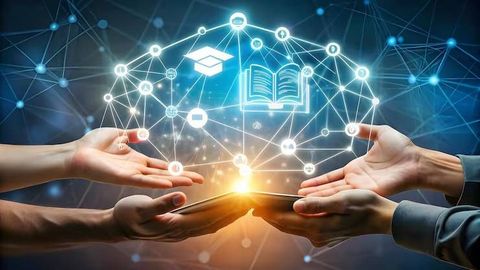
Transfer learning is a machine learning approach in which knowledge learned by a model for one task is reused for another related task.
Instead of developing a neural network entirely from the beginning, developers start with a pretrained AI model and adapt it to a new problem.
This approach is particularly common in deep learning. A model may first learn general patterns from a large dataset and later be adapted to a smaller, specialized dataset. For example, an image recognition model trained on millions of images can provide useful visual features for identifying particular types of industrial components, medical images, or natural objects.
The basic transfer learning process usually includes four stages:
- Select a suitable pretrained machine learning model.
- Prepare a dataset for the new task.
- Freeze some or most of the pretrained layers.
- Train selected layers or fine-tune part of the model.
Two widely used methods are feature extraction and fine-tuning. Feature extraction keeps most of the original model unchanged and uses its learned representations for a new prediction task. Fine-tuning allows some pretrained layers to continue learning from the new dataset. TensorFlow describes both approaches as standard ways to adapt pretrained networks.
Transfer learning is used in computer vision, natural language processing, speech recognition, healthcare research, manufacturing analytics, recommendation systems, and other machine learning applications.
Main Types of Transfer Learning
Transfer learning methods differ according to how knowledge is transferred and how much of the original model is changed.
| Method | Basic Approach | Typical Use |
|---|---|---|
| Feature Extraction | Keep pretrained layers fixed and train a new output layer | Small datasets |
| Fine-Tuning | Update selected pretrained layers | Related tasks with sufficient data |
| Domain Adaptation | Adapt a model to a different data distribution | Different environments or industries |
| Multitask Transfer | Reuse knowledge across several related tasks | Multiple prediction objectives |
| Parameter-Efficient Fine-Tuning | Adjust a small portion of model parameters | Large language and foundation models |
Feature extraction is useful when the original model has learned broadly applicable patterns. Fine-tuning is more suitable when the new dataset is sufficiently related to the original training data and contains enough examples for adaptation.
How Transfer Learning Works
A typical transfer learning workflow begins with a pretrained model. The model already contains learned parameters developed from an earlier training process.
For example, in computer vision, early neural-network layers may identify basic visual patterns such as edges, shapes, and textures. Later layers generally represent more complex patterns. A new classification layer can use these learned representations for a different task.
A simplified workflow is:
Pretrained model → Data preparation → Feature extraction or fine-tuning → Evaluation → Deployment
During fine-tuning, developers normally use a smaller learning rate than they would when training a model from random initialization. This helps reduce the risk of changing useful pretrained representations too aggressively. TensorFlow specifically recommends careful control of trainable layers and learning rates during fine-tuning.
Why Transfer Learning Matters Today
Modern AI systems often depend on large datasets and substantial computational resources. Creating a sophisticated model entirely from scratch can require extensive data, hardware, experimentation, and validation.
Transfer learning addresses part of this challenge by allowing researchers and developers to reuse existing model representations.
It can be particularly relevant for:
- Organizations working with limited domain-specific datasets
- Researchers developing specialized machine learning applications
- Healthcare and scientific research teams working with carefully controlled datasets
- Manufacturers analyzing images or sensor information
- Developers adapting language models to specialized domains
- Educational institutions teaching deep learning concepts
Transfer learning can also support faster experimentation because developers can compare several pretrained architectures before deciding which model is appropriate for a particular dataset.
However, transfer learning is not automatically better in every situation. A pretrained model can contain biases, irrelevant patterns, or assumptions that do not match the new dataset. Model selection, data quality, validation, and monitoring remain important.
Transfer Learning in Different AI Fields
In computer vision, transfer learning is widely used for image classification, object detection, segmentation, and visual inspection. Pretrained convolutional neural networks and vision transformers can provide useful representations for specialized image datasets.
In natural language processing, pretrained transformer models can be adapted for classification, summarization, question answering, information extraction, and other language tasks. Hugging Face describes fine-tuning as continuing the training of a pretrained model on a smaller, task-specific dataset.
In speech and audio processing, pretrained representations can be adapted for speech recognition, speaker identification, sound classification, and related applications.
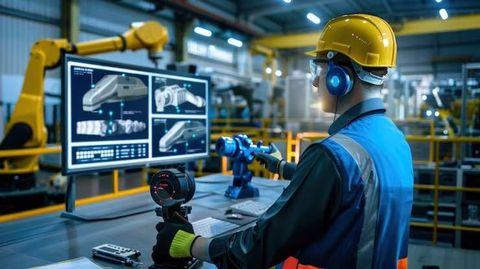
In industrial AI, transfer learning can help adapt a model trained on one production environment to another environment when the underlying patterns are sufficiently similar.
Recent Developments and Trends
Transfer learning has increasingly become connected with foundation models, transformer architectures, multimodal AI, and parameter-efficient fine-tuning.
One important development is the broader use of large pretrained models as starting points for specialized AI systems. Instead of training every model from scratch, organizations can adapt an existing foundation model to a particular language, industry, task, or dataset.
Parameter-efficient techniques are also becoming increasingly important. Rather than changing every parameter in a large model, some approaches modify a smaller set of parameters or introduce additional trainable components. This can make experimentation with large models more manageable.
The evolution of AI infrastructure is another relevant trend. In India, the IndiaAI Mission has expanded its planned computing ecosystem. A 2026 government update reported that the initiative had progressed from an original target of 10,000 GPUs to 38,000 GPUs.
India also launched initiatives around indigenous foundation models. In January 2025, IndiaAI issued a call for proposals related to foundational AI models trained on Indian datasets.
In July 2026, the government reported progress under the Safe & Trusted AI pillar, including responsible AI projects, AI Centres of Excellence, and India Data & AI Labs.
These developments are relevant to transfer learning because access to pretrained models, computing infrastructure, datasets, and responsible AI frameworks all influence how organizations develop and adapt machine learning systems.
Laws and Policies Affecting Transfer Learning in India
Transfer learning itself is not generally regulated as a separate technology category in India. However, the data used for training and adapting models can be subject to legal and policy requirements.
The Digital Personal Data Protection Act, 2023 establishes a framework concerning the processing of digital personal data. The Act received presidential assent on August 11, 2023.
An important recent development occurred on November 14, 2025, when the Ministry of Electronics and Information Technology notified the Digital Personal Data Protection Rules, 2025. The government also established a phased implementation timeline for provisions of the Act.
For machine learning teams, this means datasets containing personal information require appropriate attention to data governance, lawful processing, security, retention, and individual rights as applicable.
India's broader AI policy direction is also represented by the IndiaAI Mission, approved in March 2024 with an outlay of ₹10,371.92 crore over five years. Its pillars include compute capacity, datasets, foundation models, applications, FutureSkills, and Safe & Trusted AI.
For international development, organizations may also encounter foreign AI regulations. For example, obligations for providers of general-purpose AI models under the EU AI Act began applying from August 2, 2025.
Organizations using transfer learning should therefore consider data protection, model documentation, intellectual-property requirements, security, transparency, and applicable sector-specific rules.
Tools and Resources for Transfer Learning
Several established machine learning platforms provide practical resources for transfer learning and model fine-tuning.
- TensorFlow and Keras: Provide tutorials covering pretrained networks, feature extraction, and fine-tuning.
- PyTorch: Provides computer vision transfer learning tutorials using pretrained neural networks. Its tutorial was updated in January 2025.
- TensorFlow Hub: Provides access to pretrained TensorFlow models that can be adapted for new tasks.
- Hugging Face Transformers: Provides pretrained transformer models and documentation for fine-tuning language models.
- Google Colab: Useful for experimenting with machine learning notebooks and educational examples.
- Kaggle: Provides datasets and notebooks that can support practical machine learning experimentation.
- AI model evaluation tools: Useful for measuring accuracy, precision, recall, robustness, and other performance indicators after adaptation.
A suitable resource depends on the model type, dataset, programming framework, hardware environment, and intended application.
Frequently Asked Questions
What is transfer learning in machine learning?
Transfer learning is a technique in which a model's previously learned knowledge is reused for a new but related task. Instead of starting with random parameters, developers begin with a pretrained model and adapt it.
What is the difference between feature extraction and fine-tuning?
Feature extraction keeps the pretrained model largely fixed and uses its learned representations for a new task. Fine-tuning updates some pretrained layers so that the model becomes more specialized for the new dataset.
Is transfer learning suitable for small datasets?
It can be particularly useful when the new dataset is relatively small and the pretrained model was trained on a relevant and sufficiently broad dataset. However, performance depends on the similarity between the original and new tasks.
Is transfer learning used with large language models?
Yes. Fine-tuning pretrained transformer and foundation models is a common form of transfer learning. Hugging Face documentation describes adapting pretrained models to smaller, task-specific datasets.
What should be checked before using a pretrained AI model?
Developers should examine the model's intended use, training data information where available, license or usage conditions, known limitations, potential bias, security considerations, and performance on the target dataset.
Conclusion
Transfer learning methods provide a practical way to reuse knowledge learned by existing machine learning models. Feature extraction, fine-tuning, domain adaptation, and parameter-efficient approaches allow models to be adapted for specialized applications without treating every AI project as a completely new training problem.
The approach has become increasingly important as pretrained models and foundation models have expanded across computer vision, language, audio, and multimodal AI. At the same time, successful implementation requires careful dataset preparation, model evaluation, responsible AI practices, and attention to applicable data-protection rules.