Pneumatic Assembly Systems: A Guide to Modern Assembly Methods
Pneumatic assembly systems use compressed air to power tools, actuators, clamps, presses, and other mechanisms involved in assembling products.
These systems have been used in industrial production for decades because compressed air can create controlled mechanical movement for repetitive assembly activities. Today, pneumatic technology is often combined with sensors, electronic controls, programmable controllers, and robotics.
Pneumatic assembly equipment can perform tasks such as pressing, clamping, positioning, gripping, fastening, and inserting components. Depending on the application, a production setup may contain individual pneumatic tools or a coordinated collection of machines forming an automated assembly process.
How Pneumatic Assembly Developed
Traditional pneumatic systems were relatively simple. Air compressors supplied compressed air through valves and tubing to cylinders or other actuators. When a control signal was received, the actuator moved a component into a predetermined position.
Modern pneumatic assembly machinery can integrate electronic sensors and programmable controls with these basic principles. This allows machines to detect component positions, coordinate multiple movements, and respond to predefined conditions.
Pneumatic automation systems are commonly found in manufacturing environments where repeated mechanical actions need to occur in a defined sequence. They can also be combined with electric motors, vision systems, robotic arms, and digital monitoring equipment.
Main Components
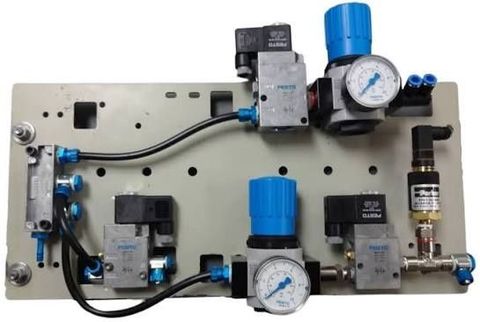
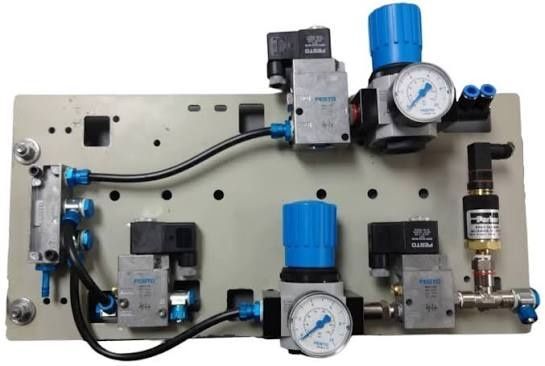
A typical pneumatic assembly system may contain several interconnected components:
- An air compressor or compressed-air source supplies the working medium.
- Air preparation components filter and regulate compressed air.
- Valves control the direction and timing of airflow.
- Cylinders convert air pressure into linear movement.
- Rotary actuators create rotational movement where required.
- Sensors detect position, movement, pressure, or component presence.
- Controllers coordinate machine sequences.
- Fixtures hold components in specific positions during assembly.
The combination of these elements depends on the product and assembly process. A small workstation may require only a few pneumatic components, while an automated production line can contain many coordinated devices.
Importance
Pneumatic assembly systems are important because manufacturing often involves repeated physical actions that need consistent positioning and timing. Activities such as pressing a component into place, clamping a workpiece, or moving a part between stations can be performed using pneumatic mechanisms.
These systems affect industries that manufacture vehicles, appliances, electronics, packaging equipment, machinery, and various consumer products. The quality of an assembled product can depend partly on how accurately components are positioned and joined.
Supporting Repetitive Assembly
Manual assembly can involve repeated movements throughout a production cycle. Pneumatic assembly machines can perform predefined movements repeatedly while an operator supervises the process or handles tasks that require judgment.
Automated pneumatic assembly systems can coordinate several actions in sequence. For example, a machine may position a component, clamp it, perform a pressing action, release the component, and then prepare for the next cycle.
Accuracy and Controlled Movement
Precision pneumatic assembly equipment can be configured to control movement through regulated pressure, valves, sensors, and mechanical stops. The achievable precision depends on factors such as component design, air pressure stability, actuator characteristics, mechanical tolerances, and control methods.
High precision pneumatic assembly systems may therefore use additional sensing and positioning mechanisms when the application requires tighter control. Pneumatic movement itself is not automatically precise; system design and operating conditions influence the result.
Production Challenges
Pneumatic systems also have practical limitations. Compressed air can be affected by pressure fluctuations, leaks, moisture, and contamination. Mechanical components can also experience wear over time.
Industrial pneumatic equipment requires appropriate inspection and maintenance practices. Tubing, seals, valves, filters, actuators, and connections may need periodic examination depending on operating conditions.
| Assembly Approach | Typical Movement Method | Common Application |
|---|---|---|
| Manual assembly | Human movement | Low-volume or variable tasks |
| Pneumatic assembly | Compressed air | Pressing, clamping, gripping |
| Electric assembly | Electric motors or actuators | Controlled positioning |
| Robotic assembly | Programmable robotic motion | Repetitive multi-axis operations |
| Hybrid assembly | Pneumatic and electric systems | Mixed production processes |
Recent Updates
From 2024 through 2026, pneumatic assembly technology has continued moving toward greater connectivity, automation, and integration with digital manufacturing systems. The underlying pneumatic mechanisms remain familiar, while sensors, controllers, software, and robotics increasingly influence how complete systems are designed.
Integration With Digital Controls
Modern industrial pneumatic automation can connect pneumatic components with programmable logic controllers and digital sensors. This allows machine sequences to be monitored and adjusted through electronic control systems.
Pneumatic production systems may also collect information about cycle activity, pressure conditions, actuator movement, and equipment status. Such data can support production monitoring and help identify unusual operating conditions.
Robotics and Collaborative Equipment
Robotic pneumatic assembly systems combine robotic movement with pneumatic grippers, clamps, or tools. Pneumatic end-effectors can be used when a robot needs to grip or manipulate particular components.
Automated precision assembly systems increasingly combine robotics with sensing and machine vision. These technologies can help a system identify component positions and coordinate movements according to predefined instructions.
Energy and System Efficiency
Energy use remains an important consideration for pneumatic equipment because compressed air requires electrical energy to generate and maintain pressure. Modern system design therefore pays attention to leakage detection, pressure regulation, actuator sizing, and efficient air distribution.
Advanced industrial pneumatic systems may include digital monitoring components that help identify abnormal air consumption or pressure conditions. These developments connect pneumatic equipment with broader industrial energy-management practices.
Hybrid Automation
Pneumatic and electric technologies are increasingly used together rather than treated as separate alternatives. A machine may use pneumatic cylinders for clamping while electric actuators handle precise positioning.
Advanced pneumatic assembly machinery can therefore form part of a larger automated manufacturing environment that includes robots, sensors, controllers, conveyors, and digital production software.
Tools and Resources
Understanding pneumatic assembly requires both physical equipment knowledge and an understanding of control sequences. Several types of tools and resources can help explain, design, or evaluate these systems.
Design and Calculation Resources
Pneumatic design resources can help users estimate actuator requirements and understand air consumption. Common calculations involve cylinder force, operating pressure, piston area, stroke length, and approximate air requirements.
Circuit-design software can also be used to create pneumatic diagrams before equipment is assembled. These diagrams show how valves, actuators, regulators, and other components are connected.
Training and Documentation
Manufacturer technical manuals, pneumatic circuit diagrams, component datasheets, industrial automation textbooks, and engineering reference materials can explain how pneumatic equipment operates.
Useful resources include:
- Pneumatic circuit simulation platforms for testing control sequences.
- Cylinder sizing calculators for estimating force requirements.
- Air-consumption calculators for evaluating pneumatic demand.
- PLC programming resources for sequence control.
- Technical standards covering pneumatic system symbols and safety practices.
- Maintenance checklists for inspecting air preparation equipment and connections.
System Monitoring Tools
Pressure gauges, digital pressure sensors, flow measurement devices, and electronic monitoring platforms can provide information about pneumatic system conditions. These tools can help identify pressure changes and unusual operating behavior.
For larger pneumatic assembly line equipment, monitoring can be integrated with industrial control software. This creates a connection between physical assembly operations and production data.
FAQs
What are pneumatic assembly systems?
Pneumatic assembly systems use compressed air to create controlled mechanical movements during assembly. They may include cylinders, valves, sensors, controllers, clamps, grippers, and related equipment.
What is pneumatic assembly equipment used for?
Pneumatic assembly equipment is commonly used for pressing, clamping, positioning, gripping, inserting, and moving components. Its application depends on the design of the assembly process.
How do automated pneumatic assembly systems work?
Automated pneumatic assembly systems use programmed controls and pneumatic components to perform a sequence of mechanical actions. Sensors can provide information about component positions or machine conditions, allowing the control system to coordinate the sequence.
What are robotic pneumatic assembly systems?
Robotic pneumatic assembly systems combine robotic equipment with pneumatic tools such as grippers or clamps. The robot provides programmable movement while pneumatic components perform specific gripping or mechanical actions.
What are high precision pneumatic assembly systems?
High precision pneumatic assembly systems are designed for applications where controlled movement and positioning are important. They may use regulated pressure, sensors, mechanical guides, and electronic controls to improve process consistency.
Conclusion
Pneumatic assembly systems use compressed air, mechanical components, sensors, and controls to perform structured assembly activities. Modern pneumatic assembly machinery increasingly works alongside robotics, digital controls, machine vision, and production-monitoring technologies. System performance depends on factors such as pressure management, component selection, mechanical design, control logic, and maintenance. Pneumatic technology therefore remains one part of a broader industrial automation environment that combines physical movement with digital process control.