Mass Flow Meters Guide: Working Principles, Types, and Industrial Applications
Mass flow meters are instruments used to measure the mass of a gas or liquid passing through a pipe over a specific period.
Unlike volumetric flow meters, which measure the volume of a moving substance, mass flow meters determine the quantity of material by mass. They are used in chemical processing, food production, pharmaceutical manufacturing, energy systems, and other industrial operations where accurate material measurement is important.
Industrial mass flow meter manufacturers produce instruments based on different measurement principles, including the Coriolis effect and thermal energy transfer. The appropriate instrument depends on the substance being measured, operating conditions, required accuracy, and process requirements. Modern digital mass flow meter systems can also connect measurement instruments with monitoring software and automated control equipment.
How Mass Flow Meters Work
A mass flow meter measures how much material moves through a system by detecting physical properties associated with the flowing substance. Some instruments measure changes in vibrating tubes, while others evaluate heat transfer between a heated sensor and the moving gas.
The resulting measurement can be expressed in units such as kilograms per hour, grams per minute, or tonnes per hour. Certain instruments also calculate related values, including density, temperature, or volumetric flow, depending on their design.
Main Types of Mass Flow Meters
Two widely used categories are Coriolis and thermal mass flow meters. Each operates differently and is suited to particular applications.
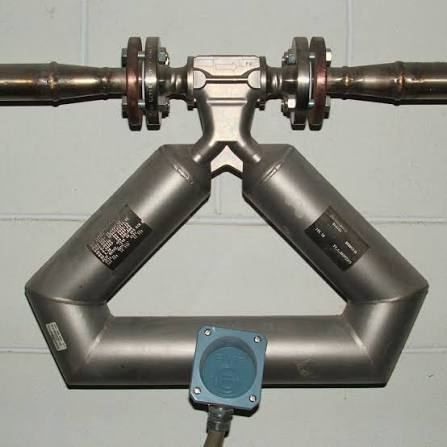
Coriolis mass flow meters measure mass flow by detecting changes in the vibration of tubes carrying a flowing substance.
Thermal mass flow meters estimate gas mass flow by measuring heat transfer between a heated sensor and the gas.
Specialized mass flow instruments are designed for particular gases, operating ranges, or process conditions.
Coriolis flow meters are commonly used for liquids and gases, while thermal instruments are frequently used for gas measurement. Selection depends on the substance, installation conditions, and measurement requirements.
Importance
Accurate mass flow measurement helps industrial facilities monitor material consumption, maintain process conditions, and track production quantities. In chemical processing, for example, an incorrect flow reading can affect the proportions of ingredients entering a reaction vessel. In energy applications, measurement data can help operators monitor gas consumption and evaluate system performance.
High precision mass flow measurement systems are also relevant when small changes in flow can influence product consistency or process stability. Their importance extends to industries that handle expensive raw materials, compressed gases, liquid ingredients, and other substances that require controlled quantities.
Applications Across Industries
Mass flow meters are used in many industrial environments because different processes require reliable information about material movement.
Chemical processing: Mass flow meters for chemical processing help monitor the movement of liquids, gases, and process ingredients.
Food and beverage production: Instruments measure ingredients and liquids used in mixing, blending, and filling operations.
Energy and utilities: Industrial gas flow measurement equipment helps monitor fuel gas and other gases moving through pipelines.
Pharmaceutical manufacturing: Flow measurement supports controlled handling of process materials and gases.
Environmental monitoring: Gas measurement instruments can help quantify airflow and emissions-related streams in suitable applications.
Semiconductor production: Specialized instruments measure small quantities of process gases used in manufacturing environments.
The measurement method must match the physical and chemical properties of the material. Gas composition, fluid viscosity, pressure, temperature, and operating range can affect instrument selection and performance.
Factors Affecting Measurement Accuracy
Measurement accuracy depends on more than the meter itself. Installation quality, calibration, operating conditions, and maintenance can all influence readings.
Common considerations include:
Fluid compatibility with the meter's wetted materials.
Pressure and temperature limits.
Expected minimum and maximum flow rates.
Gas composition or liquid properties.
Pipe layout, vibration, and installation requirements.
Calibration procedures and measurement uncertainty.
Coriolis flow meter calibration systems can be used to evaluate instrument performance against established reference measurements. Calibration requirements vary according to the application, instrument specifications, and applicable quality procedures.
Recent Updates
Developments in mass flow measurement from 2024 through 2026 generally reflect wider industrial digitization, improved instrument diagnostics, and greater integration with automated control systems. These changes are part of a broader move toward collecting process data continuously and making measurement information easier to interpret.
Digital Monitoring and Industrial Connectivity
Digital mass flow meter systems increasingly support electronic communication with programmable logic controllers, supervisory control systems, and plant monitoring platforms. Depending on the instrument, communication options may include industrial Ethernet protocols, fieldbus technologies, or digital signal interfaces.
Connected measurement systems can help operators compare flow readings with other process variables. They may also provide diagnostic information about instrument status, although available functions differ by model and manufacturer.
Automation and Process Control
Mass flow controllers combine flow measurement with a control mechanism that adjusts flow toward a specified setpoint. Mass flow controllers for process automation are used when a process requires a controlled gas or liquid flow rather than measurement alone.
These devices may operate within larger control systems that coordinate valves, pumps, sensors, and production equipment. Their performance depends on the controller design, the fluid, and the operating conditions.
Calibration and Diagnostic Developments
Manufacturers continue to develop diagnostic functions that help identify measurement irregularities and assess instrument condition. Some systems can detect changes in operating behavior or indicate when further inspection may be appropriate.
Calibration remains important because digital communication and built-in diagnostics do not automatically establish measurement accuracy. Calibration practices should follow the instrument's technical documentation and the requirements of the specific application.
| Technology | Measurement principle | Common applications | Key consideration |
|---|---|---|---|
| Coriolis mass flow meter | Changes in vibrating tubes | Liquids, slurries, and some gases | Installation, pressure drop, and fluid compatibility |
| Thermal mass flow meter | Heat transfer to flowing gas | Air, natural gas, and suitable process gases | Gas composition and thermal properties |
| Mass flow controller | Flow measurement combined with active control | Gas delivery and automated processes | Setpoint range and control response |
| Digital flow measurement system | Electronic measurement and data communication | Connected industrial operations | Protocol compatibility and configuration |
Tools and Resources
Choosing and maintaining mass flow measurement equipment involves technical documentation, calibration information, and process data. Several resource types can help explain instrument capabilities and operating requirements.
Manufacturer Documentation and Selection Tools
Technical documents from industrial mass flow meter manufacturers typically describe measurement ranges, pressure ratings, fluid compatibility, accuracy specifications, electrical connections, and installation conditions. These details help users understand whether an instrument is appropriate for a particular process.
Coriolis mass flow meter suppliers and gas mass flow meter manufacturers may also publish application notes explaining instrument selection for specific fluids or operating environments. Published specifications should be reviewed alongside actual process conditions rather than treated as universal performance figures.
Calibration and Engineering Resources
Calibration laboratories, traceability documentation, and instrument manuals help explain how flow measurements are verified. Coriolis flow meter calibration systems may use reference standards and documented procedures to evaluate measurement performance.
Useful technical resources include:
National Institute of Standards and Technology (NIST) publications on measurement science.
International Organization for Standardization (ISO) documents concerning flow measurement and calibration.
Manufacturer manuals covering installation, operation, and instrument diagnostics.
Engineering calculators for converting mass flow units, such as kilograms per hour to grams per second.
Process documentation templates for recording operating conditions, calibration results, and maintenance history.
The relevance of each resource depends on the measurement technology and industry. Applicable standards and calibration procedures should be confirmed for the specific instrument and operating environment.
FAQs
What is an industrial mass flow meter used for?
An industrial mass flow meter measures the mass of gas or liquid moving through a process. It is used in applications such as chemical production, gas delivery, food processing, energy systems, and industrial manufacturing.
What is the difference between Coriolis and thermal mass flow meters for industrial use?
Coriolis meters measure mass flow by detecting changes in vibrating tubes. Thermal mass flow meters estimate gas mass flow from heat transfer. Coriolis technology is used for liquids and gases, while thermal technology is commonly applied to suitable gas measurement tasks.
How do mass flow meters for chemical processing work?
These instruments measure the movement of process materials using a suitable measurement principle. Coriolis meters can measure many liquids and some gases, while thermal meters are generally used for compatible gases. Material compatibility, pressure, temperature, and chemical properties influence selection.
Why is calibration important for high precision mass flow measurement systems?
Calibration compares an instrument's readings with an appropriate reference to assess measurement performance. It helps identify deviations and supports measurement traceability where required. Calibration intervals depend on operating conditions, instrument specifications, and quality requirements.
What are mass flow controllers for process automation?
Mass flow controllers measure flow and actively adjust it toward a defined setpoint. They are commonly used in gas delivery, laboratory equipment, and industrial processes that require controlled flow rates.
Conclusion
Mass flow meters measure the quantity of gas or liquid moving through a process by mass rather than volume. Coriolis and thermal technologies serve different measurement needs, with selection depending on fluid properties, operating conditions, and accuracy requirements. Digital connectivity and automated control are expanding how measurement data is monitored and used in industrial environments. Proper installation, calibration, and maintenance remain important for dependable measurement results.