Machine Vision in Industrial Systems: Guide to Components, Processes, and Applications
Machine vision is a technology that allows industrial equipment to capture images and use software to interpret visual information.
A typical machine vision system combines industrial cameras, lenses, controlled lighting, image sensors, processing hardware, and machine vision software. These components work together to identify patterns, measure dimensions, detect visible defects, read codes, and guide automated equipment.
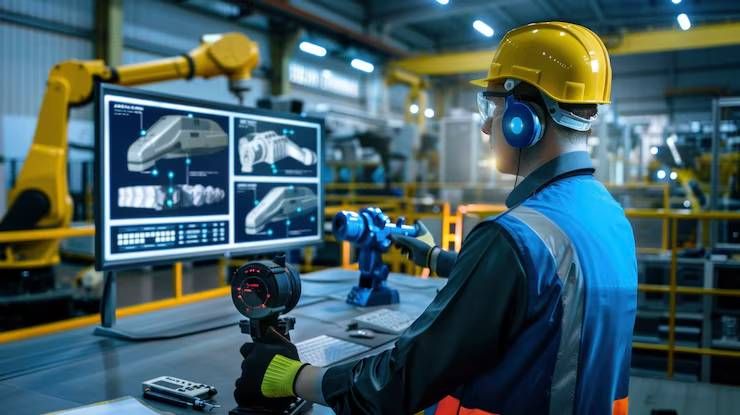
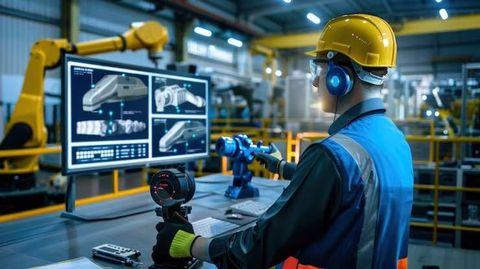
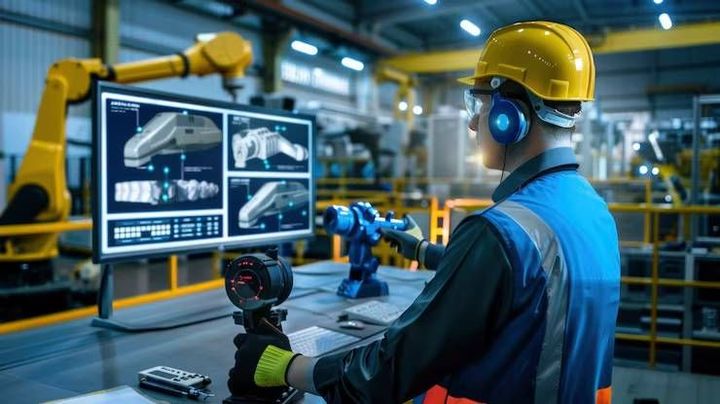
The technology exists because many manufacturing processes require consistent visual inspection. Production environments can involve repetitive tasks, high speeds, small components, difficult lighting, and large volumes of data. Machine vision turns these visual tasks into measurable digital information that can connect with production and quality systems.
How Industrial Machine Vision Works
A machine vision process normally follows a sequence: image capture, image processing, analysis, and decision-making. An industrial camera captures an image when a sensor or production event triggers it. Lighting is arranged to make the relevant features visible. The software then processes the image and applies rules or trained models.
Common machine vision components include:
- Industrial cameras for image capture
- Lenses selected for field of view and resolution
- LED lighting for controlled illumination
- Image sensors and frame-grabber hardware
- Machine vision software for image processing
- Industrial PCs or edge computing devices
- Communication interfaces for PLCs, robots, and factory networks
The result may be a measurement, classification, location, identification, or pass/fail signal. It can then be sent to a programmable logic controller, robot, manufacturing execution system, or quality database.
Why Machine Vision Matters in Modern Manufacturing
Industrial machine vision is important because manufacturers increasingly need consistent inspection and traceable production data. The technology is used in sectors such as automotive, electronics, pharmaceuticals, food processing, packaging, logistics, and semiconductor manufacturing.
Typical applications include:
- Automated optical inspection of electronic assemblies
- Surface inspection for scratches, cracks, stains, or missing features
- Dimensional measurement of manufactured parts
- Barcode, QR code, and character recognition
- Robot guidance and component positioning
- Presence and absence detection
- Label and packaging verification
- Assembly verification
- Process monitoring and anomaly detection
Machine vision also supports quality control automation by converting images into structured information. A system can retain the image, measurement, detected feature, and inspection result for later analysis.
Machine Vision Technologies at a Glance
| Technology | Main Role | Typical Industrial Use |
|---|---|---|
| 2D vision | Analyze surface and shape information | Inspection, OCR, code reading |
| 3D vision | Capture depth and volume | Measurement, bin picking, geometry checks |
| Hyperspectral imaging | Analyze spectral characteristics | Material and product inspection |
| Deep learning vision | Recognize complex visual patterns | Defect classification and anomaly detection |
| Edge vision | Process images close to the machine | Fast inspection and local decision-making |
People and Industries Affected
Machine vision affects production engineers, quality teams, automation specialists, maintenance personnel, system integrators, and factory managers. It also influences equipment manufacturers that design machines around cameras, sensors, robotics, and control systems.
For operators, the main change may be a shift from manual checking toward automated inspection combined with human review. People can focus on exception handling, process improvement, calibration, and unusual results.
Machine vision can provide structured inspection data for quality analysis and production monitoring. For equipment and industrial camera manufacturers, it creates requirements for imaging quality, processing speed, connectivity, and software integration.
Recent Developments and Trends
Machine vision is developing alongside artificial intelligence, edge computing, industrial networking, and advanced semiconductor manufacturing.
One notable standards development is ISO/DIS 24942, a draft international standard for methods used to measure and present specification parameters and characterization data for cameras and image sensors used in machine vision. ISO registered the draft for the enquiry stage on July 29, 2026, with the DIS ballot initiated on October 1, 2026. The standard remains under development and should not be treated as a final published requirement.
Another important trend is the use of deep learning for industrial image analysis. Traditional rule-based vision remains useful where lighting, geometry, and inspection criteria are stable. Deep learning is useful when visual variation is harder to describe with fixed rules.
India's electronics and semiconductor manufacturing expansion is also relevant to machine vision. The India Semiconductor Mission reported several semiconductor developments during 2025, including the launch of an end-to-end OSAT pilot line facility in Sanand, Gujarat, announced on October 3, 2025. Semiconductor production commonly requires detailed inspection and measurement at multiple stages, increasing the relevance of advanced vision technologies.
The Electronics Component Manufacturing Scheme was notified on April 8, 2025, with guidelines published on April 26, 2025. It includes camera module sub-assemblies and capital equipment used in electronics manufacturing, areas connected with imaging and automation.
Laws, Policies, and Standards in India
Machine vision systems in India are influenced by several areas of regulation rather than by one single machine vision law.
The Occupational Safety, Health and Working Conditions Code, 2020 consolidates rules relating to occupational safety, health, and working conditions. India Code records November 21, 2025 as its enforcement date. Where vision equipment is integrated into machinery or automated production cells, safety planning, guarding, emergency controls, and safe operating procedures remain important.
Data protection can matter when cameras capture identifiable people rather than only products or machines. MeitY lists the Digital Personal Data Protection Rules, 2025 as published on November 14, 2025, together with an enforcement timeline and information about the Data Protection Board of India. Facilities using cameras for worker monitoring or other personal-data purposes should assess applicable obligations.
India's electronics manufacturing policies are another relevant area. The Electronics Component Manufacturing Scheme covers segments including camera module sub-assemblies and capital equipment used in electronics manufacturing. The India Semiconductor Mission also supports development of the semiconductor and display ecosystem.
International standards can help organizations define technical specifications and safety practices, but applicable requirements depend on the machine, industry, location, and intended use. Organizations should verify current Indian standards, sector-specific rules, and machine safety requirements before deployment.
Tools and Resources for Machine Vision
Several categories of tools help with machine vision planning, development, testing, and maintenance.
- Camera and lens calculators can help estimate field of view, working distance, resolution, and pixel coverage.
- Machine vision software platforms provide image acquisition, filtering, measurement, classification, and inspection functions.
- Industrial camera configuration tools help evaluate exposure, frame rate, sensor size, interface, and image quality.
- PLC and robot integration tools connect inspection results with automated equipment.
- Dataset annotation platforms support preparation of images for deep learning models.
- Calibration tools help maintain measurement accuracy and consistent imaging.
- ISO standards resources provide information about relevant international standards and their development status.
- MeitY and India Semiconductor Mission portals provide information on Indian electronics and semiconductor programs.
A practical specification normally records camera resolution, lens characteristics, lighting, image-processing method, cycle time, communication protocol, inspection criteria, environmental conditions, and data-retention requirements.
Frequently Asked Questions
What is machine vision in industrial systems?
Machine vision is the use of cameras, lighting, sensors, computing hardware, and software to capture and interpret visual information from industrial processes. It can support inspection, measurement, identification, positioning, and process monitoring.
What is the difference between machine vision and computer vision?
Computer vision is the broader field of interpreting images and video using algorithms and artificial intelligence. Machine vision usually refers to industrial applications where cameras and image-processing systems are integrated with machines, automation controls, and production processes.
Can machine vision use artificial intelligence?
Yes. Deep learning and other AI techniques can be used for tasks such as defect classification, anomaly detection, object recognition, and complex visual inspection. Traditional image-processing methods remain useful for structured and predictable applications.
What factors affect machine vision accuracy?
Image resolution, lens selection, lighting, camera position, object movement, surface properties, calibration, processing algorithms, and environmental conditions can all affect results. A strong inspection design considers the complete imaging system rather than the camera alone.
Does machine vision always replace human inspection?
No. Some applications can be highly automated, while others benefit from human review. The appropriate balance depends on inspection complexity, risk, product variation, regulatory requirements, and the consequences of an incorrect decision.
Conclusion
Machine vision is an important part of industrial automation because it connects visual information with measurable production decisions. Industrial cameras, lighting, machine vision software, edge computing, robotics, and AI can support inspection, measurement, identification, and process monitoring.
Developments in deep learning, 3D imaging, edge processing, semiconductor manufacturing, and camera standards are expanding industrial applications. In India, electronics and manufacturing policies are supporting wider use of advanced inspection and automation.