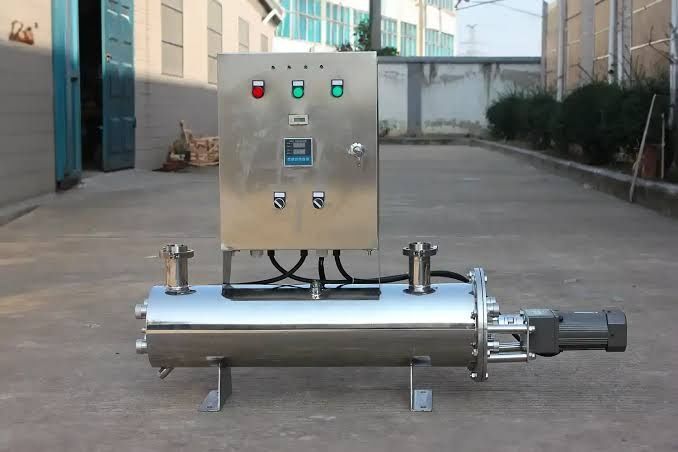
Industrial UV Water Treatment for Efficient Disinfection
Industrial UV water treatment uses ultraviolet (UV) light to inactivate microorganisms in water without relying on added disinfectant chemicals.
It is used in applications where microbial control is important, including process water, drinking water, wastewater reuse, and high-purity water systems.
Why Industrial UV Water Treatment Matters
Water used in industrial processes can contain bacteria, viruses, protozoa, and other microorganisms. If microbial levels are not controlled, they can affect water quality, production processes, equipment, and downstream applications.
UV treatment works by exposing microorganisms to a controlled dose of ultraviolet light. The UV energy can damage their genetic material, preventing them from reproducing effectively.
Key advantages of UV treatment include:
- Chemical-free microbial inactivation: UV does not require continuous addition of conventional disinfectants.
- Rapid treatment: Water can be treated as it passes through a UV reactor.
- No major chemical residual: UV generally does not leave a disinfectant residual in the treated water.
- Compact equipment: UV reactors can be integrated into existing water treatment lines.
- Continuous operation: Systems can operate alongside automated monitoring and control equipment.
How Industrial UV Water Treatment Works
An industrial UV water treatment system generally consists of a UV reactor, UV lamps, quartz sleeves, sensors, electrical controls, and monitoring equipment.
The treatment process typically follows these stages:
- Water enters the UV reactor after suitable pretreatment.
- UV lamps generate ultraviolet radiation, commonly within the germicidal UV-C range.
- Water passes around the lamps, allowing microorganisms to receive a controlled UV dose.
- UV energy damages microbial genetic material, reducing their ability to reproduce.
- Treated water exits the reactor and continues to the next stage of the process.
UV treatment performance depends on factors such as UV intensity, exposure time, water flow, and water clarity.
Main Components of a UV Water Treatment System
UV Reactor
The reactor provides the chamber where water is exposed to ultraviolet radiation. Its design influences flow distribution and UV exposure.
UV Lamps
UV lamps generate the radiation required for microbial inactivation. Lamp type, output, operating hours, and replacement intervals can affect system performance.
Quartz Sleeves
Quartz sleeves separate the lamps from the water while allowing UV radiation to pass through. Deposits or fouling on the sleeves can reduce UV transmission.
UV Sensors
Sensors monitor UV intensity and can provide information about whether the system is receiving sufficient radiation.
Control System
Industrial systems may use control panels, alarms, flow monitoring, automatic lamp controls, and data logging to support consistent operation.
Factors That Affect UV Treatment Performance
Several water characteristics influence how effectively ultraviolet radiation reaches microorganisms.
| Factor | Effect on UV Treatment |
|---|---|
| Water turbidity | High turbidity can reduce UV penetration |
| Suspended solids | Can shield microorganisms from UV exposure |
| UV transmittance | Higher transmission generally allows better UV penetration |
| Flow rate | Changes the exposure conditions inside the reactor |
| Lamp intensity | Determines available UV radiation |
| Sleeve cleanliness | Deposits can reduce UV transmission |
| Water temperature | Can influence lamp performance |
| Microbial type | Different organisms can require different UV doses |
For this reason, pretreatment can be important when the incoming water contains high levels of suspended particles or substances that reduce UV transmission.
Industrial UV Treatment Compared With Other Methods
UV treatment is often used as one part of a broader water treatment process rather than as the only treatment technology.
| Treatment Method | Primary Function | Chemical Addition | Typical Role |
|---|---|---|---|
| UV treatment | Microbial inactivation | Generally no | Final disinfection |
| Chlorination | Microbial control | Yes | Disinfection and residual protection |
| Ozonation | Oxidation and disinfection | Ozone generated on site | Advanced treatment |
| Reverse osmosis | Dissolved contaminant removal | No | Water purification |
| Ultrafiltration | Particle and microorganism separation | No | Membrane treatment |
The appropriate configuration depends on the incoming water quality, required treatment level, flow rate, and downstream process requirements.
Applications of Industrial UV Water Treatment
Industrial UV systems can be used across different sectors.
Food and beverage processing: UV treatment can support microbial control in process and ingredient water.
Pharmaceutical manufacturing: UV systems may be integrated into purified-water treatment trains where microbial control is required.
Electronics manufacturing: High-purity water systems can use UV technology as part of a larger purification process.
Wastewater reuse: UV can provide a final microbial-control step before treated water is reused.
Municipal and commercial water systems: Larger UV reactors can be incorporated into water disinfection systems.
Industrial process water: Manufacturing facilities can use UV treatment to control microorganisms in circulating or process water.
Automation and Monitoring
Modern industrial UV water treatment equipment can incorporate automated controls to maintain operating conditions.
Common monitoring functions include:
- UV intensity monitoring
- Water flow measurement
- Lamp status monitoring
- Operating-hour tracking
- Automatic alarms
- Reactor pressure monitoring
- Control-panel integration
- Data recording
Automatic lamp control can also adjust operation according to system demand in some configurations. These functions help operators identify changes that could affect UV exposure.
Maintenance Considerations
Regular maintenance is important for consistent UV performance. Quartz sleeves should be inspected and cleaned when deposits accumulate, while UV lamps should be replaced according to their operating characteristics and manufacturer specifications.
Operators should also check UV sensors, flow controls, electrical connections, alarms, and reactor components. Water pretreatment should be maintained because excessive turbidity or suspended solids can reduce UV transmission.
Safety Considerations
UV-C radiation can be harmful to skin and eyes. Industrial UV systems therefore require enclosed reactors and appropriate interlocks or protective arrangements.
Maintenance procedures should follow the equipment manufacturer's safety instructions. Electrical isolation is also important before opening equipment for inspection or maintenance.
FAQs
1. What is industrial UV water treatment?
Industrial UV water treatment uses ultraviolet radiation to inactivate microorganisms in water. It is commonly integrated into industrial purification and disinfection processes.
2. Does UV treatment add chemicals to water?
UV treatment itself does not normally require adding a disinfectant chemical to the water. However, other treatment stages may use chemicals depending on the overall process.
3. Can UV remove dissolved minerals?
No. UV treatment is primarily intended for microbial inactivation. Technologies such as reverse osmosis, ion exchange, or demineralization are used when dissolved minerals need to be reduced.
4. Why is water pretreatment important before UV treatment?
High turbidity, suspended solids, and low UV transmittance can interfere with UV penetration. Pretreatment can help provide clearer water for more consistent UV exposure.
5. How often do UV lamps need replacement?
Lamp replacement depends on lamp type, operating conditions, operating hours, and the equipment manufacturer's specifications. UV intensity monitoring can help identify declining lamp performance.
Conclusion
Industrial UV water treatment provides a rapid method for microbial inactivation using ultraviolet radiation. Its effectiveness depends on factors such as UV dose, flow conditions, lamp performance, water clarity, and reactor design.
When integrated with appropriate pretreatment, monitoring, and maintenance, UV technology can form an important part of industrial water purification and disinfection systems.