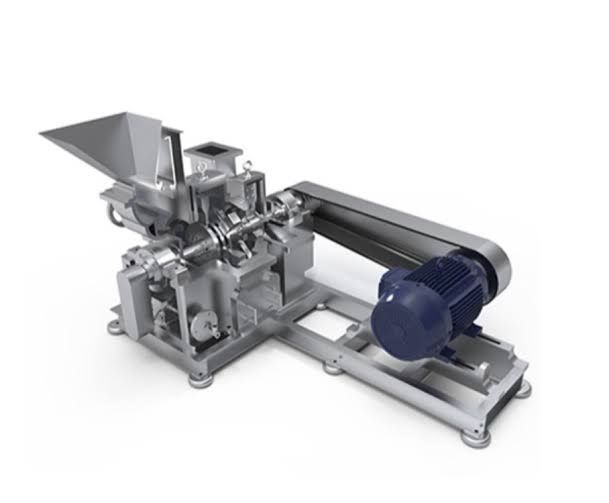
Industrial Pulverizers Guide to Grinding Processes and Equipment Types
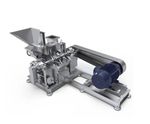
Industrial pulverizers are machines used to reduce solid materials into smaller particles or powders.
An industrial pulverizer machine can process materials such as minerals, chemicals, food ingredients, plastics, agricultural materials, and other industrial substances. The basic purpose is to create a particle size that is suitable for a later manufacturing or processing stage.
The development of industrial pulverizing equipment is closely connected with the need to process raw materials more consistently. Earlier grinding methods often depended on manual effort or simple mechanical arrangements. As manufacturing processes became more complex, specialized industrial pulverizer machines were developed to handle larger quantities and provide more controlled particle reduction.
How Pulverizing Works
Pulverizing generally involves applying mechanical force to a material. Depending on the equipment design, this force may come from impact, compression, shearing, attrition, or a combination of these actions.
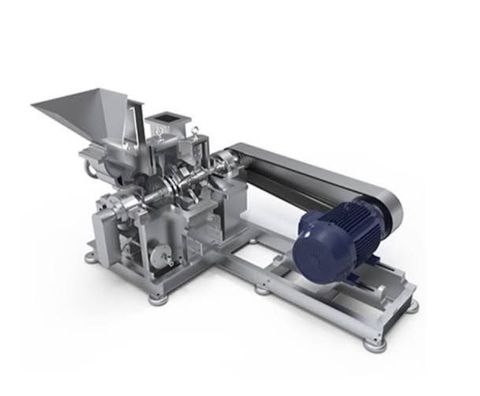
An industrial grinding pulverizer may contain rotating components, grinding surfaces, screens, classifiers, or other internal parts. Material enters the processing area, undergoes size reduction, and leaves after reaching a specified particle range.
The required grinding process depends on the material and the intended result. A soft material may respond differently from a hard mineral, while fibrous materials can behave differently from brittle substances.
Common Pulverizer Types
Different machine designs are used for different materials and particle-size requirements. Common categories include:
- Hammer pulverizers, which use rapidly moving hammers to impact material.
- Disc or plate pulverizers, which reduce material between rotating or fixed surfaces.
- Ball mills, which use grinding media inside a rotating chamber.
- Pin mills, which use closely positioned pins to create impact and shearing forces.
- Air-classifying mills, which combine grinding with particle classification.
- Roller mills, which use compression between rollers to reduce material size.
These machines form part of broader pulverizer grinding equipment and industrial milling machines used across many manufacturing sectors.
Importance
Industrial pulverization plays an important role because particle size can influence how a material behaves during later processing. Powdered or finely ground materials may be easier to mix, transport, heat, blend, mold, or incorporate into another formulation.
Industries that process minerals, chemicals, polymers, food ingredients, construction materials, and agricultural products may use industrial powder processing equipment as part of their production processes.
Supporting Consistent Material Processing
Material that enters a manufacturing process with inconsistent particle sizes can behave differently during mixing or other operations. Industrial material grinding systems are therefore designed to produce particles within a defined range.
High capacity industrial pulverizers can be used where substantial quantities of material need to pass through a grinding stage. The actual capacity depends on factors such as material properties, feed size, moisture, machine configuration, and required particle size.
Matching Equipment to Materials
Selecting suitable pulverizing equipment requires an understanding of the material being processed. Hardness, moisture, abrasiveness, temperature sensitivity, fibrous structure, and desired particle size can all affect equipment selection.
For example, a brittle mineral may respond effectively to impact or compression, while a heat-sensitive material may require a process designed to limit temperature increases during grinding.
Industrial Applications
Industrial pulverizing equipment is used in several sectors. Typical applications include:
- Mineral processing, where rocks and minerals are reduced to smaller particles.
- Chemical processing, where solid materials are prepared for blending or further processing.
- Food processing, where selected ingredients may be reduced to powder form.
- Plastic processing, where certain materials are reduced into smaller particles for subsequent handling.
- Agricultural processing, where dried materials may be ground into suitable particle sizes.
- Construction materials, where selected raw materials may undergo crushing and grinding.
A heavy duty industrial pulverizer may be designed for demanding materials or extended processing conditions, while precision pulverizing equipment is focused on tighter control of particle characteristics.
Recent Updates
From 2024 through 2026, developments in pulverizing technology have generally focused on automation, energy management, particle-size control, monitoring, and integration with wider production systems. These developments reflect broader changes across industrial manufacturing.
Greater Process Automation
Automatic pulverizing machines increasingly incorporate sensors and control systems that monitor operating conditions. Automated powder processing systems can coordinate feeding, grinding, classification, and material collection with limited manual intervention.
Automation can also help operators monitor variables such as temperature, motor load, vibration, airflow, and production conditions. These measurements can provide information for process monitoring and equipment maintenance.
Improved Particle Classification
Modern industrial powder grinding systems may combine grinding with classification. A classifier separates particles according to characteristics such as size or aerodynamic behavior, allowing material that does not meet the required range to return for additional processing.
This approach is particularly relevant where particle-size consistency is important. High precision pulverizer machines may use controlled airflow, screening, or classification arrangements to manage the final material characteristics.
Digital Monitoring and Equipment Data
Advanced industrial grinding equipment is increasingly connected to digital monitoring systems. Sensors can collect information about operating conditions and transmit it to control interfaces or production databases.
This data can support condition monitoring and help identify unusual changes in machine operation. Advanced industrial pulverizing systems may therefore combine mechanical grinding components with electronic controls and data collection.
| Equipment Type | Main Size-Reduction Action | Typical Material Characteristics |
|---|---|---|
| Hammer pulverizer | Impact | Brittle and moderately hard materials |
| Roller mill | Compression | Materials suitable for pressure-based grinding |
| Pin mill | Impact and shearing | Fine grinding applications |
| Ball mill | Impact and attrition | Minerals and other hard materials |
| Air-classifying mill | Impact with classification | Fine powders requiring particle control |
| Disc pulverizer | Compression and shearing | Selected dry and semi-dry materials |
The table provides general categories; actual performance depends on machine design, operating conditions, and material properties.
Tools and Resources
Understanding pulverizing equipment often requires more than identifying a machine type. Material characteristics and the desired particle range should also be considered when evaluating a grinding process.
Particle-Size Measurement Tools
Particle-size analyzers can measure the distribution of particles within a processed material. Common techniques include sieve analysis, laser diffraction, and image-based measurement.
Sieve analysis is often used for relatively coarse particles, while laser-based methods can characterize finer powders. The appropriate method depends on particle characteristics and the required measurement range.
Process Calculation Resources
Several basic calculations can help explain grinding operations. Common measurements include feed rate, throughput, moisture percentage, particle-size distribution, and energy consumption.
Useful resources may include:
- Particle-size conversion charts for comparing measurement systems.
- Sieve analysis worksheets for recording particle distributions.
- Material property databases for understanding hardness and density.
- Equipment manuals for operating and maintenance information.
- Process flow diagrams for documenting material movement through a grinding system.
Safety and Technical References
Grinding equipment can involve rotating machinery, airborne particles, heat, noise, and stored mechanical energy. Technical documentation, workplace safety guidance, equipment manuals, and applicable industrial standards can provide information about safe operating practices.
Complete industrial pulverizing equipment may also include feeding systems, dust collection components, classifiers, conveyors, control panels, and material collection systems. These supporting elements can influence how the overall process operates.
FAQs
What are industrial pulverizers used for?
Industrial pulverizers reduce solid materials into smaller particles or powders. They are used in areas such as mineral processing, chemical processing, food production, plastics, agriculture, and construction-material preparation.
How does an industrial pulverizer machine work?
An industrial pulverizer machine applies mechanical forces such as impact, compression, or shearing to reduce material size. The processed material may then pass through a screen or classifier to control its particle range.
What should be considered when selecting industrial pulverizing equipment?
Material hardness, moisture, abrasiveness, feed size, desired particle size, temperature sensitivity, and required processing capacity are important considerations. Equipment configuration should correspond to the characteristics of the material and process.
What are industrial powder grinding systems?
Industrial powder grinding systems combine grinding equipment with related components used to prepare, classify, collect, or transport powdered materials. Some systems may include feeders, classifiers, dust collection equipment, conveyors, and control systems.
Are automatic pulverizing machines fully independent?
Not necessarily. Automatic pulverizing machines can perform many programmed or controlled operations, but operators may still be needed for setup, monitoring, inspection, maintenance, and responses to abnormal conditions.
Conclusion
Industrial pulverizers reduce solid materials into smaller particles through mechanical actions such as impact, compression, and shearing. Different equipment types are suited to different materials, particle-size requirements, and processing conditions. Current developments increasingly connect grinding equipment with automation, sensors, classification systems, and digital monitoring. Understanding material properties, grinding methods, particle measurement, and equipment configuration provides a foundation for understanding industrial powder processing.