Industrial Processing Equipment: An Overview of Modern Process Systems
Industrial processing equipment refers to machinery and systems used to transform raw materials into usable products or intermediate materials.
These systems are found across manufacturing, food production, chemicals, pharmaceuticals, energy, water treatment, and other industrial fields. Industrial processing equipment can include mixers, separators, filters, heaters, coolers, pumps, conveyors, reactors, dryers, and control systems.
The development of industrial processing systems is closely connected with the growth of mechanized manufacturing. Earlier production relied heavily on manual handling and basic mechanical equipment. As production requirements became more complex, specialized industrial processing machinery was developed to control temperature, pressure, flow, material movement, mixing, separation, and other physical processes.
Modern industrial process equipment can combine mechanical components with electronic controls, sensors, software, and data systems. This allows individual machines to work as part of a coordinated production sequence. The specific configuration depends on the material being processed, the required output, operating conditions, safety requirements, and production method.
Main Functions of Processing Equipment
Industrial processing machines generally perform one or more physical or chemical operations. Common functions include:
- Mixing different materials into a consistent combination.
- Separating solids, liquids, gases, or particles.
- Filtering unwanted substances from a process stream.
- Heating or cooling materials to defined conditions.
- Moving materials between different stages.
- Changing the physical or chemical characteristics of a material.
- Measuring and controlling process conditions.
Manufacturing process equipment is therefore not limited to one type of machine. A complete production line may contain several equipment categories that work together.
Major Equipment Categories
Different industries use different combinations of industrial process machinery. Industrial mixing equipment is used when materials need to be blended, dispersed, or combined. Industrial separation equipment can divide materials according to properties such as size, density, phase, or composition.
Industrial filtration equipment removes selected particles or substances from liquids or gases. Industrial thermal processing equipment manages heating, cooling, drying, evaporation, or other temperature-dependent operations.
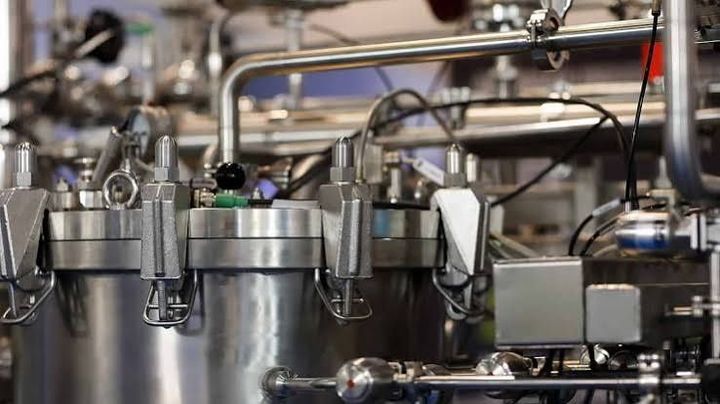
Food processing equipment is designed for activities such as preparation, cooking, cooling, filling, and packaging. Industrial chemical processing equipment may involve reactors, vessels, pumps, heat exchangers, separators, and related control systems.
Importance
Industrial processing equipment plays an important role in how raw materials become finished or partially processed products. Its effects can reach everyday areas such as food production, construction materials, household products, packaging, transportation, water treatment, and energy generation.
Industrial production equipment helps organize repeated processing steps and allows materials to move through defined stages. The equipment selected for a particular process can influence production consistency, material handling, energy use, maintenance requirements, and workplace conditions.
Supporting Consistent Processing
Many industrial processes require specific operating conditions. For example, a food product may need controlled heating and cooling, while a chemical process may depend on carefully managed temperature, pressure, or mixing conditions.
Industrial processing systems can use sensors and control equipment to monitor these conditions. Automated controls can adjust selected parameters according to programmed instructions, while operators can review information and respond to situations that require human attention.
Managing Different Materials
Materials behave differently during processing. Liquids, powders, gases, slurries, metals, food ingredients, and chemical mixtures may require different equipment designs.
For example, industrial mixing equipment used for a low-viscosity liquid may have different characteristics from machinery designed for a thick paste. Similarly, industrial separation equipment may use screens, centrifuges, membranes, filters, or other methods depending on the material.
Improving Process Coordination
Modern facilities often use multiple machines connected through a production sequence. Automated processing equipment can coordinate certain operations so that materials move between stages according to defined conditions.
Automated industrial processing equipment may also collect operational information. Data from sensors can help operators understand equipment status, process conditions, production events, and maintenance requirements.
Challenges in Industrial Processing
Processing systems also involve practical challenges. Equipment must be matched to the characteristics of the material and the requirements of the process. Incorrect sizing, unsuitable operating conditions, poor integration, or inadequate maintenance can affect process performance.
Other considerations include worker safety, environmental controls, energy consumption, equipment compatibility, data security, and regulatory requirements. These factors are particularly important when several machines operate as one connected system.
Recent Updates
From 2024 through 2026, industrial processing has continued moving toward greater digital integration, automation, and data-based monitoring. Advanced industrial processing systems increasingly combine conventional mechanical equipment with sensors, digital controls, industrial networks, and analytical software.
One notable direction is the wider use of connected equipment. Sensors can collect information about temperature, vibration, pressure, flow, motor conditions, and other operating parameters. This information can be displayed through monitoring platforms and used to identify changes in process conditions.
Automation and Digital Control
Automated industrial processing equipment is increasingly connected to programmable controllers and supervisory systems. These technologies can coordinate different machines and provide operators with information about process conditions.
Advanced manufacturing process equipment may also include digital interfaces that record operating information. This can make it easier to review process histories and identify relationships between operating conditions and production results.
Artificial Intelligence and Data Analysis
Artificial intelligence is being incorporated into some industrial environments for activities such as pattern recognition, anomaly detection, forecasting, and process analysis. AI-based tools can examine large amounts of operational information and identify patterns that may require further investigation.
AI does not replace the physical processing equipment itself. Instead, it can function as an analytical layer around existing systems. Results still depend on data quality, system configuration, and appropriate human oversight.
Greater Equipment Integration
Another current direction is the integration of individual machines into connected production environments. Instead of treating every machine as an isolated unit, facilities can connect equipment through industrial communication networks and centralized monitoring systems.
This approach can support complete industrial processing systems in which material handling, processing, measurement, and control functions operate as coordinated stages. Integration can also introduce additional requirements for cybersecurity and system compatibility.
| Equipment Type | Typical Function | Example Applications |
|---|---|---|
| Mixing equipment | Combines materials | Food, chemicals, coatings |
| Separation equipment | Divides materials | Manufacturing, water treatment |
| Filtration equipment | Removes selected particles | Food, chemicals, process gases |
| Thermal equipment | Controls temperature | Food, chemicals, materials |
| Conveying equipment | Moves materials | Manufacturing and packaging |
| Processing vessels | Holds or processes materials | Chemical and industrial production |
| Control equipment | Monitors and regulates processes | Automated production systems |
Tools and Resources
Several types of tools can help people understand, design, monitor, or evaluate industrial processing systems. The appropriate resource depends on whether the task involves equipment selection, process analysis, system design, or operational monitoring.
Process Calculation Tools
Engineering calculators and process-planning worksheets can be used to examine basic variables such as flow rate, pressure, temperature, volume, residence time, and heat transfer. Spreadsheet templates can also organize equipment specifications and process parameters.
Process flow diagrams are another useful resource. They show how materials move between equipment stages and can help explain the relationship between different machines.
Equipment Documentation
Technical manuals, equipment datasheets, operating instructions, and maintenance documents provide information about individual machines. These resources commonly describe operating ranges, connection requirements, material compatibility, inspection procedures, and control interfaces.
Industry standards and regulatory publications can also provide general information about equipment safety, environmental requirements, measurement practices, and process controls.
Digital Monitoring and Simulation
Process simulation platforms can model certain industrial operations before physical changes are introduced. Depending on the application, simulation may examine fluid movement, heat transfer, material balances, equipment capacity, or process sequences.
Industrial monitoring platforms can collect information from connected sensors and controllers. These systems can present data through dashboards, historical records, alarms, and reports, helping operators understand changing process conditions.
FAQs
What is industrial processing equipment?
Industrial processing equipment is machinery used to transform, combine, separate, heat, cool, filter, move, or otherwise process materials. It can be used individually or as part of a larger industrial processing system.
What types of industrial processing machinery are commonly used?
Common types include mixers, pumps, filters, separators, conveyors, reactors, heat exchangers, dryers, cooling systems, processing vessels, and control equipment. The selection depends on the material and process requirements.
What is automated processing equipment?
Automated processing equipment uses control systems, sensors, software, or programmed instructions to perform selected processing activities with limited manual intervention. Operators may still monitor the equipment and handle situations requiring judgment.
How is industrial process equipment used in manufacturing?
Industrial process equipment can support activities such as material preparation, mixing, heating, cooling, separation, filtration, forming, and material transfer. Several machines may be connected to create a coordinated manufacturing process.
What is industrial chemical processing equipment?
Industrial chemical processing equipment is machinery designed for processes involving chemical materials or reactions. Examples can include reactors, tanks, mixers, pumps, heat exchangers, filtration systems, and separation equipment, depending on the process.
Conclusion
Industrial processing equipment includes a broad range of machines used to transform and manage materials across many industries. Modern industrial processing systems increasingly combine mechanical machinery with sensors, automation, digital controls, and data analysis. Equipment categories such as mixing, separation, filtration, and thermal processing address different stages and requirements within production environments. Understanding these systems provides a foundation for recognizing how modern industrial processes are organized and controlled.