Industrial Polishing Systems: An Overview of Modern Surface Finishing
Industrial polishing systems are used to improve the surface condition, appearance, and functional characteristics of manufactured components.
Industrial polishing equipment can remove small surface irregularities, marks, oxidation, burrs, and other unwanted material from metals and selected non-metallic materials. The process is part of a broader group of manufacturing operations known as surface finishing.
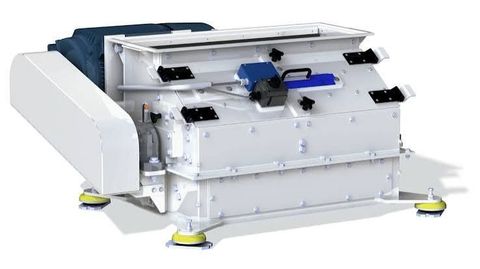
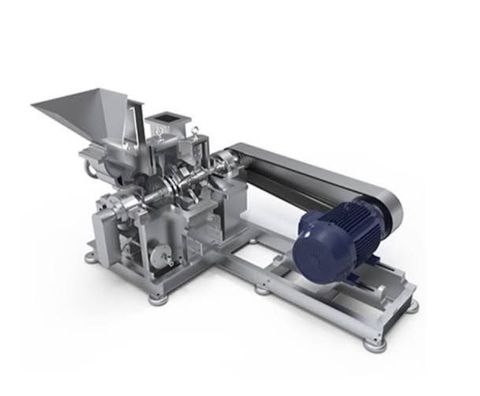
Traditional polishing involved considerable manual work using abrasive materials, wheels, compounds, and handheld tools. As manufacturing processes became more standardized, industrial polishing machines were developed to provide controlled movement, pressure, speed, and abrasive contact. Modern systems can range from relatively simple machines to integrated automated polishing systems.
How Industrial Polishing Developed
Early polishing methods relied on manual rubbing, abrasive stones, cloth wheels, and compounds. Operators adjusted pressure and movement based on the shape and condition of the component. Although manual techniques remain useful for certain applications, they can be difficult to apply consistently across large production volumes.
The development of industrial polishing machinery introduced controlled mechanical movement. Machines could maintain more consistent contact between an abrasive medium and a workpiece. Later developments introduced sensors, programmable controls, robotic arms, and automated material handling.
Today, metal polishing equipment is used across industries that process stainless steel, aluminum, copper, brass, titanium, and other materials. The required polishing method depends on the material, component geometry, desired surface condition, and production process.
Main Types of Polishing Systems
Different industrial polishing machines are designed for different surface shapes and finishing requirements. Common categories include:
- Wheel polishing machines that use rotating abrasive or polishing wheels.
- Belt polishing systems that use continuous abrasive belts.
- Vibratory systems that process multiple small components together.
- Automatic polishing machines that follow programmed operating sequences.
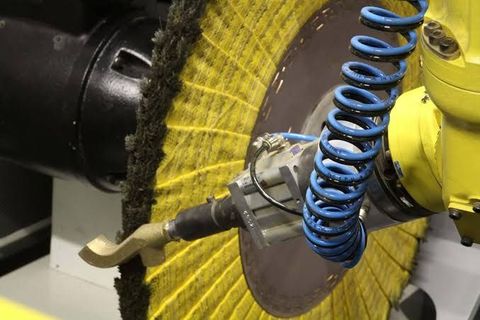
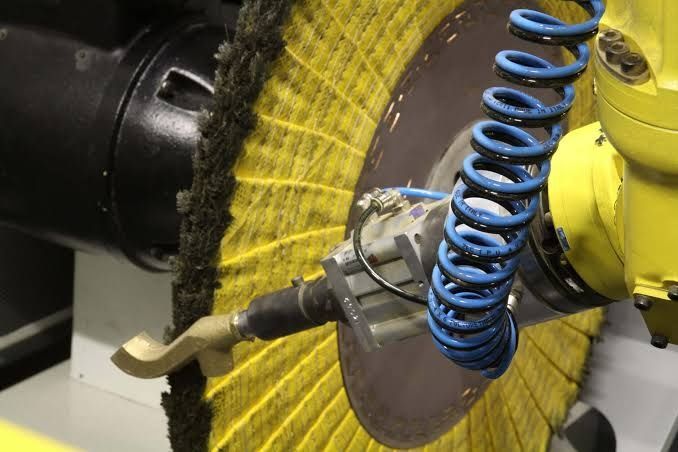
- Robotic polishing systems that use programmable robotic arms for controlled movement.
- Precision polishing equipment designed for components where surface uniformity is important.
A complete industrial polishing system may combine the polishing machine with fixtures, abrasive materials, dust collection, workpiece handling, controls, and inspection equipment.
Importance
Surface finishing affects how manufactured components look, function, fit, and interact with other parts. Industrial surface finishing equipment is therefore used in many manufacturing environments where the condition of a surface has practical importance.
Polishing can remove minor surface defects and create a more uniform finish. Depending on the material and process, it may also help prepare a component for later operations such as coating, plating, painting, or assembly.
Applications Across Manufacturing
Metal surface polishing systems are used for components found in several sectors. Applications can include metal fabrication, automotive components, kitchen and architectural products, machinery parts, medical equipment, and precision components.
The requirements differ between applications. A decorative metal component may require a smooth and visually consistent appearance, while a precision component may require controlled surface characteristics that relate to its dimensional or functional requirements.
Manual, Automated, and Robotic Processes
Manual polishing allows an operator to respond directly to variations in a workpiece. However, the result can vary with operator technique, pressure, movement, abrasive selection, and working conditions.
Automated polishing systems use programmed movements and machine controls to reduce variation in repeatable operations. Automated metal polishing machines may also incorporate fixtures and material-handling mechanisms to move components through multiple stages.
Robotic polishing systems provide programmable movement across complex paths. They can be used where components have repeated shapes or where controlled movement is required across difficult-to-reach surfaces.
Factors That Affect Polishing Results
Several factors influence the final surface condition. These include:
- Material hardness and composition.
- Initial surface roughness.
- Abrasive type and grade.
- Polishing speed.
- Applied pressure.
- Contact time.
- Workpiece geometry.
- Cooling and heat management.
- Cleaning between finishing stages.
High speed polishing machines may process material quickly, but speed must be considered together with abrasive characteristics, heat generation, machine movement, and the requirements of the workpiece.
Recent Updates
Between 2024 and 2026, the general direction of industrial polishing has continued toward automation, robotics, digital monitoring, and greater process consistency. Manufacturers are increasingly combining conventional polishing techniques with programmable equipment and digital controls.
Greater Use of Automation
Automated industrial surface finishing systems can coordinate several stages of a finishing process. A system may control workpiece positioning, abrasive contact, polishing movement, and process timing through programmed parameters.
Automation can also be connected with material handling equipment. This allows components to move between machining, polishing, cleaning, inspection, and other production stages with less manual transfer.
Robotics and Complex Components
Robotic polishing systems are receiving increased attention for components with curved or irregular surfaces. A robotic arm can follow programmed paths while maintaining a controlled relationship between the polishing tool and workpiece.
Advanced industrial polishing equipment may use sensors to detect changes in contact conditions or component position. These technologies can help systems respond to variations, although their effectiveness depends on the sensors, software, programming, and physical process involved.
Digital Monitoring and Precision
Precision surface finishing systems increasingly use digital controls to record or adjust operating parameters. These may include tool speed, movement paths, pressure, and cycle time.
High precision polishing systems are particularly relevant where small surface variations matter. Digital monitoring can support process documentation and comparison between production cycles, while inspection equipment can verify whether a finished surface meets defined specifications.
| Polishing Approach | Typical Control Method | Common Application |
|---|---|---|
| Manual polishing | Operator-controlled movement | Small batches and complex work |
| Wheel polishing | Rotating tool | Flat and shaped metal surfaces |
| Belt polishing | Continuous abrasive belt | General metal finishing |
| Automatic polishing | Programmed machine cycle | Repeatable production |
| Robotic polishing | Programmable robotic movement | Complex or repeated geometries |
| Precision polishing | Controlled process parameters | Components with defined surface requirements |
Tools and Resources
Industrial polishing processes depend on more than the machine itself. Abrasives, fixtures, measurement equipment, software, and safety equipment all contribute to the overall process.
Abrasives and Polishing Tools
Abrasive belts, discs, wheels, brushes, compounds, and other finishing media are selected according to the material and desired surface condition. Abrasive grades are commonly changed through multiple stages, beginning with material removal and progressing toward finer finishing.
Industrial finishing machinery may use interchangeable tools so that different stages can be completed using appropriate abrasive materials. Tool selection depends on the component and the intended surface result.
Measurement and Inspection Tools
Surface inspection can involve visual examination, surface roughness measurement, dimensional measurement, and microscopic inspection. Surface roughness instruments can provide numerical measurements that help describe the texture of a finished surface.
Digital calipers, micrometers, optical inspection equipment, and surface measurement instruments may also be used when dimensional or geometric characteristics need to be checked.
Digital Resources and Documentation
Manufacturers and technical organizations publish equipment manuals, abrasive selection guides, material specifications, and process documentation. CAD software and robotic programming platforms can also help define movement paths for automated polishing machinery.
Process templates can record important parameters such as material type, abrasive grade, machine speed, pressure, cycle duration, inspection method, and acceptable surface characteristics. Clear documentation helps establish repeatable operating procedures.
FAQs
What are industrial polishing systems used for?
Industrial polishing systems are used to modify and refine the surface of manufactured components. Depending on the process, they can remove minor imperfections, improve smoothness, prepare surfaces for later treatment, or create a specified appearance.
How do industrial polishing machines work?
Industrial polishing machines generally bring an abrasive or polishing tool into controlled contact with a workpiece. The machine controls factors such as movement, rotation, pressure, or cycle time according to its design and programmed settings.
What is an automatic polishing machine?
An automatic polishing machine performs defined polishing steps using programmed or mechanically controlled operations. It can reduce the amount of manual movement required when the same or similar finishing process is repeated.
What are automated metal polishing machines used for?
Automated metal polishing machines are used to process metal components through programmed polishing cycles. They can be configured for different component shapes, abrasive tools, movement patterns, and finishing stages.
What are robotic polishing systems?
Robotic polishing systems combine a robotic arm with polishing tools, controls, fixtures, and programming. They are commonly used for repeatable movements across components with complex or consistent geometries.
Conclusion
Industrial polishing systems form an important part of modern surface finishing, covering manual, automated, robotic, and precision-based approaches. Industrial polishing equipment can be configured according to material type, component geometry, abrasive requirements, and desired surface characteristics. Developments in automation, robotics, digital controls, and measurement are changing how polishing processes are organized and monitored. The appropriate process depends on the physical characteristics of the workpiece and the defined requirements of the finished surface.