Industrial Machinery Manufacturing: An Overview of Modern Production Systems
Industrial machinery manufacturing is the process of designing, producing, assembling, and testing machines used across factories, processing facilities, construction operations, agriculture, energy, transportation.
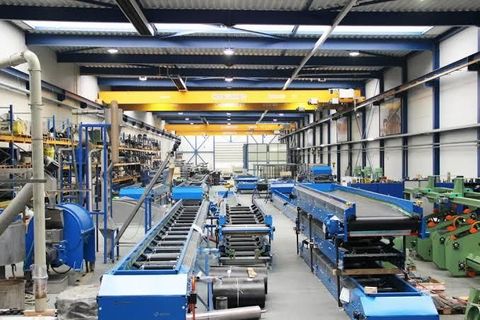
Industrial machinery equipment can range from individual machines and production tools to interconnected systems that perform several stages of a manufacturing process.
The development of industrial manufacturing machinery is closely connected with the growth of mechanized production. Earlier factories relied heavily on manual labor and basic mechanical equipment. Over time, developments in electrical systems, computer controls, sensors, robotics, and digital software changed how machines were designed and operated.
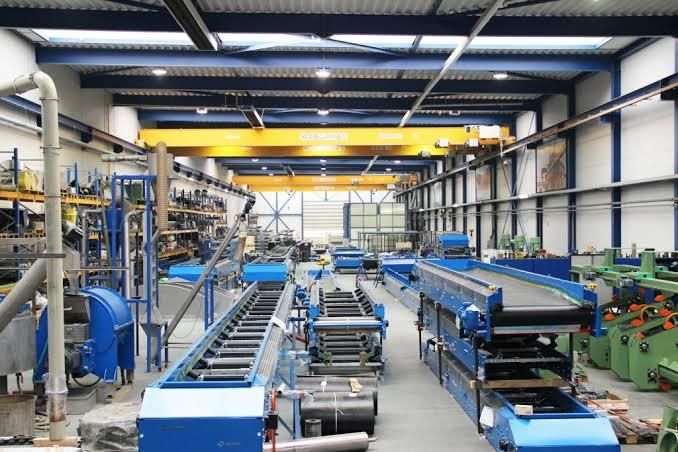
Today, industrial equipment manufacturing combines mechanical engineering with electrical, electronic, software, and materials technologies. Industrial production machinery may include cutting machines, forming equipment, pumps, compressors, conveyors, packaging systems, processing machines, and automated production units.
Main Components of Industrial Machinery
A modern machine generally contains several interconnected elements. Mechanical structures provide physical support, while motors, drives, gears, hydraulic systems, or pneumatic components create and control movement.
Sensors can monitor conditions such as position, temperature, pressure, speed, or vibration. Controllers interpret information from these components and can coordinate machine functions according to programmed instructions.
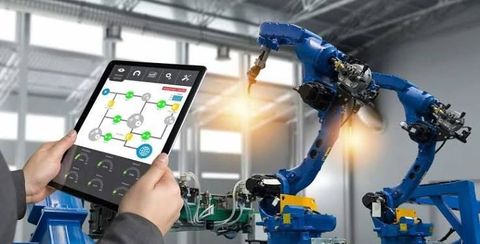
Industrial automation equipment adds another layer by allowing machines to communicate with controllers, production software, and other equipment. This can create automated industrial production systems in which several operations are coordinated rather than managed as completely separate activities.
Types of Industrial Machinery
Industrial machinery can be grouped according to its purpose and operating environment. Common categories include:
- Heavy industrial machinery used for demanding material-handling, construction, mining, and large-scale production activities.
- Precision industrial machinery designed for controlled manufacturing operations where dimensional accuracy is important.
- Industrial processing equipment used for activities such as mixing, heating, cooling, separating, filtering, and material treatment.
- Automated manufacturing machinery used for repeated production activities with limited manual intervention.
- Industrial manufacturing equipment used for forming, cutting, assembling, transporting, inspecting, or packaging materials.
The exact machine configuration depends on the material being processed, production requirements, operating environment, safety considerations, and level of automation.
Importance
Industrial machinery affects many products and systems used in everyday life. Food, vehicles, electronics, building materials, packaging, medical equipment, household products, and infrastructure components often pass through industrial processes that depend on specialized machinery.
Industrial equipment manufacturing therefore plays a role in the wider production chain. A change in machine design can influence how materials are processed, how production activities are organized, and how information is collected during manufacturing.
Supporting Modern Production
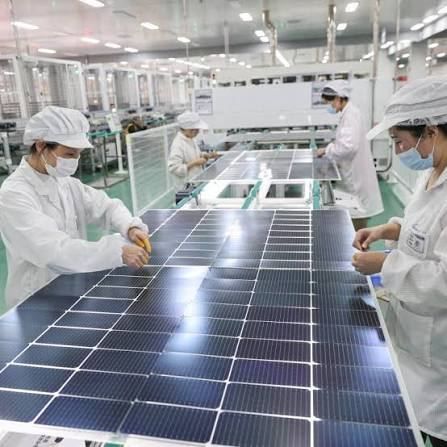
Modern production often requires machines to perform repeated operations with controlled timing and movement. Automated industrial machinery can coordinate these activities through programmable controls, sensors, and communication systems.
Automation can also help separate workers from certain repetitive or physically demanding operations. Human involvement remains important for machine setup, supervision, maintenance, quality checks, process decisions, and responding to unusual conditions.
Precision and Quality Control
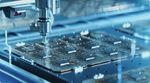
High precision industrial equipment is used where manufacturing processes require close control of dimensions, position, temperature, pressure, or other parameters. Computer-controlled machines can follow defined instructions while sensors provide information about operating conditions.
Quality control may involve measurement equipment, machine vision, inspection systems, and data records. These technologies can help identify variations during production and provide information for process analysis.
Integration Across Production
Modern facilities increasingly connect individual machines into larger production environments. Integrated industrial manufacturing systems can link machinery, material handling, inspection, control systems, and production information.
This approach can make it easier to understand how different stages of production relate to one another. It can also create technical challenges because equipment from different generations or manufacturers may use different communication methods and control architectures.
Recent Updates
From 2024 through 2026, industrial machinery manufacturing has continued moving toward greater automation, connectivity, data collection, and software integration. Manufacturers across different sectors have increasingly examined how machines, sensors, industrial networks, and analytical tools can work together within a production environment.
Digital and Connected Machinery
Industrial machines are increasingly designed with sensors and communication capabilities. Data from equipment can be collected and examined to understand operating conditions, production patterns, energy use, and equipment behavior.
This development is sometimes associated with smart manufacturing and industrial digitalization. Rather than treating every machine as an isolated unit, facilities can connect equipment to broader monitoring and production systems.
Artificial Intelligence and Automation
Artificial intelligence is becoming more relevant to industrial environments, particularly for inspection, data analysis, process monitoring, and predictive analysis. AI tools can examine large quantities of production information and identify patterns that may be difficult to detect manually.
AI does not replace the underlying mechanical and control systems. Instead, it can operate as an additional analytical layer alongside existing industrial automation equipment, sensors, controllers, and production software.
Energy and Resource Management
Energy efficiency has also become an important consideration in machinery design and facility planning. Modern industrial manufacturing equipment may include monitoring capabilities that help operators understand electricity consumption and equipment operating patterns.
Manufacturers are also examining machine designs, production layouts, and control strategies that can reduce unnecessary movement, idle operation, material waste, and energy use. Actual results vary according to equipment design and operating conditions.
| Machinery Area | Typical Function | Common Digital Element |
|---|---|---|
| Material handling | Moving materials | Sensors and automated controls |
| Machining | Cutting and shaping | Computerized machine control |
| Processing | Treating or transforming materials | Process sensors |
| Assembly | Joining components | Robotics and controllers |
| Inspection | Checking products | Vision and measurement systems |
| Packaging | Preparing finished products | Automated control systems |
Robotics and Flexible Production
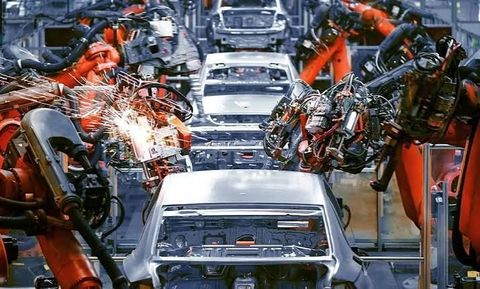
Robotic systems continue to be integrated into manufacturing environments for tasks such as assembly, material movement, welding, inspection, and packaging. Modern systems can be programmed for different sequences, although changing applications may require physical adjustments, software changes, or additional validation.
Advanced manufacturing machinery increasingly combines robotics with sensors and control software. This can support production environments where several machines coordinate activities through a shared control structure.
Tools and Resources
Understanding industrial machinery requires resources covering mechanical systems, automation, controls, safety, and manufacturing processes. Technical documentation is particularly important because machine operation varies significantly between equipment types.
Design and Engineering Tools
Computer-aided design software is commonly used to create machine components and assemblies. Engineering analysis tools can examine mechanical loads, movement, thermal conditions, or other design factors before physical equipment is produced.
Useful resources include:
- CAD templates for mechanical components and assemblies.
- Engineering calculators for dimensions, loads, power, and motion.
- Process flow diagrams for documenting production sequences.
- Maintenance checklists for recording inspection activities.
- Equipment manuals for operating and maintaining specific machinery.
- Technical standards for understanding engineering and safety requirements.
Automation and Monitoring Resources
Industrial automation platforms can provide tools for programming controllers, configuring sensors, monitoring machines, and analyzing production information. Human-machine interfaces can display operating conditions and allow authorized personnel to interact with control systems.
Manufacturing execution systems can also connect production activities with information about schedules, materials, quality records, and machine performance. These systems vary considerably in architecture and capabilities.
Learning and Reference Platforms
Technical institutes, engineering publications, standards organizations, equipment documentation, and educational platforms provide resources for learning about industrial manufacturing machinery. Simulation software can also help users study machine behavior and production sequences in a controlled digital environment.
FAQs
What is industrial machinery manufacturing?
Industrial machinery manufacturing involves designing, producing, assembling, and testing machines used for industrial production and processing. It covers equipment used for activities such as machining, material handling, assembly, processing, inspection, and packaging.
What is industrial manufacturing machinery used for?
Industrial manufacturing machinery is used to transform raw materials or components into products or intermediate materials. Examples include machining equipment, forming machines, conveyors, processing units, assembly systems, and packaging equipment.
What is automated industrial machinery?
Automated industrial machinery uses programmed controls, sensors, motors, robotics, or other technologies to perform defined machine operations with limited manual intervention. The degree of automation varies according to the application.
How does industrial automation equipment work?
Industrial automation equipment generally uses sensors, controllers, communication networks, drives, and software to monitor and control machine operations. Controllers process information and execute programmed instructions based on the requirements of the production process.
What are integrated industrial manufacturing systems?
Integrated industrial manufacturing systems connect multiple machines, controls, software platforms, and production processes into a coordinated environment. Integration can improve information flow between production stages while also creating requirements for compatible communications, cybersecurity, and system management.
Conclusion
Industrial machinery manufacturing combines mechanical engineering, electronics, automation, software, and control technologies to support a wide range of production activities. Modern machinery is increasingly connected, data-enabled, and integrated with broader manufacturing systems. Developments in robotics, sensors, artificial intelligence, and digital monitoring are changing how industrial equipment is designed and operated. At the same time, machine safety, maintenance, compatibility, data management, and human oversight remain important parts of industrial production.