Industrial Machine Engineering Systems: Complete Guide to Modern Manufacturing Technology
Industrial machine engineering systems form the foundation of modern manufacturing and industrial production. Almost every product used in daily life, from automobiles and electronics to food packaging and construction materials, is created with the help of machines that operate as part of a larger engineering system. These systems combine mechanical equipment, electrical controls, automation, software, and monitoring technologies to perform complex manufacturing tasks with precision and consistency.
As industries continue adopting automation, robotics, and digital technologies, industrial machine engineering systems have evolved from standalone machines into interconnected production environments. They are designed not only to manufacture products but also to improve efficiency, reduce waste, maintain quality, and support safer working conditions.
Understanding how these systems function helps businesses, engineers, students, and technology enthusiasts gain a better understanding of modern industrial operations and the technologies shaping manufacturing today.
What Are Industrial Machine Engineering Systems?
Industrial machine engineering systems are integrated combinations of machines, control systems, sensors, electrical components, software, and mechanical structures that work together to perform industrial processes. Instead of operating as isolated equipment, each machine becomes part of a coordinated production workflow.
These engineering systems are created to perform tasks such as cutting, forming, assembling, transporting, inspecting, packaging, and monitoring products during manufacturing. They are commonly used across factories, processing plants, warehouses, and production facilities.
A typical industrial engineering system includes both physical machinery and digital control technologies. Mechanical components perform the physical work, while electronic controllers manage timing, movement, speed, pressure, temperature, and communication between machines.
This integration allows manufacturing processes to become more reliable, repeatable, and adaptable to changing production requirements.
Why Industrial Machine Engineering Systems Matter Today
Modern industries require faster production, consistent quality, and efficient use of resources. Industrial machine engineering systems help achieve these goals by connecting different manufacturing operations into a coordinated workflow.
As production volumes increase and customer expectations become more demanding, manufacturers rely on engineering systems to maintain precision while minimizing downtime. Automated monitoring also helps detect equipment issues before they become major operational problems.
These systems also support sustainability by reducing material waste, improving energy efficiency, and optimizing production cycles. Industries ranging from automotive manufacturing to pharmaceutical production benefit from engineering systems that improve productivity while maintaining quality standards.
The growing adoption of smart factories and Industry 4.0 technologies has further increased the importance of connected industrial engineering systems across global manufacturing sectors.
Core Components of an Industrial Machine Engineering System
Every industrial engineering system consists of several interconnected components that perform specific roles within a production process.
Mechanical machinery provides the physical movement required for manufacturing operations. This includes motors, gearboxes, conveyors, pumps, hydraulic systems, pneumatic systems, bearings, shafts, and cutting tools.
Electrical systems distribute power and connect machines through wiring, control panels, transformers, relays, switches, and protection devices. Stable electrical infrastructure ensures machines operate safely and consistently.
Control systems coordinate machine behavior using programmable logic controllers, industrial computers, human-machine interfaces, and digital controllers. These devices process sensor inputs and send commands to machinery.
Sensors collect real-time information about machine conditions such as temperature, vibration, pressure, speed, proximity, position, humidity, and fluid levels. This data allows systems to monitor performance continuously.
Industrial communication networks connect multiple machines so they can exchange information and synchronize operations throughout a production line.
Software platforms monitor production, record operational data, generate reports, schedule maintenance, and help operators manage manufacturing processes efficiently.
Together, these components create a unified engineering system capable of handling complex industrial operations.
How Industrial Machine Engineering Systems Work
Industrial machine engineering systems operate through a sequence of coordinated activities. Raw materials enter the production process, machines perform programmed operations, sensors monitor conditions, and controllers adjust machine behavior based on real-time information.
The engineering system begins by receiving instructions from a production schedule or operator interface. Controllers activate machinery according to predefined parameters such as speed, timing, dimensions, pressure, or temperature.
Throughout production, sensors continuously collect operational data. If measurements move outside acceptable ranges, controllers automatically adjust machine settings or notify operators.
Finished products move through inspection, packaging, or storage stages before leaving the production line. The entire workflow is monitored digitally, allowing manufacturers to review production performance and identify opportunities for improvement.
This coordinated operation helps reduce manual intervention while maintaining consistent manufacturing quality.
Types of Industrial Machine Engineering Systems
Industrial engineering systems vary depending on manufacturing requirements, production volume, and industry applications.
Automated Production Systems
Automated production systems use programmable controllers and sensors to perform manufacturing operations with minimal manual input. These systems are common in automotive assembly, electronics manufacturing, and packaging facilities.
CNC Machine Systems
Computer Numerical Control systems manufacture components using digitally programmed instructions. CNC engineering systems produce highly accurate metal, plastic, wood, and composite parts for industrial applications.
Robotic Manufacturing Systems
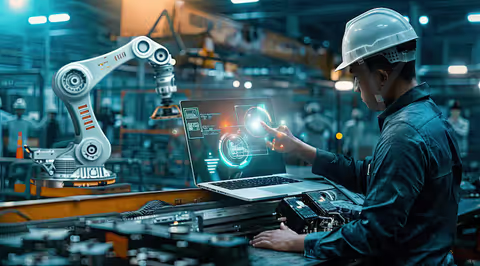
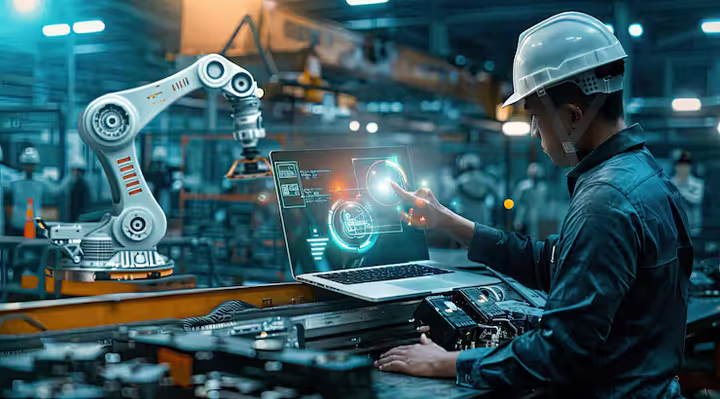
Industrial robots perform repetitive tasks including welding, painting, assembly, material handling, inspection, and palletizing. Robotic systems improve precision while reducing repetitive manual work.
Material Handling Systems
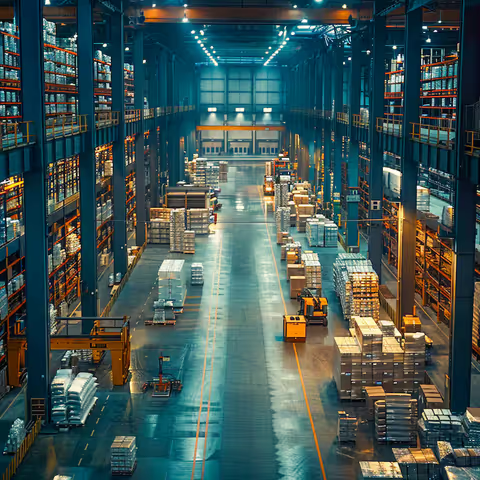
Material handling engineering systems transport products throughout manufacturing facilities using conveyors, automated guided vehicles, lifts, robotic arms, and sorting equipment.
Process Engineering Systems
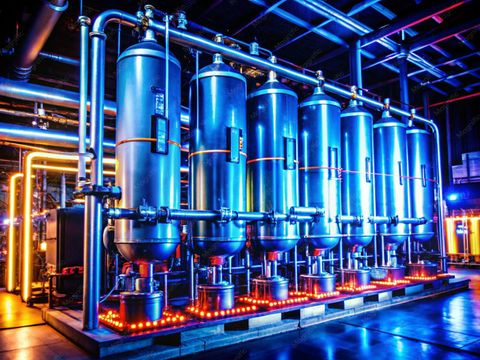
Industries such as food processing, chemicals, pharmaceuticals, and energy production use engineering systems that monitor mixing, heating, cooling, filtering, and packaging operations continuously.
Each system is designed around the operational needs of a specific manufacturing environment.
Industries That Use Industrial Machine Engineering Systems
Industrial engineering systems are essential across a wide range of industries because manufacturing processes differ significantly between sectors.
Automotive manufacturing uses engineering systems for body assembly, welding, painting, engine production, quality inspection, and final vehicle assembly.
Food and beverage industries rely on automated processing, filling, packaging, labeling, temperature control, and sanitation systems.
Pharmaceutical manufacturing depends on highly controlled engineering systems for mixing ingredients, tablet production, packaging, sterilization, and quality assurance.
Textile manufacturing integrates spinning, weaving, dyeing, cutting, sewing, and finishing machinery into coordinated production systems.
Electronics manufacturing uses precision engineering systems for circuit board assembly, soldering, testing, inspection, and packaging.
Construction material production uses industrial engineering systems for cement manufacturing, steel fabrication, glass processing, and concrete production.
These systems help industries maintain production efficiency while meeting quality and safety requirements.
The Role of Automation in Industrial Engineering Systems
Automation has transformed industrial engineering systems by allowing machines to perform tasks with minimal manual supervision. Automated systems use sensors, controllers, robotics, and software to monitor production continuously.
Automation improves consistency because machines repeat operations using identical parameters. It also increases production speed while reducing human error during repetitive tasks.
Modern automation systems collect operational data that helps manufacturers analyze equipment performance, identify maintenance needs, and improve production efficiency.
Automation does not replace every human role. Operators, engineers, maintenance teams, and quality specialists continue supervising systems, analyzing performance, troubleshooting equipment, and improving manufacturing processes.
The balance between automation and human expertise creates more efficient industrial operations.
Smart Manufacturing and Industry 4.0
Industry 4.0 represents the integration of digital technologies into manufacturing environments. Industrial machine engineering systems now communicate through connected networks and exchange operational information in real time.
Smart manufacturing systems combine sensors, industrial Internet of Things devices, cloud monitoring, artificial intelligence, and predictive analytics to improve manufacturing performance.
Connected equipment can report operational status automatically, helping maintenance teams identify potential failures before production stops.
Digital dashboards allow operators to monitor production lines remotely and analyze machine performance through historical data.
These technologies create flexible manufacturing environments capable of adapting production schedules, improving quality control, and optimizing resource utilization.
Smart manufacturing continues expanding across factories worldwide as industries modernize production facilities.
Maintenance in Industrial Machine Engineering Systems
Maintenance is essential for keeping industrial engineering systems reliable and efficient. Well-maintained machinery experiences fewer unexpected breakdowns and operates with greater consistency.
Preventive maintenance involves scheduled inspections, lubrication, cleaning, calibration, and replacement of worn components before failures occur.
Predictive maintenance uses sensor data such as vibration, temperature, pressure, and motor current to identify equipment conditions that may indicate future problems.
Corrective maintenance addresses equipment faults after they occur and restores machinery to normal operation.
A structured maintenance program helps extend machine lifespan, reduce downtime, improve workplace safety, and maintain production quality.
Digital maintenance systems also record inspection history and equipment performance for future analysis.
Safety in Industrial Machine Engineering Systems
Safety is a fundamental part of industrial engineering system design. Machines operate with moving components, electrical equipment, hydraulic pressure, heat, and automated motion that require proper safety controls.
Engineering systems include protective guards, emergency stop buttons, lockout procedures, overload protection, safety sensors, alarms, and access control mechanisms.
Operators receive training on equipment operation, maintenance procedures, emergency response, and safe working practices.
Routine inspections help verify that safety systems remain functional throughout machine operation.
Modern engineering systems increasingly integrate intelligent safety technologies that automatically stop machinery when unsafe conditions are detected.
Safety engineering protects workers while maintaining reliable industrial operations.
Energy Efficiency and Sustainable Engineering Systems
Energy efficiency has become an important goal in industrial engineering design. Modern systems aim to reduce electricity consumption, minimize waste, and improve production efficiency.
Energy-efficient motors, variable speed drives, optimized production scheduling, and automated power management reduce unnecessary energy usage.
Manufacturers also monitor compressed air systems, heating systems, cooling systems, and hydraulic equipment to improve operational efficiency.
Waste reduction strategies include precision manufacturing, material recycling, improved process control, and optimized machine calibration.
Sustainable engineering systems help industries reduce environmental impact while improving operational performance.
Recent Developments in Industrial Machine Engineering Systems
During the past year, industrial engineering systems have continued evolving through advances in artificial intelligence, robotics, machine vision, and digital monitoring technologies.
AI-powered monitoring systems now analyze equipment behavior and identify maintenance needs using operational data collected from sensors.
Collaborative robots continue expanding in manufacturing environments where humans and robots work together safely during assembly and material handling tasks.
Machine vision systems have become more accurate in inspecting products for defects during production without slowing manufacturing speed.
Digital twin technology is increasingly used to simulate industrial equipment virtually, allowing engineers to test process improvements before applying changes to physical machinery.
Cybersecurity has also become more important as connected manufacturing systems exchange operational information through industrial networks.
These developments reflect the growing transition toward intelligent and connected manufacturing environments.
Choosing the Right Engineering System for Industrial Operations
Selecting an industrial machine engineering system depends on manufacturing requirements, production capacity, product complexity, available space, automation goals, and future expansion plans.
Manufacturers typically evaluate production workflow, machine compatibility, maintenance requirements, safety standards, energy efficiency, software integration, and operational flexibility before implementing engineering systems.
A scalable engineering system allows facilities to expand production without replacing the entire manufacturing infrastructure.
Proper planning also includes workforce training, maintenance scheduling, digital monitoring capabilities, and long-term equipment management.
Choosing systems based on operational needs helps create efficient and reliable manufacturing environments.
The Future of Industrial Machine Engineering Systems
Industrial machine engineering systems will continue becoming more intelligent, connected, and data-driven. Artificial intelligence, predictive maintenance, autonomous robotics, and industrial analytics are expected to play larger roles in manufacturing operations.
Future engineering systems will likely improve production flexibility by adapting automatically to changing manufacturing requirements. Connected equipment will provide deeper operational insights, helping manufacturers reduce downtime and improve resource efficiency.
Digital twins, advanced sensors, edge computing, and cloud-based industrial platforms are expected to strengthen collaboration between machines and engineers.
As sustainability becomes increasingly important, future engineering systems will also focus on reducing emissions, improving energy efficiency, and supporting environmentally responsible manufacturing practices.
Conclusion
Industrial machine engineering systems are the backbone of modern manufacturing, combining mechanical equipment, electrical controls, automation, software, and monitoring technologies into integrated production environments. These systems help industries produce goods with greater accuracy, efficiency, consistency, and safety across a wide range of manufacturing sectors.
As automation, smart manufacturing, artificial intelligence, and connected technologies continue advancing, industrial engineering systems are becoming more capable of monitoring performance, predicting maintenance needs, and optimizing production processes in real time. Understanding these systems provides valuable insight into how modern industries operate and how engineering innovation continues shaping the future of manufacturing worldwide.