How Sludge Dewatering Equipment Works: A Complete Guide
Sludge dewatering equipment separates water from sludge to produce a material with a higher solids concentration and lower water content.
It is widely used in wastewater treatment plants, industrial facilities, municipal treatment processes, and other operations that need to manage wet sludge.
Different machines use different separation principles, including filtration, pressure, gravity, and centrifugal force. The appropriate equipment depends on sludge characteristics, solids concentration, required dryness, throughput, and downstream handling requirements.
Why Sludge Dewatering Is Important
Wastewater treatment produces sludge containing water, organic matter, suspended solids, and other materials. Handling sludge with a high water content can make transportation, storage, further processing, and disposal more difficult.
Dewatering reduces the volume of water associated with the sludge. This can make the resulting material easier to handle and prepare for subsequent treatment or utilization.
Key objectives include:
- Reducing water content: Mechanical separation removes a portion of the free and bound water.
- Increasing solids concentration: Dewatered sludge contains a higher percentage of solids.
- Improving handling: Firmer material is generally easier to convey and store.
- Reducing sludge volume: Removing water can significantly reduce the overall volume.
- Preparing for downstream processes: Dewatering can precede drying, thermal treatment, composting, or other processes.
How Sludge Dewatering Equipment Works
Although different machines use different mechanisms, most sludge dewatering systems follow a similar sequence.
1. Sludge Conditioning
Before mechanical separation, sludge may be conditioned to improve the release of water. Polymer or other conditioning methods can alter the properties of fine particles and encourage them to form larger flocs.
The conditioning approach depends on sludge chemistry and the selected dewatering technology.
2. Sludge Feeding
Conditioned sludge enters the dewatering machine at a controlled flow rate. Pumps and flow-control equipment help maintain stable feeding conditions.
3. Water-Solid Separation
The machine separates liquid from solids using pressure, gravity, centrifugal force, or a combination of these mechanisms.
Separated water, commonly called filtrate or centrate depending on the equipment, is collected and typically returned to an appropriate stage of the wastewater treatment process.
4. Cake Formation
As water is removed, the solids become concentrated and form a dewatered sludge cake or thicker sludge stream.
5. Discharge
The dewatered material leaves the equipment through a discharge mechanism and can then move to storage, transportation, drying, or another treatment stage.
Main Types of Sludge Dewatering Equipment
Belt Filter Press
A belt filter press uses moving filter belts and pressure zones to separate water from sludge. Sludge passes through gravity drainage areas before being compressed between belts.
Belt presses are suited to continuous operation and can process substantial sludge volumes when properly configured.
Filter Press
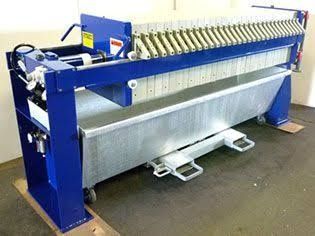
A filter press uses a series of filter plates and cloths. Sludge is pumped into chambers, and pressure forces water through the filter media while solids accumulate between the plates.
Filter presses can produce relatively dry sludge cakes but generally operate in batch cycles rather than continuous flow.
Screw Press
A screw press uses a rotating screw within a perforated or screened cylinder. As sludge moves along the screw, compression gradually increases and water drains through the screen.
Screw presses can operate continuously and often have relatively simple mechanical arrangements.
Decanter Centrifuge
A decanter centrifuge uses centrifugal force to separate solids from liquid. A rotating bowl creates high centrifugal acceleration, while an internal conveyor moves concentrated solids toward the discharge end.
Centrifuges can handle continuous sludge flows and are often used where compact equipment and automated operation are important.
Rotary Drum Thickener
A rotary drum thickener uses a rotating screen or drum to allow water to pass through while retaining larger solids. It is commonly used for sludge thickening and can also form part of a broader dewatering process.
Comparison of Sludge Dewatering Equipment
| Equipment Type | Separation Principle | Operation | Typical Characteristic |
|---|---|---|---|
| Belt filter press | Gravity and mechanical pressure | Continuous | Suitable for high-throughput processing |
| Filter press | Pressure filtration | Batch | Produces concentrated filter cake |
| Screw press | Compression and screening | Continuous | Relatively simple mechanical operation |
| Decanter centrifuge | Centrifugal force | Continuous | Compact and highly controllable |
| Rotary drum thickener | Screening and gravity drainage | Continuous | Commonly used for thickening |
Actual performance varies with sludge type, feed concentration, conditioning, equipment design, and operating conditions.
Key Components
A complete sludge dewatering system can contain several supporting components.
Sludge Feed Pump
The feed pump transfers sludge into the dewatering machine at a controlled rate. Stable feeding can help maintain consistent separation.
Polymer Preparation and Dosing Unit
Where chemical conditioning is used, a preparation and dosing system mixes and delivers polymer at a controlled concentration and rate.
Dewatering Machine
The main machine performs the mechanical separation of water and solids. Its design depends on the selected technology.
Filtrate Collection System
Separated water is collected and directed to the appropriate treatment or return point.
Sludge Cake Conveyor
A conveyor can move dewatered solids from the discharge point to a storage or handling area.
Control Panel
Control systems can coordinate pumps, motors, valves, sensors, alarms, and other equipment.
Factors Affecting Dewatering Performance
Several variables can influence the final solids concentration and throughput.
| Factor | Influence |
|---|---|
| Sludge type | Different sludges release water differently |
| Feed solids concentration | Affects machine loading and throughput |
| Particle size | Influences filtration and drainage |
| Polymer dose | Can affect floc formation and water release |
| Feed flow rate | Influences residence time and loading |
| Pressure | Affects mechanical water separation |
| Belt or screw speed | Changes retention and compression conditions |
| Centrifugal force | Influences separation in centrifuges |
| Temperature | Can affect viscosity and separation behavior |
There is no single operating condition that applies to every sludge stream. Operators generally adjust equipment based on measured feed and discharge characteristics.
Automation and Process Monitoring
Modern sludge dewatering systems can incorporate automated controls to improve consistency and reduce manual intervention.
Common monitoring parameters include:
- Sludge flow rate
- Feed pressure
- Motor load
- Polymer dosing rate
- Sludge solids concentration
- Filtrate quality
- Equipment speed
- Differential pressure
- Bearing or equipment temperature
Automated systems can coordinate sludge pumps, polymer dosing, conveyors, and the dewatering machine. Alarms can also identify abnormal pressure, motor loading, or other operating conditions.
Applications of Sludge Dewatering Equipment
Municipal Wastewater Treatment
Municipal treatment plants generate sludge during biological and physical treatment processes. Dewatering equipment can concentrate this sludge before further treatment or handling.
Industrial Wastewater
Industries such as food processing, chemicals, paper production, mining, and manufacturing can generate sludge with different physical and chemical characteristics.
Drinking Water Treatment
Water treatment facilities may generate residual solids that require thickening and dewatering before subsequent management.
Mining and Mineral Processing
Mineral-processing operations can produce large quantities of wet fine solids. Dewatering equipment can separate water from these materials before further handling.
Food Processing
Food and beverage facilities can generate organic sludge from wastewater treatment. Mechanical dewatering can reduce its water content before further processing.
Maintenance Requirements
Routine maintenance helps maintain stable operation and equipment life. Filter cloths, belts, screens, bearings, seals, pumps, screws, and other moving components should be inspected according to operating conditions.
Cleaning is particularly important for equipment with screens, filter belts, or perforated surfaces. Accumulated solids can restrict drainage and affect separation.
Operators should also inspect polymer dosing equipment and verify that sensors and control devices are functioning correctly.
Safety Considerations
Sludge dewatering equipment contains rotating components, moving belts, pumps, electrical equipment, and pressurized systems. Appropriate guarding and lockout procedures are important during inspection and maintenance.
Sludge can also contain biological contaminants or hazardous substances depending on its source. Appropriate protective equipment, hygiene procedures, ventilation, and site-specific safety practices should therefore be followed.
FAQs
1. What is sludge dewatering equipment?
Sludge dewatering equipment removes water from wastewater sludge using methods such as filtration, pressure, screening, gravity, or centrifugal force.
2. What are the main types of sludge dewatering equipment?
Common types include belt filter presses, filter presses, screw presses, decanter centrifuges, and rotary drum systems.
3. Why is sludge conditioned before dewatering?
Conditioning can improve particle aggregation and help release water from sludge. Polymer conditioning is one commonly used approach.
4. Which factors affect sludge dewatering?
Sludge composition, solids concentration, particle size, polymer dosage, feed rate, pressure, machine settings, and temperature can all influence separation.
5. Where is sludge dewatering equipment used?
It is used in municipal wastewater treatment, industrial wastewater treatment, drinking water treatment, mining, food processing, and other operations that generate wet sludge or residual solids.
Conclusion
Sludge dewatering equipment separates water from wet sludge using mechanical and physical processes such as pressure filtration, screening, compression, and centrifugal force. Belt filter presses, filter presses, screw presses, and centrifuges each use different mechanisms and operating configurations.
Selecting and operating a system requires consideration of sludge characteristics, solids concentration, throughput, conditioning requirements, desired discharge properties, and downstream handling. Proper monitoring and maintenance can help maintain consistent separation and reliable operation.