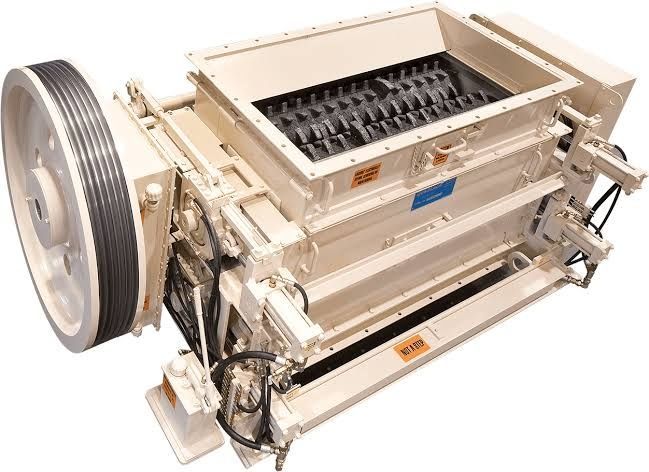
How Roll Crusher Equipment Works: A Complete Guide
Roll crushers are mechanical crushing machines used to reduce the size of materials by applying compression between rotating rolls.
They are used across mining, aggregate processing, mineral processing, coal handling, and various industrial applications. Roll crusher equipment can process materials into controlled size ranges while using a relatively straightforward crushing mechanism.
Depending on the design, roll crushers may use one or two rotating rolls, with different roll surfaces available for different materials. Understanding their operating principle, components, types, and applications helps explain where this equipment fits within a material-processing system.
Why Roll Crusher Equipment Matters
Material often needs to be reduced before it can be screened, processed, transported, or used in another manufacturing stage. Roll crushers provide controlled size reduction by drawing material between rotating surfaces and applying compressive force.
Important characteristics include:
- Controlled material reduction
- Relatively simple mechanical construction
- Adjustable crushing gap
- Continuous material processing
- Compatibility with various feed materials
- Integration with conveyors and screening systems
- Different roll-surface configurations
The appropriate design depends on material hardness, moisture, feed size, required output size, and the desired reduction ratio.
How Roll Crusher Equipment Works
A typical roll crusher has one or two cylindrical rolls that rotate toward each other. Material enters through the top and is pulled into the gap between the rolls.
As the rolls rotate, compression forces act on the material. Once the material fractures and reaches a sufficiently small size, it exits through the lower portion of the crusher.
The basic operating sequence is:
- Material enters the feed opening.
- Rotating rolls draw the material into the crushing zone.
- Compression forces are applied between the rolls.
- Material fractures along natural weaknesses.
- Smaller particles pass through the roll gap.
- Crushed material exits for further processing or screening.
The roll gap plays an important role in determining the approximate product size.
Main Types of Roll Crusher Equipment
Single Roll Crushers
A single roll crusher uses one rotating roll working against a stationary surface or crushing plate. The roll may contain teeth or other surface features that help grip and fracture incoming material.
These machines can be used for materials that require moderate size reduction.
Double Roll Crushers
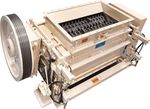
Double roll crushers use two counter-rotating rolls. Feed material is drawn between the rolls and compressed until it fractures.
Double roll crusher equipment can be configured for different feed and product sizes and is used in several mining and industrial processing applications.
Toothed Roll Crushers
Toothed rolls contain raised teeth or projections that help grip and break material. They can be suitable for certain softer or moderately hard materials where positive feeding is useful.
Smooth Roll Crushers
Smooth rolls provide a relatively uniform cylindrical surface. They are commonly associated with finer size reduction and materials that respond well to compression.
Key Components of Roll Crusher Equipment
| Component | Main Function |
|---|---|
| Crushing roll | Applies force to incoming material |
| Roll shaft | Supports and rotates the roll |
| Bearings | Support rotating assemblies |
| Drive motor | Provides mechanical power |
| Gearbox | Transfers and controls rotational power |
| Roll gap mechanism | Controls the crushing opening |
| Frame | Supports major components |
| Feed hopper | Directs material into the crushing zone |
| Scraper | Helps prevent material buildup |
| Hydraulic system | Provides adjustment or overload protection on some designs |
The exact component arrangement varies according to the crusher design and application.
Key Features of Roll Crushers
Adjustable Roll Gap
The distance between the crushing rolls determines the approximate size of material that can pass through the crushing zone.
An adjustable gap allows operators to modify the product size according to processing requirements.
Controlled Compression
Roll crushers rely mainly on compression rather than high-speed impact. This can make them suitable for materials that fracture effectively under compressive forces.
Specialized Roll Surfaces
Roll surfaces can be smooth, toothed, or configured with other profiles. Surface selection depends on the feed material and desired crushing action.
Overload Protection
Some roll crusher systems include spring or hydraulic mechanisms that allow the crushing gap to open when uncrushable material enters the machine.
This can help reduce mechanical stress on critical components.
Drive System
The drive assembly provides the rotational force needed to operate the rolls. Motors, couplings, gearboxes, and shafts work together to transfer power.
Factors Affecting Crushing Performance
Feed Size
The maximum feed size must remain within the equipment's specified range. Excessively large material can cause unstable feeding or increased mechanical stress.
Material Hardness
Hardness affects the force required to fracture the material. Extremely hard or abrasive materials may require a different crushing technology or specialized roll configuration.
Moisture Content
Wet or sticky materials can create buildup on roll surfaces and interfere with material flow. Feed moisture should therefore be considered when selecting equipment.
Roll Gap
A smaller gap generally produces a finer product, while a larger gap allows larger particles to pass through.
Roll Speed
Roll speed affects material flow and crushing action. Operating parameters should remain within equipment specifications for stable performance.
Surface Condition
Wear on teeth or roll surfaces can change the way material enters and moves through the crushing zone. Regular inspection helps maintain appropriate operating conditions.
Roll Crusher vs Other Crushing Equipment
Roll crushers operate differently from jaw, cone, and impact crushers.
| Feature | Roll Crusher | Jaw Crusher | Cone Crusher | Impact Crusher |
|---|---|---|---|---|
| Main mechanism | Compression | Compression | Compression | Impact |
| Main working components | Rotating rolls | Jaw plates | Mantle and concave | Rotor and impact surfaces |
| Typical use | Secondary or specialized crushing | Primary crushing | Secondary/tertiary crushing | Primary/secondary crushing |
| Product control | Roll gap | Discharge setting | Closed-side setting | Impact gap and rotor conditions |
| Material suitability | Depends on roll design | Wide range | Hard and abrasive materials | Selected rock and aggregate |
| Speed | Generally moderate | Relatively low | Moderate to high | Higher rotor speed |
The choice between these technologies depends on material properties, feed size, desired output, plant layout, and processing requirements.
Applications of Roll Crusher Equipment
Roll crusher equipment can be used in several industries and processing environments, including:
- Coal processing
- Mining
- Mineral processing
- Aggregate preparation
- Cement-related material processing
- Chemical material processing
- Industrial raw-material preparation
- Recycling applications
- Bulk material processing
Toothed, smooth, and specialized roll configurations can be selected according to the characteristics of the feed material.
Best Practices for Operation and Maintenance
Regular maintenance can help keep roll crushers operating within their intended conditions.
- Maintain a consistent feed rate.
- Keep feed material within specified size limits.
- Inspect roll surfaces for wear.
- Check bearings and lubrication systems.
- Monitor roll alignment and rotation.
- Inspect the drive assembly regularly.
- Check the roll gap and adjustment mechanism.
- Remove material buildup from critical areas.
- Monitor vibration, temperature, and unusual noise.
- Follow the equipment manufacturer's maintenance schedule.
Maintenance requirements vary according to operating hours, material abrasiveness, crusher design, and environmental conditions.
Automation and Monitoring
Modern roll crushing equipment can incorporate sensors and control systems for operational monitoring. These systems may track motor load, bearing temperature, vibration, hydraulic pressure, roll speed, and operating hours.
Automated gap adjustment can also help maintain a defined crushing setting. When connected to feeders and conveyors, the crusher can become part of a coordinated material-processing line.
Who Uses Roll Crusher Equipment?
Roll crushers are relevant to organizations involved in:
- Mining operations
- Coal preparation
- Aggregate processing
- Mineral processing
- Industrial material handling
- Cement material preparation
- Recycling operations
- Bulk-material processing
Equipment selection should consider the characteristics of the material, required feed and product sizes, moisture level, production requirements, and available plant space.
FAQs About Roll Crusher Equipment
What is roll crusher equipment used for?
Roll crusher equipment is used to reduce the size of materials through compression between rotating rolls. It is used in mining, coal processing, mineral processing, aggregate preparation, and other material-processing applications.
How does a roll crusher work?
A roll crusher draws material between one or two rotating rolls. The material is compressed until it fractures and becomes small enough to pass through the roll gap.
What is the difference between a single roll and double roll crusher?
A single roll crusher uses one rotating roll working against a stationary crushing surface, while a double roll crusher uses two counter-rotating rolls to compress material between them.
What materials can roll crushers process?
Depending on their design, roll crushers can process materials such as coal, selected minerals, aggregate, industrial raw materials, and other materials that respond appropriately to compression crushing.
What affects roll crusher performance?
Feed size, material hardness, moisture, roll gap, roll speed, surface condition, feed consistency, and equipment maintenance can all influence crushing performance.
Conclusion
Roll crusher equipment uses rotating rolls and compression forces to reduce material into controlled size ranges. Single-roll, double-roll, toothed, and smooth-roll configurations provide different approaches to material reduction.
Performance depends on the relationship between the roll design, feed characteristics, roll gap, operating speed, and maintenance condition. Proper equipment selection and regular inspection of rolls, bearings, drive systems, and adjustment mechanisms can help maintain stable crushing operations.