How Magnetic Separation Equipment Works: A Complete Guide
Separating magnetic materials from a mixed material stream is an important process in mining, recycling, mineral processing, food production, chemical processing, and other industries.
Magnetic separation equipment uses magnetic fields to attract and remove ferrous or other magnetically responsive materials from non-magnetic materials.
Different separator designs are available for different material flows, particle sizes, magnetic properties, and processing conditions. Drum separators, magnetic belts, overband systems, and high-intensity separators are examples of technologies used for specific separation tasks.
Understanding the working principle, components, types, and applications of magnetic separation equipment helps explain how these systems fit into modern material-processing operations.
Why Magnetic Separation Equipment Matters
Material streams can contain unwanted ferrous particles or valuable magnetic minerals that need to be separated before further processing. Magnetic separation provides a method for removing or recovering these materials without relying on mechanical sorting alone.
Common objectives include:
- Removing ferrous contaminants
- Recovering magnetic minerals
- Protecting downstream machinery
- Improving material purity
- Supporting recycling operations
- Separating selected mineral fractions
- Automating material sorting processes
The appropriate system depends on the magnetic properties of the material, particle size, moisture, feed rate, and desired separation level.
How Magnetic Separation Equipment Works
The basic principle is relatively straightforward. A magnetic field is created near a material stream, causing magnetic or magnetically responsive particles to move toward the magnetic source.
Non-magnetic particles continue along their normal path, while attracted particles follow a different path or remain attached to the magnetic surface until they are discharged.
A typical process involves:
- Material enters the separator.
- The material moves through or near a magnetic field.
- Magnetic particles are attracted toward the magnetic surface.
- Non-magnetic particles continue along their normal trajectory.
- Magnetic material is carried or directed toward a separate discharge area.
- The separated fractions are collected for further processing.
The effectiveness of this process depends on magnetic field characteristics, material properties, separator geometry, and operating conditions.
Main Types of Magnetic Separation Equipment
Magnetic Drum Separators
A magnetic drum separator uses a rotating drum containing a stationary or rotating magnetic assembly. Material passes over or around the drum.
Magnetic particles are attracted to the drum surface and carried away from the main material stream. Non-magnetic particles follow a different trajectory.
Drum separators can be used for mineral processing, recycling, and bulk-material separation.
Magnetic Belt Separators
Magnetic belt systems combine a conveyor with a magnetic assembly. Material moves along the belt while magnetic particles are attracted toward the magnetic region.
The belt carries the captured material away from the primary flow before releasing it into a separate collection area.
Overband Magnetic Separators
Overband separators are positioned above conveyor belts. Their magnetic field attracts ferrous objects from the moving material stream.
They are commonly used in recycling plants, aggregate processing, waste handling, and material recovery operations.
Magnetic Pulley Separators
A magnetic pulley replaces or forms part of a conveyor's head pulley. As material reaches the end of the conveyor, magnetic particles are attracted toward the pulley while non-magnetic material follows a different trajectory.
High-Intensity Magnetic Separators
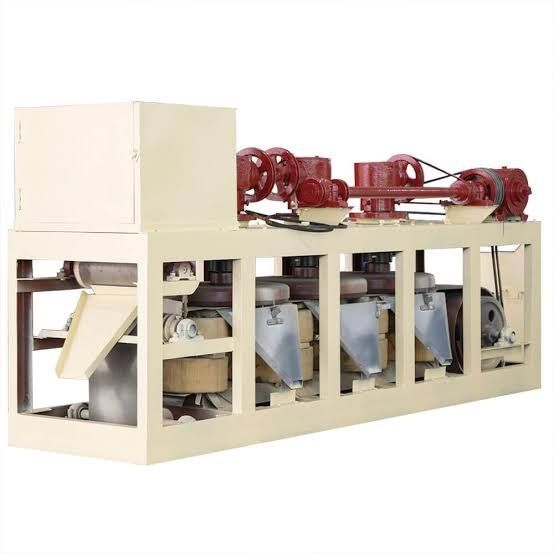
High-intensity systems generate stronger magnetic fields for separating materials with weaker magnetic responses. They are commonly used in selected mineral-processing and industrial applications.
Key Components of Magnetic Separation Equipment
| Component | Main Function |
|---|---|
| Magnet assembly | Generates the magnetic field |
| Drum | Carries material through the separation zone |
| Conveyor belt | Transports material |
| Magnetic pulley | Separates magnetic material at conveyor discharge |
| Housing | Supports and protects internal components |
| Drive motor | Powers rotating components |
| Collection chute | Directs separated material |
| Feed chute | Controls material entry |
| Control system | Monitors equipment operation |
| Support frame | Provides structural support |
The exact component arrangement varies according to separator type and application.
Key Features to Consider
Magnetic Field Strength
Magnetic field strength influences which materials can be captured. Stronger fields may be necessary for materials with weaker magnetic responses.
However, field strength should be considered together with particle size, feed depth, and separator geometry.
Magnetic Configuration
The arrangement of magnets affects the field distribution across the separation zone. Different configurations can provide different attraction patterns and separation characteristics.
Belt or Drum Speed
In belt and drum systems, rotational or conveyor speed influences how long material remains within the magnetic separation area.
Feed Rate
An excessively high feed rate can create a thick material layer that prevents magnetic particles from reaching the magnetic field effectively.
Separation Distance
The distance between the magnetic source and material particles affects magnetic attraction. Smaller particles may require different configurations from larger ferrous objects.
Cleaning and Discharge
Captured magnetic material must be removed from the magnetic surface. Automatic discharge mechanisms can help maintain continuous operation.
Factors Affecting Magnetic Separation Performance
Magnetic Properties
The response of a material to a magnetic field is the most fundamental factor. Strongly magnetic materials are generally easier to capture than weakly magnetic materials.
Particle Size
Particle size influences magnetic force, material movement, and the probability of contact with the magnetic field.
Feed Depth
A thin material layer can allow more particles to come within effective magnetic range. Deep material beds can reduce separation effectiveness.
Moisture
Moisture can affect material flow and cause particles to adhere to surfaces. Wet and dry separation may therefore require different equipment configurations.
Conveyor Speed
Higher conveyor speeds reduce the time material spends near the magnetic field. The appropriate speed depends on separator design and feed characteristics.
Material Composition
Mixed materials may contain particles with different magnetic responses. Understanding the composition of the feed stream helps determine the appropriate separator configuration.
Magnetic Separation vs Other Separation Methods
| Feature | Magnetic Separation | Screening | Air Classification | Density Separation |
|---|---|---|---|---|
| Main principle | Magnetic attraction | Particle size | Air movement | Density difference |
| Primary target | Magnetic materials | Size fractions | Light/heavy fractions | Density-based fractions |
| Typical equipment | Drum, belt, pulley | Vibratory screen | Air classifier | Gravity separator |
| Continuous operation | Common | Common | Common | Common |
| Material property used | Magnetic response | Particle size | Aerodynamic behavior | Density |
Different separation methods can also be combined. For example, a recycling plant may use screening followed by magnetic separation to remove different material categories.
Applications of Magnetic Separation Equipment
Magnetic separation equipment is used in numerous industrial environments, including:
- Mining
- Mineral processing
- Aggregate processing
- Metal recycling
- Municipal waste processing
- Construction material recycling
- Food processing
- Chemical processing
- Glass recycling
- Plastics recycling
- Ceramic material processing
In recycling facilities, magnetic separators can remove ferrous objects from mixed material streams. In mineral processing, they can help concentrate or separate minerals with suitable magnetic properties.
Best Practices for Operation and Maintenance
Regular inspection and appropriate operating conditions can help maintain separation performance.
- Maintain a consistent feed rate.
- Keep material depth within equipment requirements.
- Inspect belts, drums, and magnetic surfaces regularly.
- Remove accumulated material from critical areas.
- Check drive components and bearings.
- Monitor conveyor or drum speed.
- Inspect structural supports and mounting points.
- Check magnetic assemblies according to manufacturer guidance.
- Keep discharge paths clear.
- Follow recommended inspection and maintenance schedules.
Maintenance requirements vary according to separator design, material characteristics, operating hours, and environmental conditions.
Automation and Monitoring
Modern magnetic separation systems can be integrated into automated processing lines. Sensors and control systems can monitor conveyor speed, motor condition, material flow, and equipment status.
Automated controls can coordinate magnetic separators with feeders, conveyors, crushers, screens, and other processing equipment. This allows separation to become part of a larger material-handling workflow.
Some systems can also use sensors and monitoring technologies to identify changes in equipment operation and trigger maintenance alerts.
Who Uses Magnetic Separation Equipment?
Magnetic separation equipment can be relevant to organizations involved in:
- Mining operations
- Recycling facilities
- Aggregate processing
- Mineral processing
- Waste management
- Food production
- Chemical processing
- Ceramic production
- Glass recycling
- Industrial material recovery
Equipment selection should consider magnetic properties, particle size, feed rate, moisture, material depth, and required separation conditions.
FAQs About Magnetic Separation Equipment
What is magnetic separation equipment used for?
Magnetic separation equipment is used to remove or recover magnetic materials from mixed material streams. Common applications include mining, recycling, aggregate processing, mineral processing, and food production.
How does magnetic separation work?
A magnetic field attracts magnetic or magnetically responsive particles while non-magnetic materials continue along their normal path. The two fractions are then directed toward separate collection points.
What are the main types of magnetic separators?
Common types include magnetic drum separators, magnetic belt separators, overband separators, magnetic pulley systems, and high-intensity magnetic separators.
What factors affect magnetic separation performance?
Important factors include magnetic field strength, material magnetic properties, particle size, feed depth, feed rate, moisture, conveyor speed, and separation distance.
Can magnetic separators be used for recycling?
Yes. Magnetic separators are commonly integrated into recycling systems to remove ferrous materials from mixed waste, construction materials, plastics, glass, and other recyclable streams.
Conclusion
Magnetic separation equipment uses magnetic forces to remove or recover magnetically responsive materials from mixed material streams. Drum, belt, pulley, overband, and high-intensity configurations provide different approaches for handling various material characteristics and processing conditions.
Performance depends on magnetic field strength, feed characteristics, material depth, equipment speed, separator geometry, and maintenance condition. When properly integrated with conveyors, screens, crushers, and other processing equipment, magnetic separation can become an important stage in automated material-processing systems.