How Industrial Water Treatment Systems Work: A Complete Guide
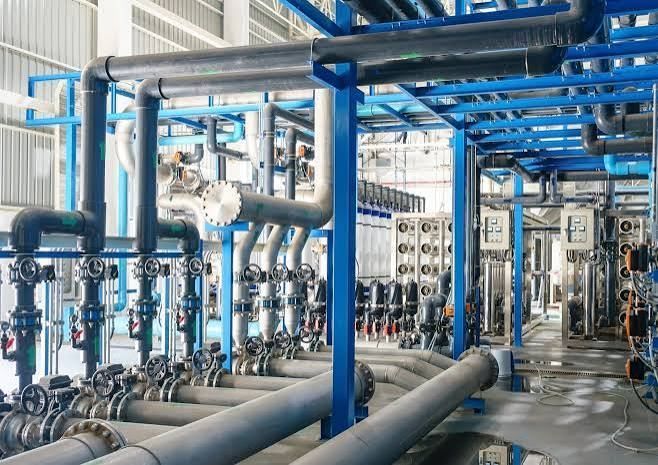
Industrial water treatment systems are engineered systems used to treat water for manufacturing, processing, cooling, boiler operation, cleaning, reuse, or discharge.
Industrial facilities may need to remove suspended solids, dissolved minerals, microorganisms, oils, chemicals, and other contaminants before water can be used for a particular process.
The treatment approach depends on the incoming water quality, intended application, contaminant characteristics, required water quality, operating conditions, and applicable environmental requirements. A treatment system may contain several stages working together rather than relying on a single process.
What Is an Industrial Water Treatment System?
An industrial water treatment system is a combination of equipment and processes designed to modify water quality for a specific industrial purpose.
Depending on the application, a system can include:
- Screening equipment
- Clarifiers
- Coagulation and flocculation systems
- Multimedia filters
- Activated carbon filters
- Cartridge filters
- Water softeners
- Reverse osmosis systems
- Ultrafiltration systems
- Ion-exchange units
- Disinfection equipment
- Pumps
- Chemical dosing systems
- Storage tanks
- Instrumentation and control systems
The equipment combination is determined by the characteristics of the source water and the required treated-water quality.
Why Industrial Water Treatment Is Important
Water is used throughout many industrial operations. It can function as a process ingredient, cleaning medium, cooling fluid, boiler feedwater, heat-transfer medium, or utility resource.
Untreated or inadequately treated water can contain substances that contribute to:
- Scale formation
- Corrosion
- Fouling
- Microbial growth
- Equipment contamination
- Process instability
- Wastewater compliance challenges
Proper treatment can help control these issues and support consistent industrial operations.
How Industrial Water Treatment Systems Work
1. Water Intake and Screening
The treatment process begins when source water enters the facility.
Screens or strainers can remove larger particles such as leaves, debris, fibers, and other suspended materials. This initial step protects downstream equipment from blockage and mechanical damage.
2. Coagulation
Coagulation is used to destabilize fine suspended particles that may not settle naturally.
A chemical coagulant can be introduced and mixed with the water under controlled conditions. The treatment chemistry depends on the characteristics of the incoming water.
3. Flocculation
During flocculation, gentle mixing encourages destabilized particles to combine into larger aggregates called flocs.
These larger particles are easier to separate through sedimentation or other clarification processes.
4. Clarification
Clarifiers allow suspended particles and flocs to separate from water.
Gravity causes heavier material to settle toward the bottom of the clarifier, while clarified water is collected from the upper portion.
Some systems use dissolved air flotation or other separation technologies when the contaminants are more suitable for flotation than sedimentation.
5. Filtration
Filtration removes remaining suspended particles from the water.
Common filtration technologies include:
- Sand filters
- Multimedia filters
- Cartridge filters
- Bag filters
- Activated carbon filters
- Membrane filters
The appropriate filter depends on particle size, water chemistry, flow rate, and required water quality.
6. Softening
Water softening reduces hardness-causing ions, primarily calcium and magnesium.
Ion-exchange softeners are commonly used for applications where hardness can contribute to scale formation in equipment such as boilers, heat exchangers, and piping.
7. Membrane Treatment
Membrane systems separate contaminants using semi-permeable membranes.
Common technologies include:
- Microfiltration
- Ultrafiltration
- Nanofiltration
- Reverse osmosis
Each technology has a different separation range and is selected according to the contaminants that need to be removed.
8. Reverse Osmosis
Reverse osmosis uses pressure to force water through a semi-permeable membrane.
The membrane can remove many dissolved salts, minerals, and other dissolved substances. A portion of the feedwater becomes permeate, while the concentrated stream is known as reject or concentrate.
9. Disinfection
Disinfection reduces microorganisms in treated water.
Common technologies include:
- Ultraviolet treatment
- Chlorination
- Ozonation
The selected technology depends on water characteristics, required microbial control, downstream use, and operating requirements.
10. Final Conditioning
Some industrial applications require additional conditioning after primary treatment.
This may involve pH adjustment, chemical dosing, polishing filtration, demineralization, or other processes before the water enters the production system.
Main Components of Industrial Water Treatment Systems
| Component | Main Function |
|---|---|
| Intake screen | Removes larger debris |
| Feed pump | Moves water through the system |
| Chemical dosing unit | Adds treatment chemicals |
| Coagulation tank | Promotes particle destabilization |
| Flocculation tank | Encourages floc formation |
| Clarifier | Separates suspended solids |
| Media filter | Removes suspended particles |
| Carbon filter | Reduces selected organic compounds and chlorine |
| Softener | Removes hardness ions |
| Membrane unit | Separates dissolved or suspended contaminants |
| UV system | Provides ultraviolet disinfection |
| Ozone system | Provides oxidation and disinfection |
| Storage tank | Holds treated or process water |
| Control panel | Coordinates equipment operation |
| Sensors | Monitor water and process parameters |
Types of Industrial Water Treatment Systems
Industrial Process Water Treatment
Process water treatment prepares water for direct or indirect use in manufacturing and processing operations.
Treatment requirements vary significantly according to the industry and process.
Boiler Feedwater Treatment
Boiler systems generally require controlled water chemistry to reduce scale, corrosion, and other operating problems.
Treatment can include softening, filtration, demineralization, reverse osmosis, deaeration, and chemical conditioning.
Cooling Water Treatment
Cooling systems can experience scale, corrosion, fouling, and microbial growth.
Treatment programs can include filtration, chemical conditioning, side-stream treatment, and microbial control.
Industrial Wastewater Treatment
Wastewater treatment removes or reduces contaminants from water generated by industrial processes.
Treatment can include physical separation, chemical treatment, biological treatment, membrane processes, sludge handling, and disinfection.
Water Reuse Systems
Treated wastewater can sometimes be processed further for reuse in suitable industrial applications.
Reuse systems can incorporate filtration, membrane treatment, disinfection, and storage depending on the intended application.
Common Industrial Water Contaminants
Industrial water can contain different contaminants depending on its source and application.
| Contaminant | Possible Treatment Approach |
|---|---|
| Suspended solids | Screening, clarification, filtration |
| Hardness | Ion exchange, softening, membrane treatment |
| Dissolved salts | Reverse osmosis, ion exchange |
| Organic compounds | Activated carbon, oxidation, biological treatment |
| Microorganisms | UV, ozone, chemical disinfection |
| Oils and grease | Separation, flotation, specialized filtration |
| Metals | Chemical precipitation, filtration, membrane treatment |
| High turbidity | Coagulation, clarification, filtration |
The actual treatment method should be determined through water analysis and process requirements.
Water Quality Monitoring
Monitoring helps operators understand whether a treatment system is functioning within its required operating range.
Common parameters include:
- pH
- Conductivity
- Total dissolved solids
- Turbidity
- Temperature
- Flow rate
- Pressure
- Dissolved oxygen
- Oxidation-reduction potential
Specific facilities may also monitor hardness, chlorine residual, microbial indicators, chemical concentrations, or other parameters relevant to the process.
Automation and Control
Modern industrial water treatment systems can use programmable logic controllers, sensors, automated valves, variable-speed pumps, and supervisory software.
Automation can regulate:
- Pump operation
- Chemical dosing
- Filter backwashing
- Membrane pressure
- Flow rates
- Tank levels
- pH
- Conductivity
- Disinfection conditions
Alarm systems can also notify operators when measured conditions fall outside configured ranges.
Factors Affecting System Design
Source Water Quality
The initial water analysis determines which contaminants need to be treated.
Required Water Quality
Process water, boiler feedwater, cooling water, and general utility water can have different quality requirements.
Flow Rate
The treatment system must accommodate the required water volume over the operating period.
Contaminant Load
High concentrations of suspended or dissolved contaminants may require multiple treatment stages.
Temperature and Pressure
Some treatment technologies are sensitive to temperature or pressure, while others require specific operating ranges.
Waste Streams
Treatment processes can generate sludge, concentrate, spent filter media, or other residual streams that require appropriate handling.
Maintenance Requirements
Regular maintenance helps keep treatment equipment operating consistently.
Typical activities include:
- Inspecting pumps and valves
- Replacing filter media when required
- Cleaning membrane systems
- Checking chemical dosing equipment
- Inspecting storage tanks
- Calibrating sensors
- Checking UV lamps
- Inspecting piping and connections
- Monitoring pressure changes
- Cleaning or replacing cartridge filters
Membrane systems may require periodic cleaning when fouling or scaling reduces performance.
Safety Considerations
Industrial water treatment systems can involve chemicals, pressurized piping, electrical equipment, moving machinery, and confined spaces.
Important safety practices include:
- Following chemical-handling procedures
- Using appropriate protective equipment
- Maintaining electrical protection
- Controlling system pressure
- Providing suitable ventilation
- Following confined-space procedures where applicable
- Clearly labeling chemical storage areas
- Using appropriate emergency-response procedures
Safety requirements should be based on the specific chemicals, equipment, facility design, and applicable regulations.
FAQs
What is an industrial water treatment system?
An industrial water treatment system is a combination of processes and equipment used to modify water quality for industrial applications such as manufacturing, cooling, boiler operation, cleaning, reuse, or discharge.
What are the main stages of industrial water treatment?
A system may include screening, coagulation, flocculation, clarification, filtration, softening, membrane treatment, disinfection, and final conditioning. Not every system requires every stage.
What is reverse osmosis used for?
Reverse osmosis uses a semi-permeable membrane to reduce many dissolved salts, minerals, and other dissolved substances from water.
How is industrial wastewater treated?
Industrial wastewater can be treated using physical, chemical, biological, membrane, and disinfection processes. The treatment sequence depends on the wastewater characteristics and required final water quality.
How often does industrial water treatment equipment require maintenance?
Maintenance frequency varies by equipment type, water quality, operating hours, and manufacturer requirements. Regular monitoring helps identify when filters, membranes, sensors, pumps, and other components require attention.
Conclusion
Industrial water treatment systems combine multiple technologies to prepare water for manufacturing, processing, cooling, boiler operation, cleaning, reuse, or controlled discharge. Treatment can involve screening, clarification, filtration, softening, membrane separation, disinfection, and chemical conditioning.
The appropriate system depends on source-water characteristics, contaminant concentrations, required water quality, flow rate, process conditions, and residual-stream management. Monitoring instruments and automated controls can help maintain stable operating conditions, while scheduled maintenance supports reliable equipment performance.
A properly designed industrial water treatment system is therefore based on water analysis and the specific requirements of the industrial process rather than a single universal treatment configuration.