How Continuous Flow Chemical Reactors Work: A Complete Guide
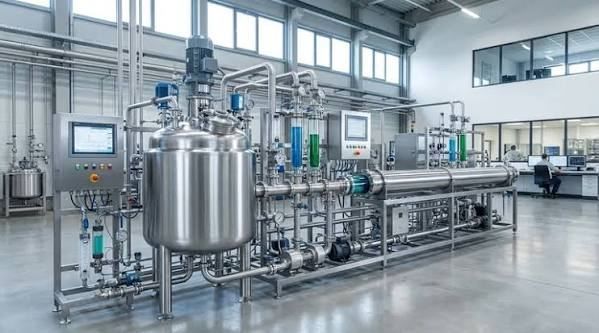
Continuous flow chemical reactors are process systems in which reactants are continuously introduced into a reactor while products are continuously removed.
Unlike batch reactors, where materials are loaded and processed as a single batch, continuous flow systems maintain an ongoing reaction process under controlled conditions.
These reactors are used in chemical manufacturing, pharmaceuticals, specialty chemicals, petrochemicals, food processing, and other industries. Their design allows engineers to control factors such as flow rate, temperature, pressure, residence time, and reactant concentration.
What Are Continuous Flow Chemical Reactors?
Continuous flow chemical reactors are vessels or channels designed to carry out chemical reactions while reactants and products continuously move through the system.
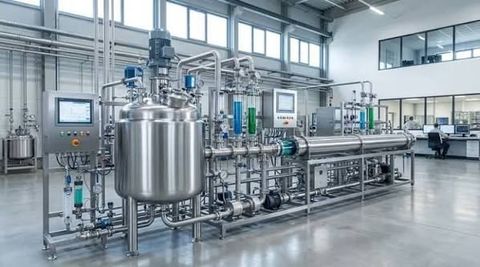
A basic continuous flow process consists of:
- Reactant storage
- Feed pumps
- Flow-control equipment
- Reactor
- Heating or cooling system
- Sensors and controls
- Product collection
Reactants enter at controlled rates, interact within the reactor, and leave as a product stream. The reaction conditions can be adjusted according to the chemistry and desired conversion.
How Continuous Flow Chemical Reactors Work
1. Reactant Preparation
Reactants are stored in tanks or other containers before entering the reactor. Their concentration, temperature, and physical condition may be adjusted before processing.
2. Controlled Feeding
Pumps or other metering devices introduce reactants into the system at specified flow rates. Accurate flow control helps maintain the desired reactant ratio and residence time.
3. Mixing
The incoming streams are combined and mixed. Mixing can occur through static mixers, mechanical devices, or the geometry of the reactor channel.
Efficient mixing helps provide consistent reaction conditions throughout the reactor.
4. Chemical Reaction
The mixed reactants travel through the reactor while the chemical reaction takes place. Temperature, pressure, concentration, and residence time influence the reaction rate and product formation.
5. Heat Management
Chemical reactions may release or absorb heat. Heat exchangers, jackets, heating elements, or cooling systems can regulate the reaction temperature.
6. Product Removal
The resulting product stream continuously exits the reactor. Additional separation, purification, cooling, or treatment steps may follow depending on the process.
Types of Continuous Flow Chemical Reactors
Continuous Stirred-Tank Reactors
A continuous stirred-tank reactor, or CSTR, continuously receives reactants and removes products while an agitator maintains mixing inside the vessel.
CSTRs can be used when uniform composition and temperature throughout the reactor are desirable.
Plug Flow Reactors
Plug flow reactors, or PFRs, move reactants through a tubular reactor with limited axial mixing. Reaction conditions can change progressively along the reactor length.
They are commonly used for reactions where controlled residence time and continuous movement through a reaction zone are important.
Packed-Bed Reactors
Packed-bed reactors contain solid catalyst or another packing material through which reactants flow. The packing provides a surface for catalytic reactions.
These reactors are used in various chemical and petrochemical processes.
Microreactors
Microreactors contain very small reaction channels. Their small dimensions can provide high surface-area-to-volume ratios and rapid heat and mass transfer.
They can be used for applications requiring precise control of reaction conditions.
Continuous Loop Reactors
Loop reactors circulate reaction material through a defined flow path. The circulation pattern can improve mixing and heat transfer for particular reaction processes.
Main Components of Continuous Flow Reactor Systems
| Component | Function |
|---|---|
| Feed tanks | Store reactants before processing |
| Metering pumps | Control reactant flow rates |
| Flow meters | Measure material flow |
| Mixers | Combine reactant streams |
| Reactor vessel or channel | Provides the reaction environment |
| Heat exchanger | Transfers heat into or out of the process |
| Temperature sensors | Monitor reaction temperature |
| Pressure sensors | Monitor system pressure |
| Control valves | Regulate material flow |
| Back-pressure regulator | Maintains selected pressure |
| Product collection system | Receives the reactor output |
| Control system | Coordinates process parameters |
Important Operating Parameters
Flow Rate
Flow rate determines how quickly material moves through the reactor. Changes in flow can affect residence time and the amount of reaction that occurs before material exits.
Residence Time
Residence time represents how long material remains within the reaction zone. It depends on factors such as reactor volume and flow rate.
Temperature
Reaction rates are often strongly influenced by temperature. Heating and cooling systems help maintain the required process conditions.
Pressure
Pressure can affect reaction rates, gas solubility, boiling points, and phase behavior. Some continuous reactions therefore require controlled pressure conditions.
Reactant Concentration
Reactant concentration influences reaction kinetics and product formation. Continuous systems can use controlled feed rates and mixing to maintain desired concentrations.
Advantages and Limitations
| Aspect | Continuous Flow Reactor |
|---|---|
| Material movement | Continuous |
| Production mode | Continuous processing |
| Residence time | Controlled through flow and reactor volume |
| Heat transfer | Can be highly controlled |
| Automation | Well suited to automated control |
| Scale-up approach | Often based on reactor size or parallelization |
| Process monitoring | Continuous measurement possible |
| Flexibility | Depends on reactor design and chemistry |
Continuous flow systems can provide consistent operating conditions and precise control of reaction parameters. However, they may require more complex pumps, controls, instrumentation, and process integration than simpler reaction arrangements.
Heat Transfer in Continuous Flow Reactors
Heat management is particularly important for fast or highly exothermic reactions. Continuous reactors can use jackets, coils, heat exchangers, electrical heating, or external cooling loops.
Because many continuous reactors have relatively high surface-area-to-volume ratios, heat can be transferred efficiently in certain designs. This can help maintain stable reaction temperatures.
Temperature sensors are commonly positioned at strategic locations to detect changes during operation.
Process Control and Automation
Continuous flow reactor systems often use automated controls to regulate key operating parameters. Sensors can measure flow, temperature, pressure, level, and other process variables.
A control system can use these measurements to adjust pumps, valves, heaters, coolers, and other equipment. Automated monitoring can also identify deviations from predefined operating conditions.
Data recording allows operators and engineers to review process behavior and evaluate changes over time.
Applications of Continuous Flow Chemical Reactors
Pharmaceutical Manufacturing
Continuous flow reactors can be used for chemical synthesis, pharmaceutical intermediates, and selected active ingredient production processes.
Precise control of temperature, residence time, and mixing can be useful for reactions involving sensitive or reactive materials.
Specialty Chemicals
Manufacturers can use continuous reactors for producing specialty chemicals, intermediates, coatings ingredients, and formulated chemical materials.
Petrochemical Processing
Continuous reactors are widely associated with chemical and petrochemical processing, where large quantities of feed materials are processed under controlled temperature and pressure conditions.
Polymer Processing
Certain polymerization processes can use continuous reactor configurations to maintain controlled feed and reaction conditions.
Food and Biochemical Processing
Continuous reaction systems can also be used in selected food, fermentation, biochemical, and enzymatic processes where continuous material movement is appropriate.
Factors to Consider When Selecting a Reactor
Reaction Chemistry
The reaction mechanism, kinetics, heat generation, phase behavior, and catalyst requirements should be evaluated before selecting a reactor configuration.
Required Production Rate
The required throughput influences reactor volume, number of reactors, flow rates, and supporting equipment.
Material Compatibility
Reactor materials should be compatible with the reactants, products, catalysts, temperature, and pressure conditions.
Heat Generation
Exothermic reactions may require carefully designed heat removal systems, while endothermic reactions may require controlled heat input.
Pressure Requirements
The reactor and connected components must be suitable for the intended operating pressure and potential pressure variations.
Maintenance Requirements
Continuous flow reactors require regular inspection of pumps, valves, sensors, piping, seals, mixers, and heat-transfer surfaces.
Blockages can affect flow rates and pressure, particularly in narrow channels or systems handling solids or viscous materials. Cleaning procedures should therefore be selected according to the process chemistry and reactor design.
Sensors and flow meters should be checked and calibrated according to the equipment and process requirements.
Safety Considerations
Continuous chemical reactors can involve high temperatures, elevated pressures, reactive chemicals, flammable materials, and rapid reactions. Appropriate safeguards should be incorporated into the reactor system.
Common measures include:
- Pressure relief devices
- Temperature monitoring
- Emergency shutdown controls
- Leak detection
- Appropriate ventilation
- Chemical containment
- Flow monitoring
- Automated interlocks
- Proper material compatibility assessment
Safety procedures should be based on the specific chemical process, equipment design, and applicable regulations.
FAQs
What is a continuous flow chemical reactor?
A continuous flow chemical reactor is a system where reactants continuously enter a reaction zone while products continuously leave. Reaction conditions are maintained through controlled flow, temperature, pressure, and mixing.
What are the main types of continuous flow reactors?
Common types include continuous stirred-tank reactors, plug flow reactors, packed-bed reactors, microreactors, and loop reactors.
What is residence time in a continuous flow reactor?
Residence time is the approximate period that material remains inside the reaction zone. It is influenced by reactor volume and flow rate.
Why is temperature control important?
Temperature affects reaction kinetics, selectivity, heat generation, and material properties. Heating and cooling systems help maintain the required reaction conditions.
Where are continuous flow reactors used?
They are used in chemical manufacturing, pharmaceuticals, petrochemicals, specialty chemicals, polymer processing, and selected food and biochemical applications.
Conclusion
Continuous flow chemical reactors provide a controlled method for carrying out chemical reactions while reactants and products continuously move through the system. Pumps, mixers, reactors, heat exchangers, sensors, valves, and control systems work together to maintain the required process conditions.
Reactor selection depends on reaction chemistry, flow rate, residence time, temperature, pressure, material compatibility, heat generation, and production requirements. With suitable monitoring and control, continuous flow systems can support consistent processing across a wide range of industrial applications.