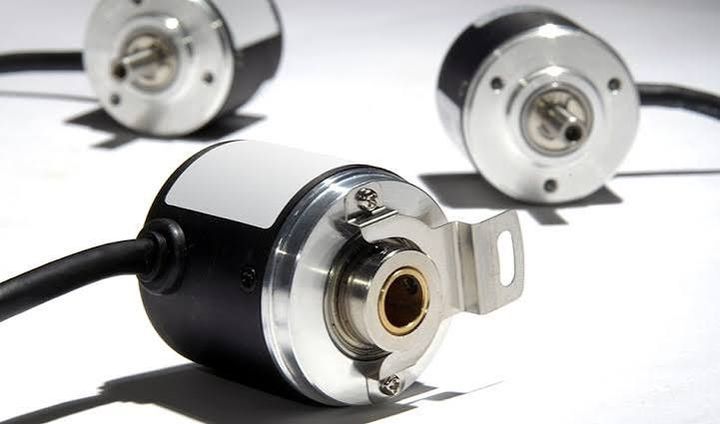
Encoder Guide: Understanding Types, Functions, and Industrial Applications
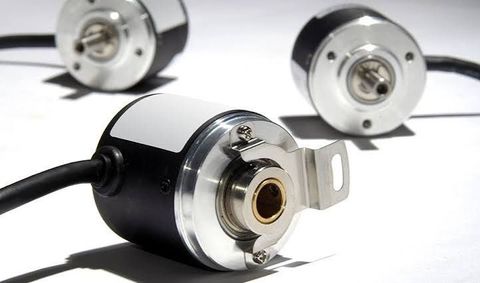
An encoder is an electronic device that converts mechanical movement into an electrical signal that a control system can interpret.
Encoders are commonly used to determine position, direction, speed, or rotational movement. In industrial environments, an industrial encoder can connect rotating shafts, motors, conveyors, robotic mechanisms, and other moving equipment with electronic control systems.
The development of encoder technology is closely connected with the growth of automated machinery and digital control. As machines became more precise, manufacturers needed ways to measure movement electronically rather than relying only on mechanical indicators. This led to different encoder systems designed for specific measurement requirements.
Today, rotary encoder devices are widely used where a rotating shaft needs to be monitored. Encoder sensors can detect changes in position and communicate those changes to a controller. Depending on their construction, encoders may use optical, magnetic, or other sensing principles.
How an Encoder Works
A typical encoder detects movement and converts it into an electrical output. The output is then interpreted by a controller, drive, or other electronic equipment.
For example, when a motor shaft rotates, an encoder can generate signals corresponding to that movement. The control system can use the information to determine how far the shaft has moved and, depending on the encoder type, its direction or exact position.
Main Encoder Types
Several encoder designs are used in industrial and commercial equipment. The main categories include:
- Incremental encoder: Produces pulses as movement occurs. The control system counts these signals to determine movement.
- Absolute encoder: Provides a coded position value so the system can identify a specific shaft position.
- Optical encoder: Uses a light source and patterned disc or scale to detect movement.
- Magnetic encoder: Uses magnetic fields and sensing elements to determine position or rotation.
- Rotary encoder: Measures rotational movement around a shaft or axis.
These designs can have different resolution levels, environmental characteristics, interfaces, and installation requirements.
| Encoder Type | Basic Measurement Method | Common Application |
|---|---|---|
| Incremental encoder | Pulse generation | Motor speed and relative movement |
| Absolute encoder | Coded position | Position measurement |
| Optical encoder | Light-based detection | Precision motion systems |
| Magnetic encoder | Magnetic detection | Industrial machinery |
| Rotary encoder | Rotational position | Motors, machinery, robotics |
Importance
Encoders matter because modern machines often need accurate information about movement. A motor may need to rotate to a particular position, a conveyor may need to move a controlled distance, or a robotic mechanism may need to coordinate several axes.
Without movement feedback, a control system may have limited information about what a mechanical component is actually doing. An encoder provides a measurement signal that can be used alongside other control information.
Supporting Industrial Motion Control
An industrial motion control encoder can provide feedback about motor rotation and mechanical movement. This information can help a controller regulate speed, direction, acceleration, or position according to the design of the machine.
Industrial position encoders are particularly relevant in equipment where movement must be measured repeatedly. Applications can include automated assembly systems, machine tools, packaging equipment, material-handling systems, and robotic equipment.
Position and Speed Measurement
A rotary encoder can measure rotational movement while a suitable control system interprets the encoder's electrical signals. Incremental systems are commonly associated with relative movement because the controller counts pulses from a known reference point.
Absolute encoders work differently by assigning coded values to positions. This allows a control system to identify a shaft position without relying solely on counting pulses from a starting point.
Accuracy and Resolution
Resolution describes how finely an encoder can distinguish movement. A high resolution encoder can provide more measurement increments within a given range, although resolution alone does not determine overall measurement accuracy.
Precision encoder systems also depend on mechanical installation, signal quality, operating conditions, alignment, electronics, and the characteristics of the application. A high precision position encoder therefore needs to be considered as part of a complete measurement system rather than as an isolated component.
Where Encoders Are Used
Encoder systems appear in many types of equipment, including:
- Industrial motors and drives
- Robotic arms and automated machinery
- Conveyors and material-handling equipment
- Printing and packaging machines
- Machine tools
- Elevators and lifting mechanisms
- Automated production equipment
- Positioning and motion-control systems
Their role varies according to whether the application primarily needs speed, direction, relative movement, or absolute position information.
Recent Updates
Between 2024 and 2026, encoder development has generally followed wider industrial trends toward automation, compact electronics, connected machinery, and more detailed motion feedback. Industrial equipment increasingly combines sensors with digital control systems, creating greater demand for compatible measurement technologies.
More Compact and Connected Designs
Modern industrial encoders are increasingly designed to fit within compact machine architectures. Smaller motors, robotic joints, and automated mechanisms can require measurement devices that occupy limited physical space.
Encoder interfaces are also becoming an important consideration. Depending on the application, systems may use analog signals, pulse outputs, serial communication, or other digital interfaces to transfer position information.
Optical and Magnetic Technologies
Optical encoder technology remains relevant for applications requiring detailed measurement, while magnetic encoder designs can be useful in environments where sensing through magnetic fields is appropriate. Each approach involves different design considerations relating to resolution, environmental conditions, mechanical arrangement, and signal processing.
Industrial rotary encoder designs may therefore vary substantially even when their basic purpose is similar. Selection depends on the movement being measured and the conditions surrounding the equipment.
Automation and Digital Motion Systems
Automated encoder systems are increasingly integrated with programmable controllers, motor drives, robotics platforms, and machine monitoring systems. Advanced industrial encoders can contribute measurement data to systems that coordinate multiple machine functions.
Advanced encoder measurement systems may also combine encoder feedback with other sensors and software. This can provide a broader picture of machine movement and operating conditions, particularly in automated manufacturing environments.
Tools and Resources
Understanding an encoder often requires more than identifying its basic type. Several practical resources can help explain specifications and determine how an encoder fits within a measurement system.
Encoder Specification Resources
Manufacturer datasheets and technical manuals commonly provide information such as resolution, output type, supply voltage, shaft dimensions, mounting arrangements, environmental ratings, and communication interfaces.
Useful reference materials include:
- Encoder selection tables for comparing technical characteristics.
- Wiring diagrams for understanding signal connections.
- Resolution calculators for relating pulses or counts to mechanical movement.
- Motor and drive manuals for checking encoder compatibility.
- Application notes explaining incremental and absolute measurement methods.
- Measurement-system documentation describing signal processing and feedback.
Measurement and Testing Tools
Multimeters, oscilloscopes, signal analyzers, and controller diagnostic software can be used in appropriate technical environments to examine encoder signals. An oscilloscope, for example, can display pulse waveforms from an incremental encoder and help identify timing or signal-quality issues.
For precision rotary encoder installations, mechanical alignment tools may also be relevant. Accurate mounting and shaft alignment can influence the quality of the measurement obtained from an encoder.
Choosing a Suitable Encoder
The selection process generally begins by identifying what needs to be measured. Important considerations include:
- Type of movement: rotational or linear.
- Measurement requirement: speed, direction, relative position, or absolute position.
- Resolution: the level of movement detail required.
- Environment: temperature, dust, moisture, vibration, and other conditions.
- Interface: the type of electrical connection required by the control system.
- Mechanical arrangement: shaft size, mounting method, and available space.
These factors help explain why there is no single encoder design for every industrial application.
FAQs
What is an encoder?
An encoder is a sensing device that converts mechanical movement into an electrical signal. The signal can be interpreted to determine information such as position, direction, or rotational speed.
What is the difference between an incremental encoder and an absolute encoder?
An incremental encoder generates signals that represent changes in movement, often through pulses. An absolute encoder provides coded position information that identifies a particular position within its measurement range.
How does an industrial encoder work?
An industrial encoder detects movement using a sensing method such as optical or magnetic detection. It then produces an electrical output that a controller or drive can interpret as movement information.
What are optical encoder and magnetic encoder systems used for?
An optical encoder uses light and a patterned element to detect movement, while a magnetic encoder uses magnetic fields and sensing components. Both can be used for position or rotational measurement, with their suitability depending on application conditions.
What is a high resolution encoder?
A high resolution encoder can distinguish a larger number of measurement increments over a specified movement range. Resolution is only one factor in an encoder measurement system, since accuracy and repeatability also depend on mechanical, electrical, and environmental conditions.
Conclusion
Encoders convert mechanical movement into electrical information that control systems can interpret. Rotary, incremental, absolute, optical, and magnetic encoders use different measurement approaches for applications involving position, direction, and speed. Industrial encoder systems are increasingly integrated with automated machinery, robotics, motor drives, and digital control platforms. Their actual measurement performance depends on the encoder design, installation, surrounding environment, electronics, and requirements of the application.