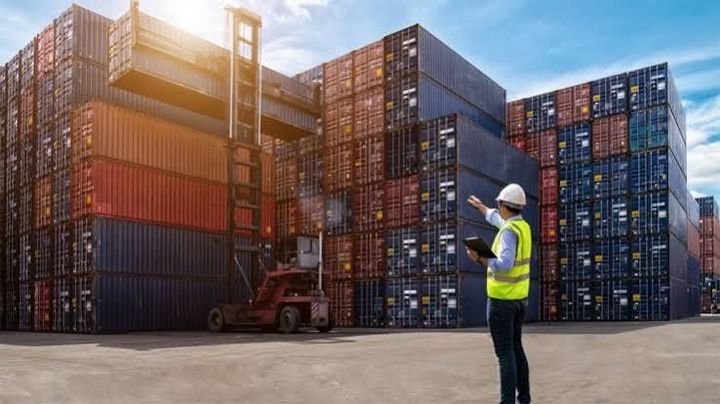
Container Inspection Systems Guide to Digital Inspection Technologies
Container inspection systems use cameras, sensors, measurement devices, and software to examine containers for visible defects, dimensional variations, contamination.
These systems are used across packaging, manufacturing, logistics, and industrial production environments where containers need to meet defined physical or visual requirements.
Traditional inspection often depended on manual examination or simple mechanical gauges. As production became more automated, container inspection equipment developed to capture images and measurements electronically. This created a foundation for automated container inspection, allowing inspection data to be processed according to defined rules.
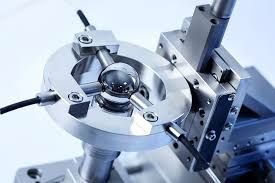
Today, a container inspection system may combine cameras, lighting, sensors, computing hardware, and software. Depending on the application, it can examine the shape, surface, position, closure area, label, markings, or other characteristics of a container.
How Digital Inspection Works
A typical automated inspection process begins when a container enters an inspection area. Sensors can detect its position, cameras capture one or more views, and software analyzes the collected information.
The system may compare measurements or images with predefined specifications. If a detected condition falls outside the specified range, the system can record the result and, when integrated with a production line, send a signal to another control system.
Container vision inspection systems are particularly useful when visual characteristics need to be examined repeatedly. Lighting, camera position, image resolution, container material, and surface appearance all influence the inspection process.
Types of Inspection
Different technologies address different inspection requirements. Common approaches include:
- Optical container inspection systems for visual characteristics such as surface marks, labels, shape, and visible defects.
- Industrial dimensional inspection systems for measurements involving height, width, diameter, position, or geometry.
- Non destructive container inspection for examining an item without intentionally damaging it.
- Machine-vision inspection for image-based identification and classification.
- Sensor-based inspection for conditions that may not be easily assessed through ordinary images.
The appropriate technology depends on the container material, geometry, production environment, and type of defect being examined.
Importance
Container quality can affect manufacturing processes, packaging operations, transportation, storage, and the condition of products held inside a container. A damaged, incorrectly formed, contaminated, or incorrectly positioned container may create problems later in the production or distribution process.
Container quality inspection equipment helps identify specified conditions before containers move further through a workflow. This can be particularly relevant in high-volume environments where examining every item manually may be difficult to maintain consistently.
Supporting Consistent Inspection
Manual inspection can depend on lighting, viewing conditions, operator attention, and the characteristics of the defect. Automated inspection equipment uses defined imaging or measurement procedures, which can make inspection criteria more consistent when the system is properly configured.
Industrial quality inspection systems can also record inspection results. These records may help organizations understand recurring defect patterns and investigate changes in production conditions.
Applications Across Industries
Container inspection technology can be applied to glass, plastic, metal, composite, and other container formats. Typical inspection areas include:
- Container dimensions and geometry.
- Cracks, chips, dents, scratches, or deformation.
- Surface contamination or unwanted material.
- Labels, markings, codes, and positioning.
- Openings, necks, closures, and sealing areas.
- Color or appearance variations.
- Presence and position of specified components.
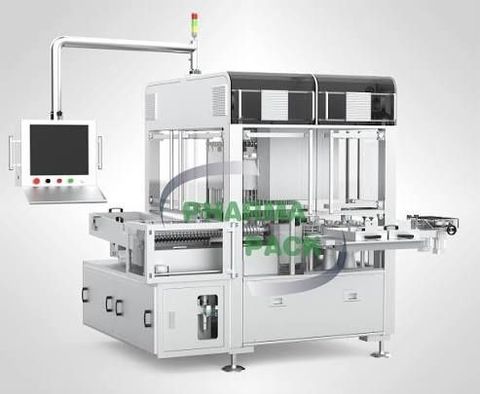
A container inspection machine may perform one inspection task or combine several inspection functions. More complex installations can use several cameras or sensing methods to examine different areas of the same container.
Quality and Operational Considerations
Automated quality control systems do not eliminate the need for appropriate inspection criteria. A system needs defined tolerances, suitable lighting, calibrated measurement methods, and appropriate test conditions.
Container surfaces can also create technical challenges. Transparent, reflective, curved, or textured materials can change how light reaches a camera. As a result, optical inspection normally requires careful configuration of cameras and illumination.
Recent Updates
Between 2024 and 2026, container inspection technology has increasingly incorporated artificial intelligence, deep learning, improved machine vision, and connected data systems. Recent research and industry developments show greater interest in combining conventional image-processing methods with AI-based recognition.
Research published on reusable industrial containers has examined computer vision for container identification and defect detection. The work demonstrates how image datasets and machine-learning models can support automated examination while also showing that defect detection remains an area requiring further development.
Growth of AI-Based Inspection
Advanced machine vision inspection systems increasingly use AI to recognize variations that may be difficult to describe through fixed image-processing rules. AI can assist with classification, anomaly detection, and identification of changing visual patterns.
Recent packaging research has also examined hybrid approaches that combine deep-learning-based image analysis with conventional measurement rules. Such systems can use AI where visual variation is greater while retaining defined measurement criteria for more structured inspection tasks.
Inspection Beyond Simple Defect Detection
Another development is the movement from isolated inspection machines toward connected inspection environments. Data from cameras and sensors can be stored alongside production information, allowing inspection results to be reviewed later.
Research into AI-based inspection of empty shipping containers has also explored image-based damage recognition. The objective is to support more consistent assessment of container conditions and improve the digital handling of inspection information.
Non-Destructive Inspection Developments
Non destructive container inspection is also developing through technologies designed to identify conditions without intentionally damaging the inspected item. Optical methods can examine visible characteristics, while other techniques may detect internal or structural conditions that are not apparent from ordinary images.
The choice of technology remains dependent on the inspection objective. A camera may be appropriate for a visible surface defect, while another sensing method may be necessary for a structural condition.
| Inspection Method | Typical Information | Common Application |
|---|---|---|
| Optical imaging | Surface and visual characteristics | Scratches, labels, markings |
| Dimensional measurement | Size and geometry | Height, diameter, profile |
| Machine vision | Image patterns and defects | Automated visual inspection |
| Non-destructive sensing | Internal or structural conditions | Material or integrity checks |
| AI-based analysis | Classification and anomalies | Variable visual defects |
Tools and Resources
Several categories of tools can help users understand, design, or evaluate inspection processes. These include machine-vision software, measurement tools, process documentation templates, technical standards, and equipment manuals.
Machine Vision and Measurement Tools
Camera-based inspection platforms generally include image acquisition, lighting controls, image-processing functions, and result logging. Measurement software can calculate dimensions or compare observed geometry against predefined tolerances.
For dimensional applications, calibration tools are important because measurements from a camera need a known reference. Calibration targets, gauges, and reference samples can help establish the relationship between image measurements and physical dimensions.
Documentation and Process Templates
Inspection templates can organize information such as:
- Container type and material.
- Inspection points and viewing angles.
- Required dimensions and tolerances.
- Defect categories.
- Camera and lighting requirements.
- Inspection frequency.
- Acceptance criteria.
- Data-recording requirements.
Process flowcharts can also show where inspection occurs and how results move to later production stages.
Technical and Educational Resources
Standards organizations, industrial automation documentation, machine-vision publications, and equipment manuals can provide background information about inspection methods and measurement principles. Educational material covering optics, image processing, industrial sensors, and quality management can also help readers understand how inspection systems function.
For organizations developing industrial quality inspection systems, technical documentation should clearly describe inspection conditions and the meaning of each recorded result.
FAQs
What are container inspection systems?
Container inspection systems are technologies used to examine containers for defined visual, dimensional, structural, or quality characteristics. They can use cameras, sensors, measurement equipment, and software.
How does automated container inspection work?
Automated container inspection typically uses sensors to position or detect a container, cameras or other sensing devices to collect information, and software to compare the results with predefined inspection criteria.
What is container inspection equipment used for?
Container inspection equipment can examine dimensions, surfaces, markings, closures, shape, position, and other specified characteristics. The exact inspection functions depend on the container and the production process.
What are container vision inspection systems?
Container vision inspection systems use cameras and image-processing software to examine containers. They can identify visual conditions such as surface defects, incorrect positioning, markings, labels, or changes in shape.
Is non destructive container inspection possible?
Yes. Non destructive container inspection methods examine an item without intentionally damaging it. Optical inspection is one example, while other sensing technologies may be used when information beyond the visible surface is required.
Conclusion
Container inspection systems combine imaging, measurement, sensors, and software to examine containers according to defined quality criteria. Digital technologies are expanding from conventional machine vision toward AI-assisted analysis, connected data collection, and more flexible inspection methods. The appropriate container inspection equipment depends on the material, geometry, production conditions, and characteristics that need to be examined. Modern inspection systems therefore represent a combination of physical sensing, software analysis, defined tolerances, and documented inspection procedures.