AI in Supply Chain Management: Discover Forecasting, Automation, and Optimization
AI in Supply Chain Management: Discover Forecasting, Automation, and Optimization explains how artificial intelligence is being applied across modern supply chains. It covers demand forecasting, inventory planning, logistics, supplier analysis, warehouse automation, risk monitoring, route planning, and data-driven decision support for more connected supply chain operations.
AI in Supply Chain Management: Discover Forecasting, Automation, and Optimization
Context
Artificial intelligence is becoming an important technology in modern supply chain management. AI in Supply Chain Management refers to the use of machine learning, predictive analytics, natural language processing, computer vision, optimization techniques, and related technologies to analyze supply chain information and support business processes.
Supply chains connect many activities, including procurement, production, inventory management, warehousing, transportation, distribution, and demand planning. These activities generate large amounts of data from orders, shipments, inventory records, supplier interactions, market conditions, production schedules, and logistics systems.
Traditional supply chain planning often relies on historical information, predefined rules, spreadsheets, and manual decisions. AI can add analytical capabilities that identify patterns across large datasets and help organizations anticipate potential changes.
AI does not replace every supply chain decision. Its role can range from assisting employees with analysis to automating specific low-risk workflows. The appropriate level of automation depends on the process, data quality, business requirements, and consequences of an incorrect decision.
Major Applications of AI in Supply Chains
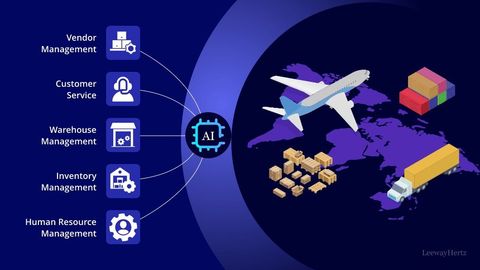
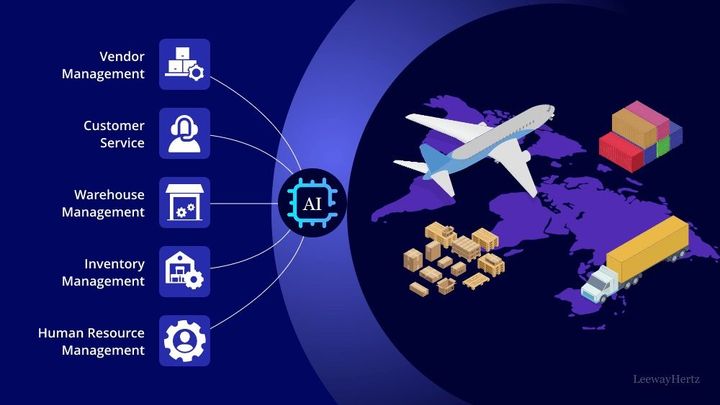
AI can be applied to many supply chain functions:
Demand forecasting: Analyzing historical and current information to support demand estimates.
Inventory planning: Identifying inventory patterns and supporting replenishment decisions.
Logistics optimization: Analyzing transportation routes, schedules, and shipment information.
Warehouse operations: Supporting inventory identification, movement, and workflow planning.
Supplier analysis: Evaluating supplier information and identifying patterns or potential disruptions.
Procurement: Supporting purchasing workflows, document processing, and data analysis.
Production planning: Helping align production schedules with anticipated requirements.
Risk monitoring: Identifying unusual patterns that may indicate potential supply chain disruption.
Customer fulfillment: Supporting order prioritization and delivery planning.
Supply Chain Data
AI depends on information from many sources. Common datasets include:
| Data Category | Examples | AI Application |
|---|---|---|
| Demand data | Orders and historical demand | Forecasting |
| Inventory data | Stock levels and movements | Inventory planning |
| Logistics data | Routes and shipment records | Transportation analysis |
| Supplier data | Delivery and quality records | Supplier analysis |
| Production data | Schedules and output | Production planning |
| Market data | External demand indicators | Forecast refinement |
| Warehouse data | Locations and movement records | Warehouse optimization |
The usefulness of AI depends on whether these datasets are accurate, sufficiently complete, appropriately integrated, and relevant to the task.
Importance
AI in Supply Chain Management can help organizations analyze complex relationships between demand, inventory, production, procurement, and logistics. Supply chains are dynamic environments, so changes in one area can affect multiple downstream activities.
Demand Forecasting
Demand forecasting is one of the most established AI applications in supply chain management. Machine learning models can analyze historical demand alongside variables such as seasonality, product characteristics, promotions, and other relevant business information.
Forecasting models should be monitored because historical patterns do not always continue. Sudden market changes, disruptions, new products, or shifts in customer behavior can reduce the accuracy of a model.
Inventory Planning
Inventory planning involves balancing product availability with the need to avoid unnecessary accumulation. AI can examine historical movement, demand patterns, lead times, and other variables to support inventory decisions.
AI-based analysis can help identify items with unusual movement or changing demand patterns. Human review remains important when business conditions are changing rapidly.
Logistics Optimization
Transportation networks involve routes, vehicles, delivery schedules, locations, capacity constraints, and changing conditions. AI and optimization techniques can analyze these factors to support logistics planning.
Route analysis can consider multiple variables simultaneously rather than relying on a single fixed route or schedule.
Warehouse Automation
AI can support warehouse activities through computer vision, robotics, demand analysis, inventory identification, and workflow planning.
For example, computer vision systems can analyze images or video for selected operational tasks, while machine-learning systems can support the prioritization of warehouse activities.
Supplier Analysis
Supply chains depend on supplier performance and availability. AI can analyze information such as delivery patterns, order history, quality records, lead times, and other relevant indicators.
The purpose is not simply to rank suppliers. Analysis can help organizations identify unusual changes and determine where additional review may be appropriate.
Procurement Automation
AI can assist with repetitive procurement activities, including document classification, information extraction, purchase-order analysis, and workflow routing.
Automation can reduce manual processing for suitable tasks while retaining approval controls for decisions with financial or operational consequences.
Risk Management
Supply chain risks can include transportation interruptions, supplier problems, inventory shortages, production constraints, and unexpected demand changes.
AI-based monitoring can identify patterns across multiple data sources and alert teams when conditions differ from expected patterns.
End-to-End Visibility
Supply chains often involve multiple organizations and systems. AI can help combine information from procurement, manufacturing, logistics, inventory, and fulfillment systems.
Better visibility can support coordinated planning, although data-sharing arrangements and integration quality remain important limitations.
Recent Updates
From 2024 through 2026, AI in Supply Chain Management has increasingly expanded through generative AI, AI assistants, advanced forecasting, computer vision, robotics, digital twins, and more automated planning workflows.
Generative AI for Supply Chain Operations
Generative AI can help users interact with supply chain information using natural language. It can summarize shipment information, explain selected trends, assist with documentation, and help users locate relevant operational information.
These applications require controlled access to enterprise data. Generated responses should also be reviewed when they influence important operational or financial decisions.
AI Assistants
AI assistants can help supply chain professionals analyze information and navigate complex workflows. An assistant may summarize inventory conditions, explain changes in forecasts, or identify relevant records based on an authorized request.
The usefulness of these systems depends on integration with accurate supply chain data and clearly defined permissions.
AI Agents and Autonomous Workflows
Agent-based AI systems can perform multiple steps toward a defined objective. In supply chain environments, this could involve monitoring information, identifying an exception, gathering relevant records, and initiating an approved workflow.
Because agents can potentially perform actions rather than only provide information, organizations need clear controls around permissions, approval requirements, monitoring, and auditability.
Advanced Forecasting
AI forecasting continues to develop through models that can incorporate more variables and process larger datasets.
Organizations are also combining traditional forecasting methods with machine-learning approaches. The appropriate model depends on the characteristics of the product, demand pattern, data availability, and business environment.
Computer Vision
Computer vision can support selected warehouse and logistics tasks. It may be used to identify objects, inspect packages, analyze inventory locations, or monitor operational conditions.
The technology needs suitable image quality, model validation, and clearly defined operational boundaries.
Robotics and Intelligent Automation
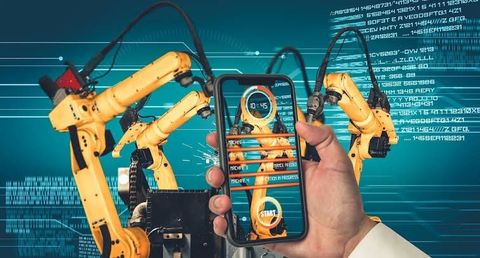
AI can complement robotics in warehouses and manufacturing environments. Intelligent systems can support movement, sorting, picking, inspection, and other repetitive activities.
Human supervision and physical safety controls remain important when AI-enabled systems interact with people or machinery.
Digital Twins
Digital twins can represent physical supply chain assets, facilities, processes, or networks in digital environments. AI and simulation techniques can then be used to examine possible scenarios.
This can help organizations evaluate potential changes before implementing them in physical operations.
Predictive Risk Monitoring
AI-based systems can analyze multiple data sources to identify potential disruptions. This may include internal operational information and selected external indicators.
Predictive monitoring does not guarantee that a disruption will be identified in advance. It provides another analytical input for risk-management processes.
Laws or Policies
AI in Supply Chain Management can be affected by data protection laws, cybersecurity requirements, industry regulations, workplace safety rules, trade requirements, contractual obligations, and internal policies.
The applicable requirements depend on the organization's activities and jurisdictions. Supply chain environments can contain personal information, financial records, supplier information, logistics data, and commercially sensitive information.
Organizations should establish policies covering:
Approved AI use cases.
Data access and authorization.
Data quality requirements.
Human review for sensitive decisions.
AI output validation.
Model documentation.
Security monitoring.
Data retention.
Third-party AI integrations.
Audit logging.
Incident management.
Change management.
Data Privacy
Supply chain systems can process information about employees, drivers, customers, suppliers, and other individuals. Privacy requirements should therefore be considered when AI systems process personal information.
Organizations should understand what data an AI system can access, where it is processed, how long it is retained, and which parties can access it.
Workplace Safety
AI-enabled robotics and automation can interact with physical equipment and human workers. Safety requirements should be addressed through appropriate engineering controls, operating procedures, training, monitoring, and applicable workplace regulations.
Third-Party Technology
Supply chains frequently involve multiple technology providers. Organizations should understand how AI tools, cloud platforms, logistics platforms, and other third-party systems handle enterprise data.
Contracts and technical documentation should clearly identify responsibilities for security, data handling, access, and system operation.
Tools and Resources
AI-enabled supply chain management typically involves multiple technology categories rather than one standalone system.
Supply Chain Management Platforms
Supply chain platforms bring together information about planning, inventory, procurement, logistics, and other activities. AI capabilities can be embedded into these systems or connected through external technologies.
Machine Learning Platforms
Machine learning platforms support the development and deployment of predictive models. They can be used for demand forecasting, anomaly detection, classification, and other analytical tasks.
Data Integration Tools
Integration technologies connect ERP systems, warehouse platforms, transportation systems, supplier applications, databases, and external data sources.
Reliable integration is essential because disconnected or delayed information can reduce the usefulness of AI analysis.
Optimization Software
Optimization tools can analyze constraints and possible combinations to support decisions involving routes, schedules, inventory, production, and resource allocation.
AI and mathematical optimization can complement each other in complex planning environments.
Warehouse Technologies
Warehouse environments can use barcode systems, RFID, computer vision, robotics, sensors, and warehouse management platforms.
These technologies provide operational data that can support AI-based analysis and automation.
Monitoring and Analytics
Dashboards and analytics systems help teams track forecasts, inventory, shipments, supplier performance, exceptions, and operational changes.
AI can add automated anomaly detection or predictive analysis to these monitoring processes.
Data Governance Tools
Data catalogs, quality-management systems, access controls, and lineage tools help organizations understand and protect the information used by AI applications.
Strong governance is particularly important when information moves between multiple supply chain participants.
FAQs
What is AI in Supply Chain Management?
AI in Supply Chain Management involves applying artificial intelligence technologies to supply chain planning and operations. Common applications include demand forecasting, inventory planning, logistics analysis, warehouse automation, supplier analysis, and risk monitoring.
How does AI improve supply chain forecasting?
AI can analyze historical demand and relevant business variables to identify patterns and generate forecasts. Forecast accuracy depends on data quality, model design, changing market conditions, and ongoing monitoring.
Can AI automate supply chain operations?
Yes. AI can automate selected activities such as document processing, anomaly detection, workflow routing, forecasting, and certain warehouse processes. Higher-impact decisions generally require appropriate human oversight.
How is AI used for inventory management?
AI can analyze demand patterns, inventory movements, lead times, and other variables to support inventory planning. It can also identify unusual changes that may require additional review.
What are the challenges of AI in Supply Chain Management?
Common challenges include data quality, integration between systems, model accuracy, cybersecurity, privacy, changing market conditions, implementation complexity, and appropriate human oversight.
Conclusion
AI in Supply Chain Management is expanding the analytical and automation capabilities available across procurement, planning, inventory, warehousing, manufacturing, transportation, and fulfillment. Forecasting, anomaly detection, document processing, computer vision, and intelligent workflow automation are among its major applications.
Recent developments in generative AI, AI assistants, agent-based workflows, robotics, digital twins, and advanced forecasting are creating additional possibilities for supply chain operations. At the same time, organizations need strong data governance, security controls, integration, monitoring, and human oversight.
The effectiveness of AI depends on more than the technology itself. Reliable data, clearly defined business processes, appropriate controls, and continuous evaluation are important for using AI responsibly across complex supply chain environments.