AI in ERP Systems: Explore Intelligent Automation and Enterprise Resource Management
AI in ERP Systems: Explore Intelligent Automation and Enterprise Resource Management explains how artificial intelligence is being integrated into enterprise resource planning platforms. It covers automated workflows, data analysis, forecasting, decision support, process optimization, intelligent reporting, and emerging AI capabilities that can shape modern enterprise management.
AI in ERP Systems: Explore Intelligent Automation and Enterprise Resource Management
Context
Artificial intelligence is becoming an important capability within enterprise resource planning systems. AI in ERP Systems refers to the integration of technologies such as machine learning, natural language processing, predictive analytics, intelligent automation, and generative AI into platforms that manage core business processes.
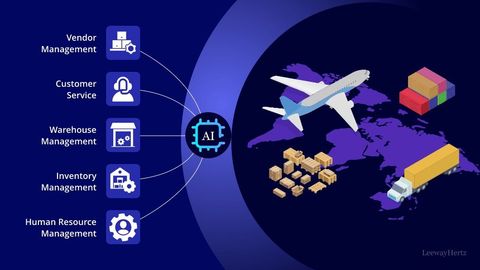
ERP systems traditionally bring together information from areas such as finance, procurement, inventory, manufacturing, sales, human resources, logistics, and supply chain operations. By adding AI capabilities, these systems can analyze large volumes of enterprise data and assist with repetitive tasks, forecasting, anomaly detection, reporting, and decision support.
Traditional ERP workflows often depend on predefined rules and manually entered information. AI can add another layer of automation by identifying patterns in data, generating predictions, classifying information, and assisting users with routine activities.
The exact capabilities vary between ERP platforms and implementations. AI may be embedded directly into an ERP application or connected through external data, analytics, and AI platforms.
Common AI Capabilities in ERP
AI can support several areas of enterprise resource planning:
Predictive analytics: Identifying patterns that may help forecast future business conditions.
Intelligent automation: Automating repetitive tasks and workflow steps.
Natural language interaction: Allowing users to interact with enterprise information using conversational language.
Document processing: Extracting structured information from invoices, forms, and other documents.
Anomaly detection: Identifying unusual transactions, values, or operational patterns.
Forecasting: Supporting demand, inventory, financial, and operational planning.
Recommendation systems: Providing contextual suggestions based on available enterprise data.
Generative AI: Producing summaries, explanations, drafts, and responses based on authorized enterprise information.
ERP Areas Where AI Can Be Applied
AI can affect many ERP functions.
| ERP Area | Potential AI Application |
|---|---|
| Finance | Transaction analysis and anomaly detection |
| Procurement | Document processing and supplier analysis |
| Inventory | Demand forecasting and replenishment analysis |
| Manufacturing | Production planning and predictive analysis |
| Supply Chain | Forecasting and disruption analysis |
| Sales | Customer and order analysis |
| Human Resources | Workforce analytics and document assistance |
| Reporting | Automated summaries and natural-language queries |
AI does not replace the underlying ERP database or business processes. Instead, it generally operates alongside existing workflows and enterprise data.
Importance
AI in ERP Systems can be important because ERP platforms contain information about many interconnected business activities. Applying AI to this information can help organizations identify patterns and automate selected processes.
Intelligent Automation
ERP environments contain many repetitive activities, such as processing documents, categorizing transactions, checking records, and routing approvals.
AI-assisted automation can reduce manual interaction for suitable tasks. The level of automation should depend on the importance and risk of the activity.
Low-risk repetitive processes may be suitable for greater automation, while sensitive financial or operational decisions may require human review.
Faster Data Analysis
ERP systems can contain large amounts of historical and real-time information. AI techniques can analyze these datasets to identify patterns that may not be immediately visible through manual review.
For example, predictive models can examine historical demand patterns to support planning activities. Financial analytics can identify unusual transaction patterns for further investigation.
Improved Forecasting
Forecasting is a major application area for AI in enterprise management. Organizations can use historical information, operational data, and relevant business variables to develop forecasting models.
Forecast quality depends heavily on the quality and relevance of the underlying data. AI cannot reliably compensate for incomplete, inconsistent, or poorly structured enterprise information.
Decision Support
AI can help users compare information, summarize records, identify patterns, and generate analytical suggestions.
Decision-support capabilities should provide appropriate context and allow users to verify important information. AI-generated outputs can contain errors or incomplete interpretations, particularly when data or business rules are unclear.
Natural-Language ERP Interaction
Generative AI and natural-language interfaces can make ERP information easier for some users to access.
Instead of navigating multiple screens, a user may be able to ask a question about authorized enterprise information in ordinary language. The system can interpret the request and present a response or direct the user to relevant information.
Access controls remain important. A conversational interface should not provide information that the user is not authorized to access.
Process Visibility
AI can analyze relationships between different ERP processes. This can help organizations identify recurring delays, unusual activity, or dependencies between business functions.
Combining AI with process analytics can provide another way to examine operational workflows.
Data Quality
AI applications depend on reliable enterprise information. Duplicate records, missing values, inconsistent classifications, and outdated information can affect AI-generated results.
For this reason, AI adoption in ERP environments often needs to be accompanied by data-quality management, governance, metadata, and clear ownership.
Recent Updates
From 2024 through 2026, AI capabilities in ERP systems have increasingly expanded beyond traditional predictive analytics toward generative AI, natural-language interfaces, intelligent agents, and more automated workflows.
Generative AI in ERP
Generative AI can assist with tasks involving text and unstructured information. In ERP environments, possible applications include summarizing records, drafting business communications, explaining reports, generating workflow descriptions, and responding to questions about authorized enterprise information.
These capabilities require appropriate access controls and data governance. Generated content should also be reviewed when accuracy is important.
AI Assistants
ERP vendors and technology providers are incorporating AI assistants that can interact with enterprise workflows. These assistants may help users navigate applications, summarize information, or complete selected tasks.
The capabilities of an assistant depend on its integration with the ERP environment, available permissions, business rules, and the data it can access.
AI Agents and Workflow Automation
More recent AI architectures include agent-based systems that can perform multiple steps toward a defined objective. Within ERP environments, this can involve interpreting a request, retrieving relevant information, initiating approved workflow actions, and reporting the result.
Agentic workflows introduce additional governance requirements because an AI system may have permission to perform actions rather than simply generate information.
Embedded Predictive Analytics
Predictive analytics continues to support areas such as demand planning, inventory analysis, financial forecasting, and operational monitoring.
Embedding predictive capabilities directly into ERP workflows can make analytical outputs more accessible to business users.
Document Intelligence
AI-based document processing can extract information from invoices, purchase documents, receipts, forms, and other unstructured or semi-structured sources.
This can help transform document content into structured ERP records. Validation remains important because document layouts and data quality can vary.
AI Governance
As AI becomes more deeply integrated into enterprise applications, organizations are paying greater attention to AI governance.
Governance can address data sources, model behavior, access permissions, human oversight, auditability, security, privacy, and acceptable use.
Laws or Policies
AI in ERP Systems can be affected by multiple areas of law and organizational policy. Relevant requirements depend on the organization's location, industry, data types, and use of AI.
ERP environments may contain financial records, employee information, customer data, supplier information, and other sensitive business information. Organizations therefore need to consider privacy, security, access control, retention, and data-processing requirements.
AI-specific regulations may also apply depending on the jurisdiction and use case. Organizations should identify whether an AI application falls within any applicable regulatory category before deploying it for sensitive activities.
Important Governance Areas
Organizations can establish policies covering:
Approved AI use cases.
Data access and authorization.
Human review requirements.
AI output validation.
Model and system documentation.
Data retention.
Privacy protection.
Security controls.
Audit logging.
Third-party AI integrations.
Incident management.
Change management.
Financial and other high-impact ERP processes may require additional oversight because incorrect automated actions can have significant operational consequences.
Shared Responsibilities
AI-enabled ERP environments can involve multiple parties, including ERP vendors, cloud providers, AI providers, implementation teams, and the organization itself.
Contracts and technical documentation should clearly establish responsibilities for data handling, security, system availability, model functionality, and administrative access.
Organizations should not assume that an AI-enabled ERP platform automatically satisfies all applicable legal or internal requirements.
Tools and Resources
Implementing AI in ERP Systems requires more than an AI model. Organizations generally need supporting data, integration, security, monitoring, governance, and workflow resources.
ERP Platforms
The ERP platform provides the core business applications and data structures used by the organization. AI capabilities may be built directly into the platform or integrated through additional technologies.
Before enabling AI features, organizations should understand how the feature accesses ERP data and what permissions it uses.
Machine Learning Platforms
Machine learning platforms can support the development, deployment, monitoring, and maintenance of predictive models.
These platforms may be used for specialized forecasting or classification tasks when embedded ERP capabilities are not sufficient.
Generative AI Platforms
Generative AI technologies can support natural-language interaction, document analysis, summarization, and content generation.
Enterprise implementations should consider data isolation, access permissions, logging, model behavior, and integration architecture.
Data Integration Tools
Integration tools connect ERP systems with external databases, cloud platforms, analytics systems, and AI applications.
Strong integration design helps maintain consistent data movement and provides appropriate controls over sensitive information.
Data Quality and Governance Tools
Data-quality tools can identify incomplete or inconsistent ERP records. Governance platforms can help define ownership, policies, classifications, metadata, and access rules.
These capabilities are particularly important when AI relies on large volumes of enterprise information.
Monitoring and Audit Tools
Monitoring can track AI usage, workflow activity, system performance, errors, and access events.
Audit logs can help organizations understand what actions occurred and support investigation when unexpected results appear.
Human Review Processes
Human oversight remains an important resource for higher-risk AI-enabled ERP workflows. Review procedures can specify which outputs require approval before an automated action is completed.
FAQs
What is AI in ERP Systems?
AI in ERP Systems refers to integrating artificial intelligence technologies into enterprise resource planning platforms. It can support automation, forecasting, document processing, anomaly detection, analytics, natural-language interaction, and decision support.
How does AI improve ERP automation?
AI can automate selected repetitive activities by recognizing patterns, processing documents, classifying information, and supporting workflow decisions. The level of automation should match the risk and importance of each process.
Can AI in ERP Systems improve forecasting?
Yes. AI-based predictive models can analyze historical and current enterprise information to support demand, inventory, financial, and operational forecasting. Results depend on data quality, model design, and appropriate validation.
Is AI in ERP Systems secure?
Security depends on the specific architecture, permissions, data controls, integration methods, and governance practices. AI features should operate within appropriate identity, access, monitoring, privacy, and security controls.
What role does generative AI play in ERP?
Generative AI can provide natural-language interaction, summaries, document assistance, explanations, and other text-based capabilities. In enterprise environments, access restrictions and human review are important for sensitive or consequential activities.
Conclusion
AI in ERP Systems is changing how organizations interact with enterprise information and automate selected business processes. Predictive analytics, intelligent automation, document processing, natural-language interfaces, and generative AI can extend the capabilities of traditional ERP environments.
Successful implementation depends on more than AI functionality. Reliable data, clear governance, appropriate access controls, integration, monitoring, and human oversight are important for responsible enterprise use.
As AI assistants and agent-based workflows become more capable, organizations will need to evaluate not only what an AI system can generate but also which actions it is authorized to perform. This makes AI governance an increasingly important component of modern enterprise resource management.